


 Defense Secretary Robert Gates won kudos earlier this month when he announced plans to slash $78 billion over 5 years from the Pentagon’s budget and cut the size of the Army and Marine Corps. One issue that received little discussion, however, is how cutting defense spending may harm the U.S. economy over the long run and help its top competitor China.
Indeed, just as the U.S. is slashing spending on aerospace systems and defense equipment, China has opened its checkbook. According to GlobalSecurity.Org, the People’s Republic had a 2010 defense budget of 532.115 billion yuan (about $77.9 billion at current exchange rates) , an increase of 7.5% more than last year. Defense spending in China has gained by a whopping 12.9% annually since 1989. Other sources give the figure at $98.8 billion as of 2009. Regardless, it’s a pittance compared with the $600 billion the Pentagon is due to spend. So far, it has been money well spent by China.
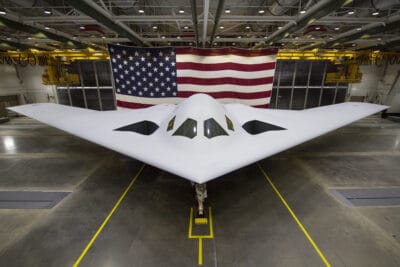
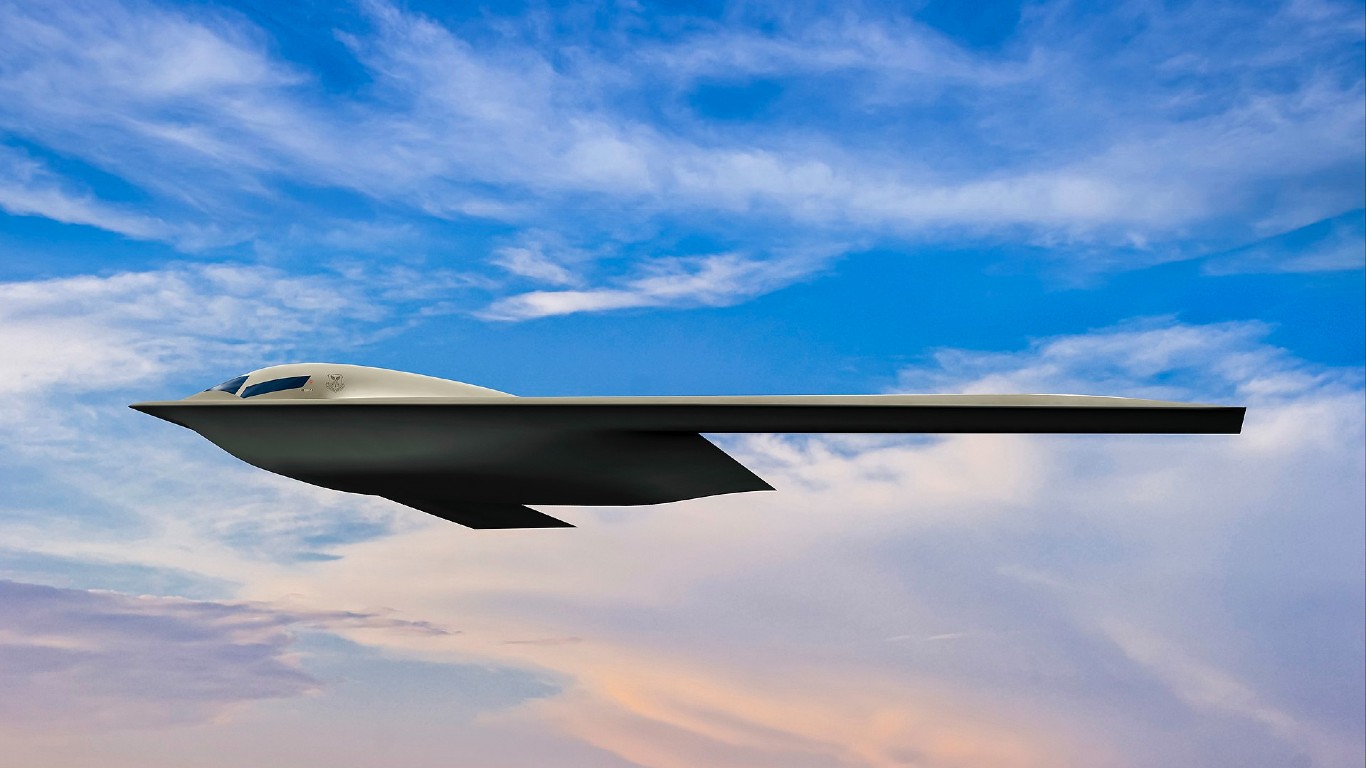
For instance, media reports about China’s “stealthy” J-20 fighter jet appeared ahead of this week’s state visit to the U.S. by leader Hu Jintao. J-20’s design would help it evade radar though not as well as the U.S. F-22 Raptor, aviation expert Richard Aboulafia told the Wall Street Journal. While that may offer some comfort, the F-22 is one of the high-tech weapons systems headed yet again for the budgetary chopping block.
“Gates halted F-22 production at 187 planes for budgetary reasons, but the Air Force argues that producing 12 planes a year – the equivalent in cost of two weeks of fighting in Afghanistan – would be enough to maintain U.S. air superiority for decades,” according to FoxNews.com
Given that the budget deficit tops $1 trillion, Gates’s view may carry the day with the fiscal conservatives in Congress. For the Chinese, who reportedly pilfered the design for the J-20 using online espionage, the advantages are many. They probably will be able to improve the aircraft’s design to make it even more stealthier in the coming years and make it at a cheaper price, as it the Chinese do with everything else. As a result, this will force U.S. defense contractors to keep their prices low when it comes time to sell the F-22 to foreign countries, which have long been a critical market for these companies. The same holds true for the F-35 Joint Strike Fighter, which was developed with frugality in mind but has also been cut by DOD bean counters.
The Chinese threat also extends to outer reaches of the heavens. As the Heritage Foundation noted today, China launched a record 15 satellites in 2010, marking the first time since the Cold War that any nation matched the U.S. in this metric. Beidou already is outpacing Europe’s Galileo system, which was supposed to be running by 2008. It already has plans to launch another 8 to 10 satellites by 2012 with global coverage by 2020, Wired magazine says. Indeed, the Chinese already have plans for a manned moon landing by 2017. The U.S. had planned a $100 billion return lunar visit in 2018 before it was scrapped for budgetary reasons. China views the Moon as a potential source of natural resources.
China’s Jin class nuclear submarines are scaring the bejesus out of some defense experts. Their ascendancy comes as the U.S. military shipbuilding industry continues to struggle because there just isn’t enough work to go around. In 2008, the U.S. Navy awarded a $14 billion contract to Northrop Grumman Corp. (NYSE: NOC) and General Dynamics Corp.’s (NYSE: GD) Electric Boat Division, the two military ship contractors, to double the number of submarines being built to two. Last year, Northrop reportedly was in talks to sell its shipbuilding division to several private equity firms because the returns were so poor.
For U.S. aerospace and defense contractors, China is the worst kind of competitor: an uneconomical one. American companies need to think of whether they will make a return on their investment while furthering the aims of U.S. policies. Their rivals in China only need to worry about keeping their government masters happy.
China is able endure short-term fiscal pain for long-term gain in one of the few industries which continue to employ tens of thousands of Americans in high-paying jobs.
–Jonathan Berr








 Top Gaining Stocks
 Top Losing Stocks