


 Steve Jobs was the greatest genius of the American technical age, which started with the launch of the PC and the operating systems that ran it. He was uniquely American, because his brand of innovation could only begin and rise in America. He exemplified the strengths of the system more than any man in 100 years. Jobs wrote another chapter for a world that allowed him to exist.
It is hard to imagine that Jobs and the success of Apple (NASDAQ: AAPL) could have happened in China, Europe or the developing world. Japan is the only country were people such as the founders of Sony (NYSE: SNE) or Toyota (NYSE: TM) could thrive. And these founders worked in a nation constrained by its size and burdened by tradition. The success of the inventiveness of the Japanese depended to some extent on their ability to test that inventiveness in America. The byproducts of genius need a great market to prove themselves.
Each product Jobs invented launched and sold in the largest consumer market in the world. The iPod, iPhone, iPad and Mac each became greater successes because of their sales abroad. And Apple’s sales outside the U.S. now account for about half of the company’s revenue.
Apple benefited from a system that allowed nearly unfettered exporting. And the same environment allowed Apple to gain and retain the margins that come with the ability to use labor outside the U.S. to build the components for its products. Apple was one of America’s largest exporters, but it was a huge importer as well. In that way, the success of Jobs had no borders, and the rise of Apple was possible because of the nearly borderless enterprise environment America invented and nourished.
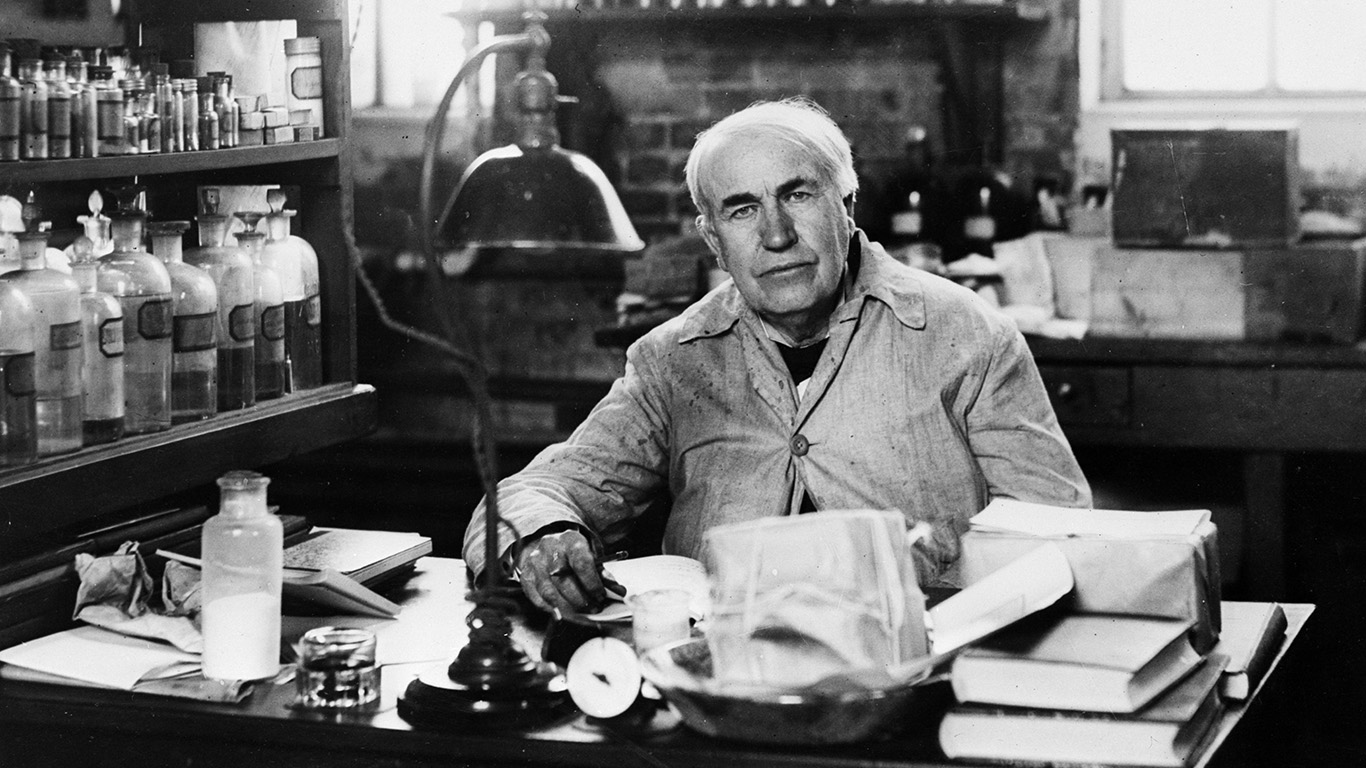
Jobs had more in common with Henry Ford, Thomas Edison or Bill Gates with his extraordinary inventiveness. Inventiveness allowed Ford to create the assembly line. The U.S. economy allowed Ford to draw labor from the south, labor that could relocate because America has no restrictions on mobility. Edison invented the light bulb and the ability of electricity to run through large infrastructures. These products were used because Americans could afford light bulbs and cities could afford to install large energy grids. None of that took away from the genius of Edison or Ford. America allowed their inventiveness to have a market large enough to make their products financially worthwhile.
Genius is genius. There is nothing that can detract from its brilliance. Jobs was one of the greatest creators and marketers of products in history. He also was born into and worked in a country that allowed him and his inventions to flourish.
Douglas A. McIntyre








 Top Gaining Stocks
 Top Losing Stocks