Few Americans Trust Online Data Safety

Photo of Douglas A. McIntyre
By Douglas A. McIntyre Published
This post may contain links from our sponsors and affiliates, and Flywheel Publishing may receive compensation for actions taken through them.

After a series of data breaches, the most famous of which was a hack of millions of Target Corp. (NYSE: TGT) customer accounts, it should not be a shock that only one in five Americans have “a lot of trust” in “businesses or companies they regularly interact with to keep their personal information secure,” according to a new Gallup poll. Only 22% say they have “a lot of trust.” The trend may threaten the future growth of businesses that get most of their revenue from online sales.

In specific, Gallup reports:

Consumers have more trust in the security of their information with some businesses or institutions than others. When asked how much they trust a list of nine institutions to keep their personal information secure, banks and credit card companies are the highest on the list, with 39% of consumers having a “lot of trust” in them. Following banks at a considerably lower level are health insurance companies (26%) and cellphone providers (19%). Given the rigorous data privacy provisions of HIPAA, Americans’ level of trust in insurance companies is surprising. Bringing up the rear are online retailers (6%) and social networking websites or applications (2%).

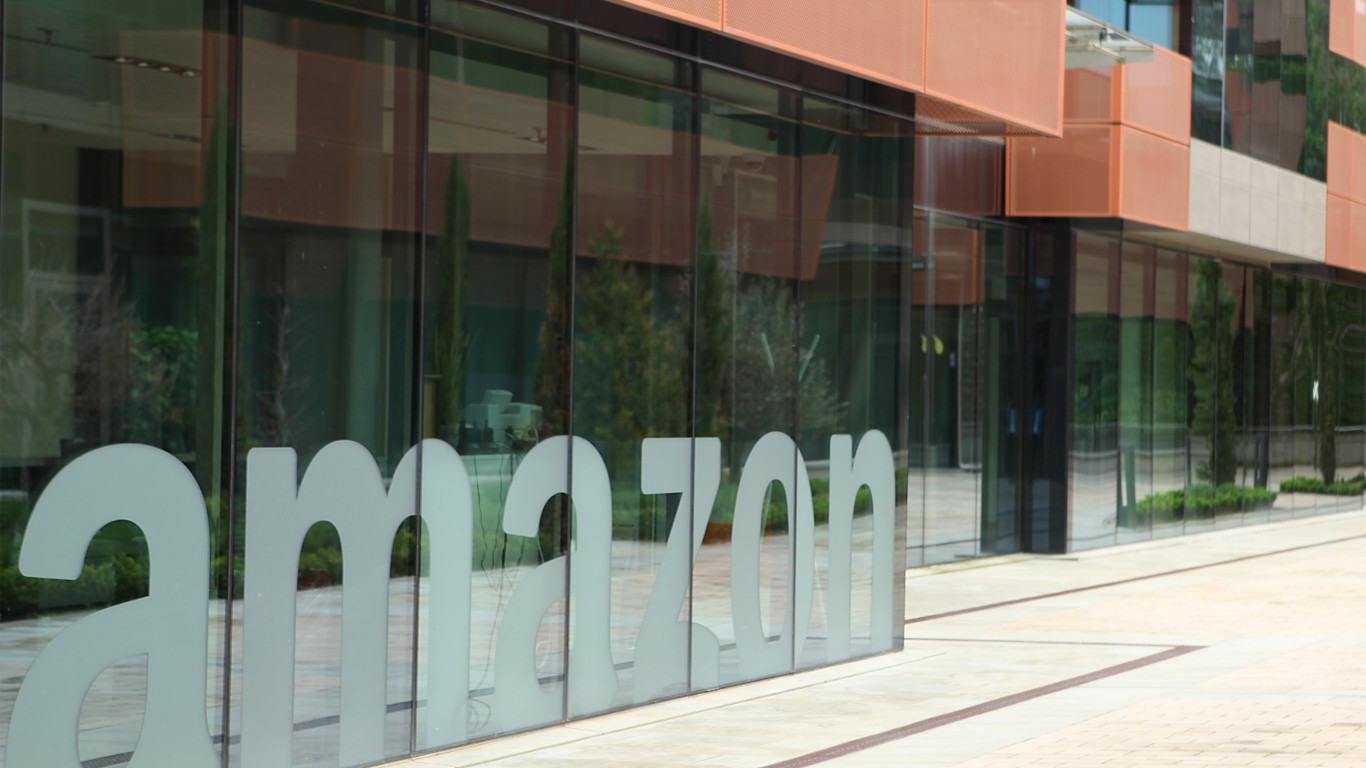
What is not clear is the effect this will have on companies like Amazon.com Inc. (NASDAQ: AMZN). Its sales soared 19% in the most recently reported quarter to $19.74 billion. Threats to that revenue include cyberattacks across the entire e-commerce industry in general, and more specifically the chance of a future hack of Amazon customer records. Amazon’s ability to take retail market share from the largest brick-and-mortar retailers, led by Wal-Mart Stores Inc. (NYSE: WMT), probably relies heavily on its position as a company that has had no had cybersecurity problems.

ALSO READ: America’s Most Profitable Products

Amazon’s problem is also a problem for the traditional retailers that need to transform themselves into ones that have a strong presence in e-commerce. Experts on the retail industry constantly press the point that companies, like Walmart that have flat same-store sales have little option for growth beyond their “dot-com” operations. While the success of these operations have been halting, an interruption of their progress would be extremely crippling.

Another hack like the one of Target’s accounts could cause consumers to draw back their e-commerce activity, and no retailer, whether it operates primarily online or is trying to push from traditional retail into online sales, can afford that.

ALSO READ: America’s Most Damaged Brands

Methodology: Results for this Gallup poll are based on telephone interviews conducted April 23 to 29, 2014, with a random sample of 1,011 adults, aged 18 and older, living in all 50 U.S. states and the District of Columbia.

Photo of Douglas A. McIntyre
About the Author Douglas A. McIntyre →

Douglas A. McIntyre is the co-founder, chief executive officer and editor in chief of 24/7 Wall St. and 24/7 Tempo. He has held these jobs since 2006.

McIntyre has written thousands of articles for 24/7 Wall St. He is an expert on corporate finance, the automotive industry, media companies and international finance. He has edited articles on national demographics, sports, personal income and travel.

His work has been quoted or mentioned in The New York Times, The Wall Street Journal, Los Angeles Times, The Washington Post, NBC News, Time, The New Yorker, HuffPost USA Today, Business Insider, Yahoo, AOL, MarketWatch, The Atlantic, Bloomberg, New York Post, Chicago Tribune, Forbes, The Guardian and many other major publications. McIntyre has been a guest on CNBC, the BBC and television and radio stations across the country.

A magna cum laude graduate of Harvard College, McIntyre also was president of The Harvard Advocate. Founded in 1866, the Advocate is the oldest college publication in the United States.

TheStreet.com, Comps.com and Edgar Online are some of the public companies for which McIntyre served on the board of directors. He was a Vicinity Corporation board member when the company was sold to Microsoft in 2002. He served on the audit committees of some of these companies.

McIntyre has been the CEO of FutureSource, a provider of trading terminals and news to commodities and futures traders. He was president of Switchboard, the online phone directory company. He served as chairman and CEO of On2 Technologies, the video compression company that provided video compression software for Adobe’s Flash. Google bought On2 in 2009.

Featured Reads

Our top personal finance-related articles today. Your wallet will thank you later.

Continue Reading

Top Gaining Stocks

CBOE Vol: 1,568,143
PSKY Vol: 12,285,993
STX Vol: 7,378,346
ORCL Vol: 26,317,675
DDOG Vol: 6,247,779

Top Losing Stocks

LKQ
LKQ Vol: 4,367,433
CLX Vol: 13,260,523
SYK Vol: 4,519,455
MHK Vol: 1,859,865
AMGN Vol: 3,818,618