


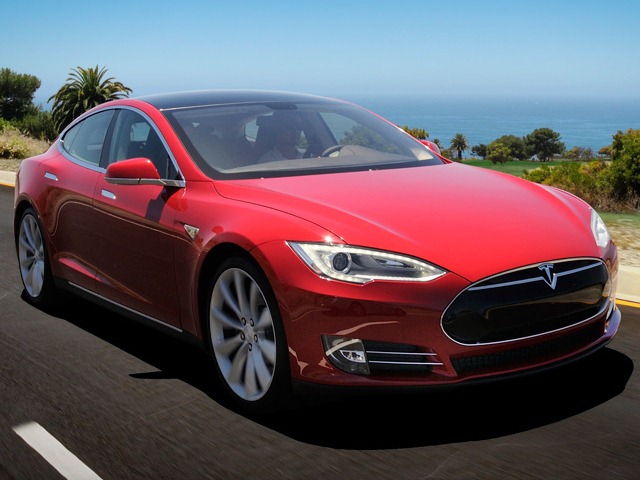
An interview this week on Esquire asked Clooney “Hey, where’s the Tesla?” almost rounded as a joke. Clooney’s response:
“I had a Tesla. I was one of the first cats with a Tesla. I think I was, like, number five on the list. But I’m telling you, I’ve been on the side of the road a while in that thing. And I said to them, ‘Look, guys, why am I always stuck on the side of the fucking road? Make it work, one way or another.’ ”
Does this sound like a short sell? No, but Americans follow their movie stars and celebrities enough that if products are not cool enough for the stars then the ambition of owning one starts to die out.
The NASDAQ short interest came out just on Monday night. Whether Clooney is shorting Tesla or not, a whole group of someone sure is. The short interest was 21.41 million shares at the end of October versus 20.81 million shares short in mid-October. That was not a record, but it was the second highest reading since May. The translation here is that more people wanted to short sell Tesla after the government shutdown resolution more than during the shutdown itself.
The reality is that Tesla does not have a George Clooney problem. Tesla has a valuation problem. This stock’s peak valuation was well north of $20 billion, and its sales numbers just quite simply cannot justify that in a world where any of the big automakers can produce as many electric cars as they want.
Having an actor talk about being stuck on the side of the road might not matter. At this point, valuations matter even if investors buying stock in 2013 are really paying up for the 2016 story when a mass market electric car is there.
Tesla’s shares are down 4.7% at $137.80 against a 52-week range of $30.50 to $194.50. The market capitalization is $16.7 billion against an expected Thomson Reuters consensus of $3.14 billion in 2014 revenues.
Clooney probably didn’t have his broker short sell Tesla. But based on where it was when Elon Musk told you to sell, he probably wishes he did short it.










 Top Gaining Stocks
 Top Losing Stocks