


Wells Fargo is America’s fourth-largest bank. Its consumer banking unit is one of the most significant revenue and profit drivers of the bank’s success. Today, Wells Fargo has 5,023 branches. AI and robotic technology will allow Wells Fargo to cut hundreds of these locations or eliminate most of the humans who work in them. Online banking has been a threat to physical locations for years. New trends are about to make the challenge to those locations worse. (These companies have the worst reputations.)
[in-text-ad]
Most of the work done at bank branches does not have to happen at physical locations or locations with humans. AI-driven robots can already do most of what is done at teller windows. Banks are not alone in this. The process has begun at retailers and also will overwhelm the fast-food industry.
[nativounit]
Part of what goes on in banks is loan applications evaluated by humans. Some of these are business loans. Others are mortgages or car loans. AI-assisted evaluations of loan risk, credit scores and the collection of information needed to evaluate loans will be handled by software programs driven by AI. The software can even evaluate collateral at physical locations, like factories and homes, using technology that includes drones.
[wallst_email_signup]
Yet another reason branches exist is to help rich customers. The marketing pitch for so-called personal banking services is that rich people need their hands held as they get advice about investing their assets and debt. AI can do a much better job based on a series of financial calculations that humans cannot do. Assets can be scanned, and their value set by optics that do not require humans.
[recirclink id=1212561]
The period when a bank needs many retail locations is disappearing.
Wells Fargo Bank Branches Start to Disappear

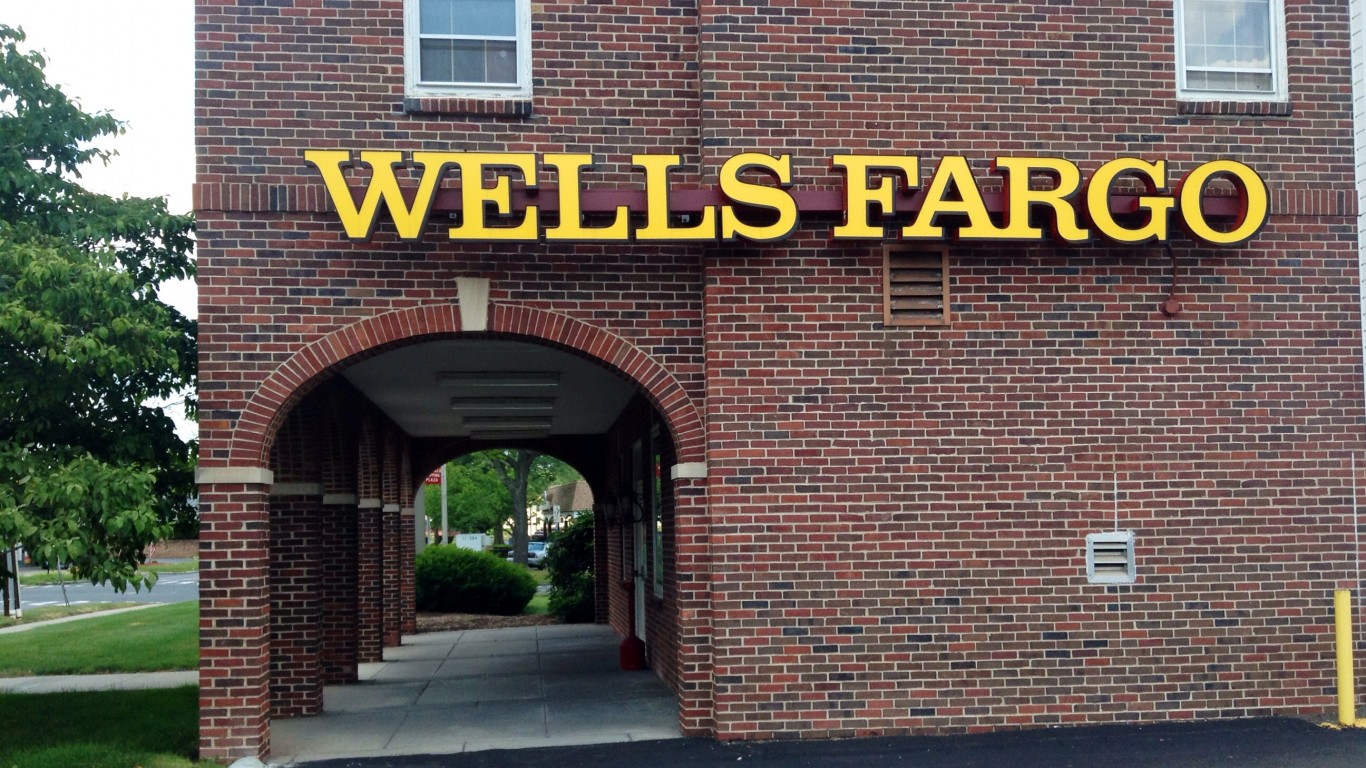
© jeepersmedia / Flickr

Douglas A. McIntyre is the co-founder, chief executive officer and editor in chief of 24/7 Wall St. and 24/7 Tempo. He has held these jobs since 2006.
McIntyre has written thousands of articles for 24/7 Wall St. He is an expert on corporate finance, the automotive industry, media companies and international finance. He has edited articles on national demographics, sports, personal income and travel.
His work has been quoted or mentioned in The New York Times, The Wall Street Journal, Los Angeles Times, The Washington Post, NBC News, Time, The New Yorker, HuffPost USA Today, Business Insider, Yahoo, AOL, MarketWatch, The Atlantic, Bloomberg, New York Post, Chicago Tribune, Forbes, The Guardian and many other major publications. McIntyre has been a guest on CNBC, the BBC and television and radio stations across the country.
A magna cum laude graduate of Harvard College, McIntyre also was president of The Harvard Advocate. Founded in 1866, the Advocate is the oldest college publication in the United States.
TheStreet.com, Comps.com and Edgar Online are some of the public companies for which McIntyre served on the board of directors. He was a Vicinity Corporation board member when the company was sold to Microsoft in 2002. He served on the audit committees of some of these companies.
McIntyre has been the CEO of FutureSource, a provider of trading terminals and news to commodities and futures traders. He was president of Switchboard, the online phone directory company. He served as chairman and CEO of On2 Technologies, the video compression company that provided video compression software for Adobe’s Flash. Google bought On2 in 2009.








 Top Gaining Stocks
 Top Losing Stocks