


Those of us of a certain age will recall a push by carmakers in the 1970s and early 1980s to get more diesel-powered cars on U.S. highways. But U.S. drivers found the cars noisy, smelly and underpowered, and the effort failed.
In recent years, however, clean diesel technology and better performance characteristics are overcoming some U.S. resistance to diesel vehicles. The main attraction of diesel-powered cars is that they are 20% to 40% more fuel efficient than gasoline powered vehicles. With a gasoline price of $3.51 a gallon, any diesel fuel price below about $4.21 a gallon is a bargain. According to AAA’s Daily Fuel Gauge Report, diesel fuel costs $3.89 a gallon today.
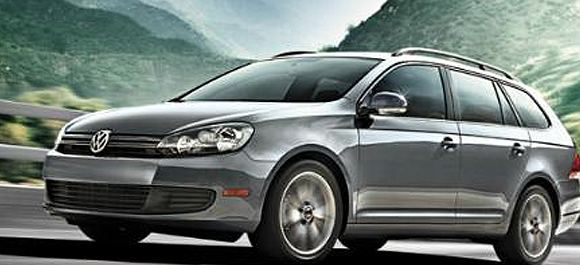
New diesel cars like the Volkswagen Jetta develop more horsepower at lower RPMs than an equivalent gasoline-powered model, and the Jetta diesel chalks up 42 miles per gallon on the highway, compared with 32 mpg for the gasoline version. Even city driving is more fuel efficient, 30 mpg for the diesel versus 24 for the gasoline model.
Diesel-powered cars and pickups have a higher initial cost, but the savings in fuel costs makes up the difference rather quickly, especially in highway driving. Resale values are also higher.
The Diesel Technology Forum also noted that in the years 2010 to 2012, the fastest growth in diesel-powered passenger vehicles occurred in the District of Columbia (20%), Maine (13%) and Pennsylvania (11%). California (55%) had the fastest growth in diesel cars and SUVs, followed by Massachusetts (45%) and New York (43%).
The full news release is available here.





 Top Gaining Stocks
 Top Losing Stocks