Farming in the Arctic’s Future

Photo of Douglas A. McIntyre
By Douglas A. McIntyre Published
This post may contain links from our sponsors and affiliates, and Flywheel Publishing may receive compensation for actions taken through them.

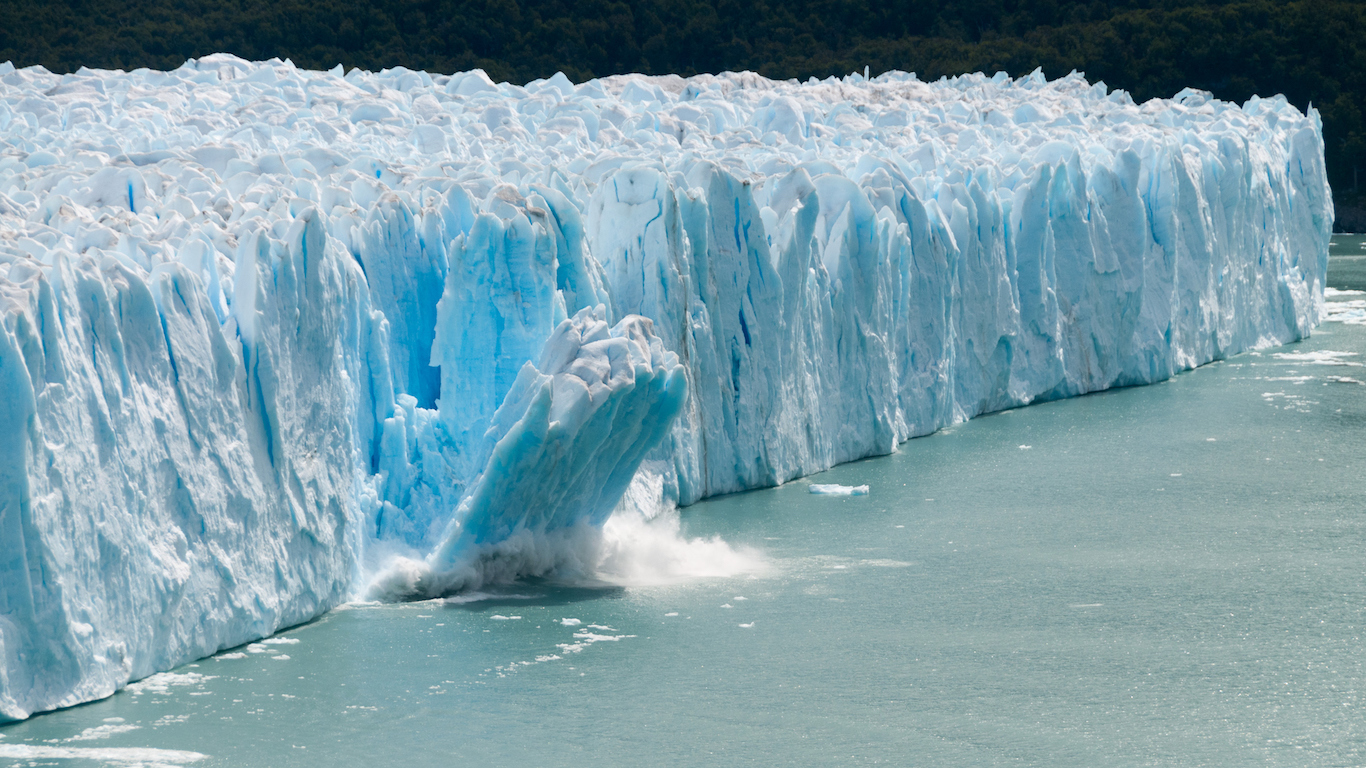
A region with unlimited access to water (though salt water) and a climate in which the temperature rises relentlessly — what a good place for farms. This may be the fate for some portions of the Arctic eventually, according to the future as envisioned by at least one scientist and his friends.

Richard G. Pearson and colleagues have written a paper published in Nature Climate Change in which they forecast:

Here we show, using climate scenarios for the 2050s and models that utilize statistical associations between vegetation and climate, the potential for extremely widespread redistribution of vegetation across the Arctic. We predict that at least half of vegetated areas will shift to a different physiognomic class, and woody cover will increase by as much as 52%. By incorporating observed relationships between vegetation and albedo, evapotranspiration and biomass, we show that vegetation distribution shifts will result in an overall positive feedback to climate that is likely to cause greater warming than has previously been predicted. Such extensive changes to Arctic vegetation will have implications for climate, wildlife and ecosystem services.

The study even includes some maps and charts to illustrate the points.

Pearson can see the future of global warming, whether or not everyone else can. He could be wrong and, based on the forecasts of some analysts, mostly crackpots, the entire world may enter an ice age in which regions suitable for farming will become rare.

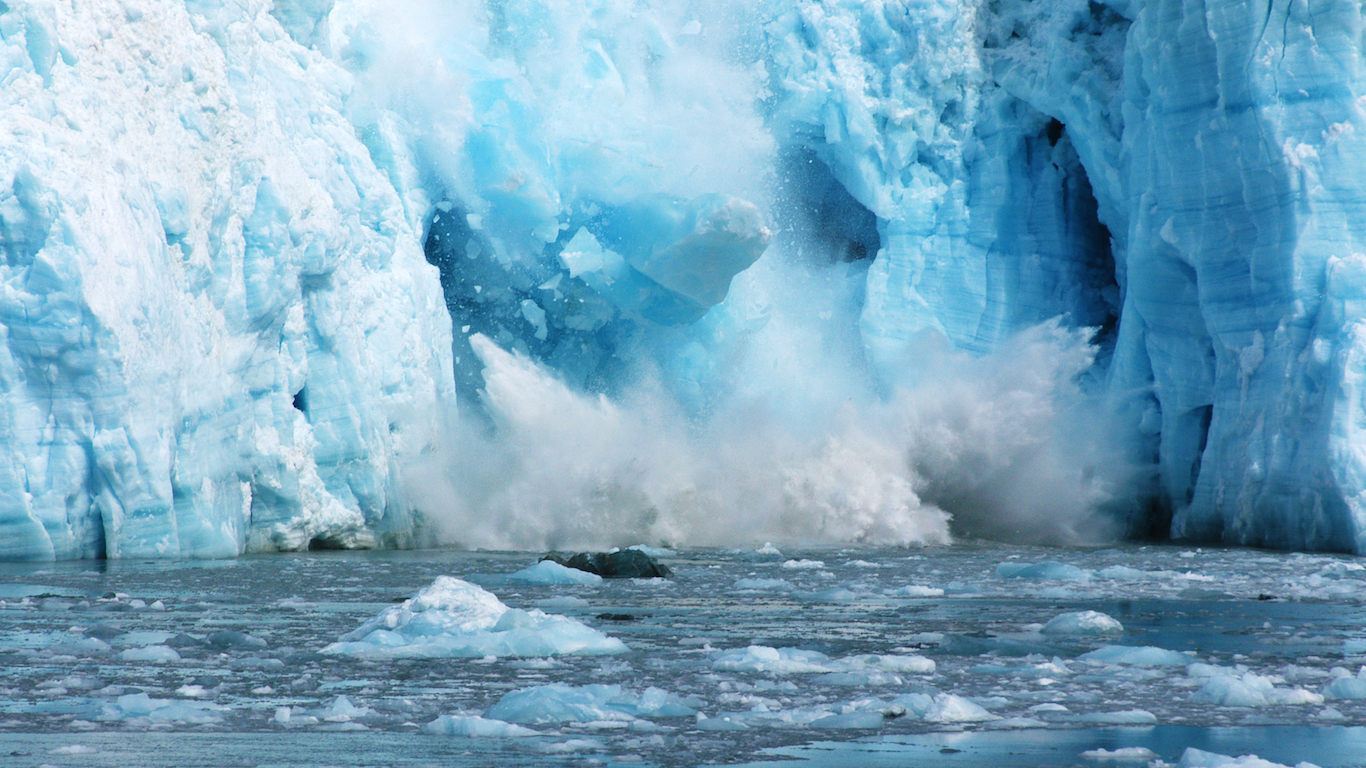
Of course, like all scientists, Pearson will not guarantee his forecast 100%. He uses the words “likely,” “scenarios,” “potential” and “predict.” Nevertheless, he is not the first expert to say that the arctic ice mass is melting, particularly because it already is.

The predictions of what melted arctic regions will allow in the future include shipping lanes that can be used by tankers and warships, international battles over the territory of what will have been the Arctic Circle and an environment in which it will be less difficult to drill for oil.

Farming in the Arctic is something new, but almost every catastrophe, in the case the end of an icy North Pole, offers an opportunity for exploitation.

Photo of Douglas A. McIntyre
About the Author Douglas A. McIntyre →

Douglas A. McIntyre is the co-founder, chief executive officer and editor in chief of 24/7 Wall St. and 24/7 Tempo. He has held these jobs since 2006.

McIntyre has written thousands of articles for 24/7 Wall St. He is an expert on corporate finance, the automotive industry, media companies and international finance. He has edited articles on national demographics, sports, personal income and travel.

His work has been quoted or mentioned in The New York Times, The Wall Street Journal, Los Angeles Times, The Washington Post, NBC News, Time, The New Yorker, HuffPost USA Today, Business Insider, Yahoo, AOL, MarketWatch, The Atlantic, Bloomberg, New York Post, Chicago Tribune, Forbes, The Guardian and many other major publications. McIntyre has been a guest on CNBC, the BBC and television and radio stations across the country.

A magna cum laude graduate of Harvard College, McIntyre also was president of The Harvard Advocate. Founded in 1866, the Advocate is the oldest college publication in the United States.

TheStreet.com, Comps.com and Edgar Online are some of the public companies for which McIntyre served on the board of directors. He was a Vicinity Corporation board member when the company was sold to Microsoft in 2002. He served on the audit committees of some of these companies.

McIntyre has been the CEO of FutureSource, a provider of trading terminals and news to commodities and futures traders. He was president of Switchboard, the online phone directory company. He served as chairman and CEO of On2 Technologies, the video compression company that provided video compression software for Adobe’s Flash. Google bought On2 in 2009.

Featured Reads

Our top personal finance-related articles today. Your wallet will thank you later.

Continue Reading

Top Gaining Stocks

CBOE Vol: 1,568,143
PSKY Vol: 12,285,993
STX Vol: 7,378,346
ORCL Vol: 26,317,675
DDOG Vol: 6,247,779

Top Losing Stocks

LKQ
LKQ Vol: 4,367,433
CLX Vol: 13,260,523
SYK Vol: 4,519,455
MHK Vol: 1,859,865
AMGN Vol: 3,818,618