


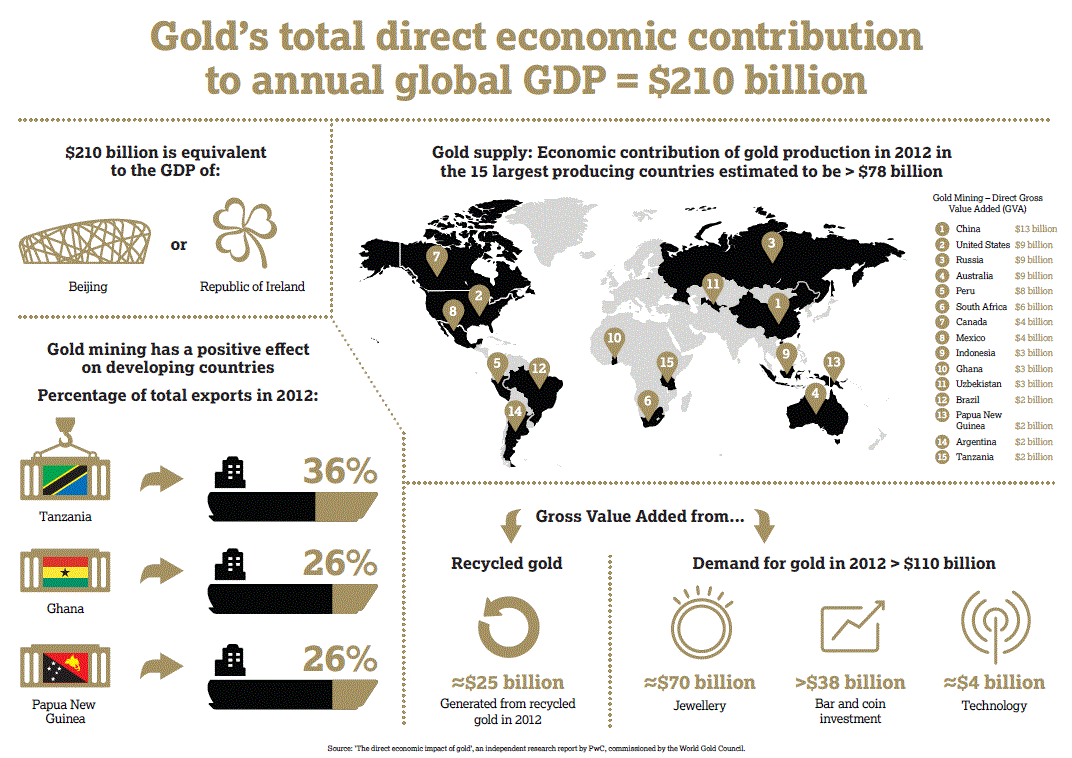
The new report was put together by PwC and was commissioned by the World Gold Council. It showed that the direct economic contribution of gold in the world’s major gold producing and consuming countries measured the entire value chain of the gold industry. Mining and refining were considered, along with consumption at the economic level.
Consumer demand for physical gold and gold products is the key driving agent here. Jewelry, small gold bars, and coins were projected to be about $110 billion of the total $210 billion in 2012 to the global economy. PwC also projected that gold mining’s total economic contribution was over $78.4 billion to the economies of the top 15 mining countries in 2012. The report said,
“Proportionally, however, gold mining has the most substantial impact on growth and wealth creation in developing countries; greatest in Papua New Guinea (15% of GDP), followed by Ghana (8% of GDP) and Tanzania (6% of GDP). For these nations, gold is also a major source of exports and, therefore, foreign exchange earnings. In 2012, gold provided 36% of all Tanzanian exports and 26% of the exports of Ghana and Papua New Guinea.”
Where this gets interesting is that the PwC report only extends to examining direct economic impacts. The consideration of indirect contributions to national economies from additional things like taxes, secondary employment and social and infrastructural development were not included. PwC also did not measure the economic impact of less formal and artisanal gold production.
There is another key thing to consider here as well. If the report stays true to form then gold’s impact to the global economy was much more than this $210 billion. You have to consider that they were quick to point out that the economic impact of holding gold in investment portfolios was not counted, and gold was still on the rise in 2012.
Keep in mind that the SPDR Gold Trust (NYSEMKT: GLD) is made up of 872.02 tonnes, or 28,036,311.27 ounces, and still worth more than $37 billion. That figure used to be far higher, but liquidation came into play. Falling prices did not help either. The GLD trust may only be down at $128 or so now, but it closed at $162.02 in 2012 versus a 2011 closing price of $151.99. That is a gain of about 6.6% in 2012.











 Top Gaining Stocks
 Top Losing Stocks