



As if the 25% tariff levied by the U.S. on single malt Scotch whisky imports in October weren’t bad enough (an industry group predicts it could cost Scottish distillers $130 million in lost exports this year), Scotland’s whisky trade now faces outright larceny as well. “A major threat to the Scotch whisky industry,” according to a new study, “is the sale of counterfeit single malt whiskies with purported distillation years in the 19th and early- to mid-20th centuries.”
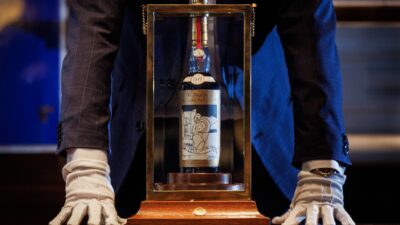
Single bottles of rare old whisky regularly sell to collectors and connoisseurs for thousands — even hundreds of thousands — of dollars a bottle. In 2018, in fact, two bottles of a single-malt Scotch, The Macallan Valerio Adami 1926, sold separately at auction for just over $1 million each — helping to cement the distillery’s reputation as one of Scotland’s most prestigious brands. (The Macallan isn’t quite considered one of the 100 most valuable brands in the world, but another Scotch producer is.)
According to the study, conducted by scientists with the Radiocarbon Lab at the Scottish Universities Environmental Research Centre (SUERC) in Glasgow, such fakery harms the industry because it “impinges upon the reputation of auction houses, retailers, brand owners and distillers.”
Why are radiation scientists studying whisky counterfeiting? Because the SUERC team has discovered a way to expose the sham Scotches by measuring their carbon-14 content. This is an isotope that was released into the atmosphere as fallout from nuclear bomb tests in the 1950s and ‘60s and absorbed into plants — including the barley used to make whisky. Because carbon-14 decays at a steady rate, scientists can analyze the level of trace elements remaining in a whisky and approximate its true age.
According to a story in Live Science called “Nuclear fallout exposes fake ‘antique’ whisky,” the researchers studied rare whiskies said to date from various years as far back as 1847. Almost half of them were younger than they were said to be. A bottle of Talisker, for instance, supposedly dating from 1863, was found to have probably been distilled between 2007 and 2014. A Laphroaig supposedly dating back to 1903 turned out to have been made in 2011 or later.
Potential buyers of pricey spirits like these should definitely exercise caution, whether they opt to have their purchases scientifically analyzed or not. If you get the real thing, though, these rarities can be a good investment, even if you never take a sip. The 2019 Luxury Investment Index published by the financial consulting firm Knight Frank recommends rare whisky as an “asset class” rapidly rising in value. In other words, if you want to make money, buy whiskey.







 Top Gaining Stocks
 Top Losing Stocks