


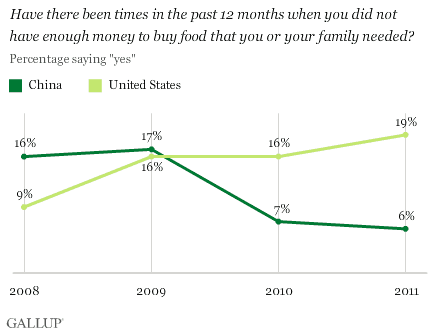
According to Gallup:
Surveys in China and the U.S. reveal Chinese are struggling less than Americans to put food on their tables. Six percent of Chinese in 2011 say there have been times in the past 12 months when they did not have enough money to buy food that they or their family needed, down significantly from 16% in 2008. Over the same period, the percentage of Americans saying they did not have money for food in the previous 12 months more than doubled from 9% in 2008 to 19% in 2011.
There has been a suspicion for some time that Americans below the poverty line often have challenges providing themselves the most basic nourishment. This has been confirmed by some statistics. According to the Map the Meal Gap report by the hunger relief charity Feeding America, “about 15 percent of American households experienced ‘food insecurity’ at some time during 2009, or believed they didn’t have enough or couldn’t get enough money for food,” ABC News said earlier this year.
The data is more confirmation that there are portions of the American population whose financial fortunes may never rise to the level where they can provide themselves with even the most basic needs. The fact that in America the number of people who do not have money for food could double in three years is stunning.
The poll results are a signal that federal, state and local governments have been unable to lift the impoverished from their positions at the bottom of the consumer economy. Or, alternatively, government has not provided the education and job opportunities that would allow people to move into the middle class. As the economy continues to falter and austerity becomes the major impetus of government spending programs, things will only get worse.
Methodology: Results are based on telephone and face-to-face interviews with approximately 4,100 adults in China and approximately 1,000 adults in the U.S., aged 15 and older, conducted each year from 2007 to 2011. For results based on the total sample of national adults, one can say with 95% confidence that the maximum margin of sampling error ranged from ±2.1 to ±4.1 percentage points. In addition to sampling error, question wording and practical difficulties in conducting surveys can introduce error or bias into the findings of public opinion polls.
Douglas A. McIntyre




 Top Gaining Stocks
 Top Losing Stocks