Budget Deficit Continues Shrinking

Photo of Paul Ausick
By Paul Ausick Updated Published
This post may contain links from our sponsors and affiliates, and Flywheel Publishing may receive compensation for actions taken through them.

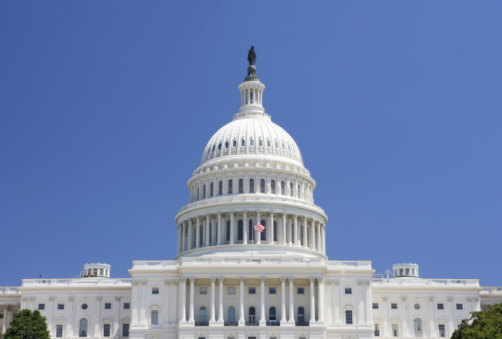
West side view of the United States Capitol building.
Thinkstock
The Congressional Budget Office (CBO) released its updated estimate of the U.S. federal budget deficit on Monday afternoon. The agency now estimates that the fiscal year 2014 deficit will fall to $492 billion, nearly a third less than the $680 billion deficit posted in fiscal year 2013. The federal fiscal year runs from October 1st through September 30th. The new estimate is $23 billion less than the previous estimate made in February.

The CBO notes that 2014 is the fifth consecutive year that the budget deficit has declined as a share of GDP since peaking at 9.8% in 2009. As a percentage the 2014 deficit is equal to 2.8% of U.S. GDP. The average deficit from 1974 to 2013 is 3.1% of GDP.

If existing laws remain unchanged, however, shrinking deficits will reverse in 2019. Deficits are projected to rise from a low of $469 billion in 2015 to about $1 trillion in 2022 before falling slightly through 2024. The primary reasons for the increase are an aging U.S. population, rising healthcare costs, expanded federal subsidies for health insurance, and larger payments on the national debt.

Federal debt held by the public grows to 78% of GDP by 2024, up from 72% at the end of 2013. In 2007 the debt totaled just 35% of GDP. Federal spending on the major health programs will rise from 9.5% of GDP in 2013 to 11.5% in 2024, surpassing federal outlays on Social Security.

Today’s projections are lower than those made in February largely due to a lower estimate for discretionary spending and lower projections of the cost of health insurance subsidies provided by Obamacare and Medicare.


Photo of Paul Ausick
About the Author Paul Ausick →

Paul Ausick has been writing for a673b.bigscoots-temp.com for more than a decade. He has written extensively on investing in the energy, defense, and technology sectors. In a previous life, he wrote technical documentation and managed a marketing communications group in Silicon Valley.

He has a bachelor's degree in English from the University of Chicago and now lives in Montana, where he fishes for trout in the summer and stays inside during the winter.

Featured Reads

Our top personal finance-related articles today. Your wallet will thank you later.

Continue Reading

Top Gaining Stocks

CBOE Vol: 1,568,143
PSKY Vol: 12,285,993
STX Vol: 7,378,346
ORCL Vol: 26,317,675
DDOG Vol: 6,247,779

Top Losing Stocks

LKQ
LKQ Vol: 4,367,433
CLX Vol: 13,260,523
SYK Vol: 4,519,455
MHK Vol: 1,859,865
AMGN Vol: 3,818,618