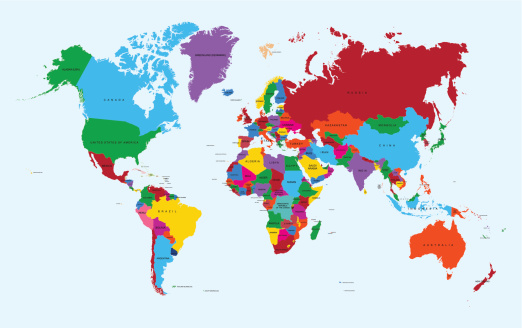
Melbourne Is World’s Most Livable City

Photo of Douglas A. McIntyre
By Douglas A. McIntyre Published
This post may contain links from our sponsors and affiliates, and Flywheel Publishing may receive compensation for actions taken through them.

In yet one more survey of the best cities to live in, most livable cities, most affordable cities and best places of foreigners to live, the Economist Intelligence Unit (EIU) has produced one of its own — “A Summary of the Liveability and Overview” of 140 cities. For starters, the list is topped by Melbourne, Australia.

In terms of the process for selection:

The concept of liveability is simple: it assesses which locations around the world provide the best or the worst living conditions. Assessing liveability has a broad range of uses, from benchmarking perceptions of development levels to assigning a hardship allowance as part of expatriate relocation packages. The Economist Intelligence Unit’s liveability rating quantifies the challenges that might be presented to an individual’s lifestyle in any given location, and allows for direct comparison between locations.

Following Melbourne among the top 10 are, in order, Vienna, Vancouver, Toronto, Adelaide, Calgary, Sydney, Helsinki, Perth and Auckland. There is a certain sameness among the cities. Not only are they grouped largely in two countries. Also there is a homogeneity to the populations and cultures in these urban areas. Indeed, all these cities get strong ranks in the survey’s education, stability, health care culture and environment, and infrastructure categories.

READ ALSO: Best and Worst Countries to Find a Full-Time Job

The cities at the bottom of the list are tragically war torn or are in hopelessly impoverished regions. Damascus is at the bottom of the list of 140, followed by, in order, Dhaka in Bangladesh, Port Moresby in Papua New Guinea, Lagos in Nigeria, Karachi in Pakistan, Algeria in Algiers, Harare in Zimbabwe, Tripoli in Libya and Abidjan in Cote d’Ivoire. Really no surprises here.

As the EIU points out as it analyzes the cities at the bottom:

Conflict is responsible for many of the lowest scores. This is not only because stability indicators have the highest single scores, but also because factors defining stability spread to have an adverse effect on other categories. For example, conflict will not just cause disruption in its own right, it will also damage infrastructure, overburden hospitals, and undermine the availability of goods, services and recreational activities.

The EIU study is created primarily to help businesses make decisions about where to locate employees. The results, however, are not much different from similar studies. Deeply troubled regions in Africa are poor places to live and the beaches of Australia are much better.


READ ALSO: 11 Countries Near Bankruptcy

Photo of Douglas A. McIntyre
About the Author Douglas A. McIntyre →

Douglas A. McIntyre is the co-founder, chief executive officer and editor in chief of 24/7 Wall St. and 24/7 Tempo. He has held these jobs since 2006.

McIntyre has written thousands of articles for 24/7 Wall St. He is an expert on corporate finance, the automotive industry, media companies and international finance. He has edited articles on national demographics, sports, personal income and travel.

His work has been quoted or mentioned in The New York Times, The Wall Street Journal, Los Angeles Times, The Washington Post, NBC News, Time, The New Yorker, HuffPost USA Today, Business Insider, Yahoo, AOL, MarketWatch, The Atlantic, Bloomberg, New York Post, Chicago Tribune, Forbes, The Guardian and many other major publications. McIntyre has been a guest on CNBC, the BBC and television and radio stations across the country.

A magna cum laude graduate of Harvard College, McIntyre also was president of The Harvard Advocate. Founded in 1866, the Advocate is the oldest college publication in the United States.

TheStreet.com, Comps.com and Edgar Online are some of the public companies for which McIntyre served on the board of directors. He was a Vicinity Corporation board member when the company was sold to Microsoft in 2002. He served on the audit committees of some of these companies.

McIntyre has been the CEO of FutureSource, a provider of trading terminals and news to commodities and futures traders. He was president of Switchboard, the online phone directory company. He served as chairman and CEO of On2 Technologies, the video compression company that provided video compression software for Adobe’s Flash. Google bought On2 in 2009.

Continue Reading

Top Gaining Stocks

CBOE Vol: 1,568,143
PSKY Vol: 12,285,993
STX Vol: 7,378,346
ORCL Vol: 26,317,675
DDOG Vol: 6,247,779

Top Losing Stocks

LKQ
LKQ Vol: 4,367,433
CLX Vol: 13,260,523
SYK Vol: 4,519,455
MHK Vol: 1,859,865
AMGN Vol: 3,818,618