


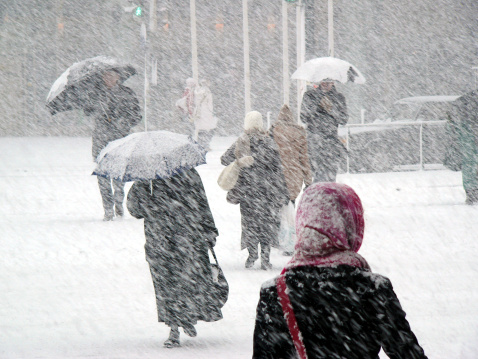
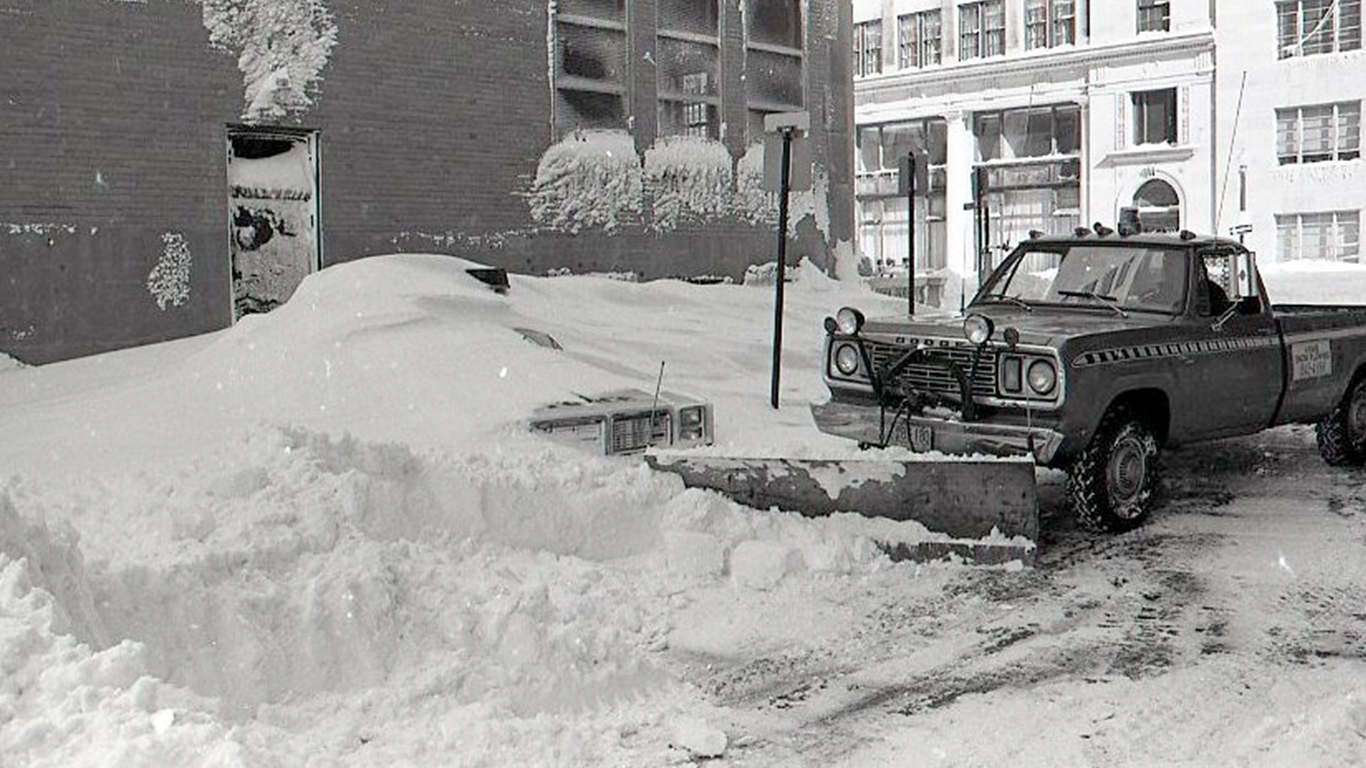
The final revision of the government’s measure of GDP in the first quarter of this year showed a slide of 2.9%. Unusually bitter and snowy weather received much of the blame. Winter 2014 has already proven to be cold and snow-filled. Deja vu all over again.
The counterweight to poor weather has been and will be low gas prices. People may not be willing to brave storms, but when the weather is less menacing, the theory is that they will drive more often, and some of this driving will be to retailers. E-commerce could offset some of the effects of shut-ins, but it is not enough of the retail segment to save the brick-and-mortar portion entirely. Beyond retail, the chance that people will hunt for houses in bad weather could drop as well.
While the majority of the very heavy snowfall has been restricted to areas around the Great Lakes so far, the National Weather Service has forecast that the South will be particularly cold this winter. Precipitation in the South and Northeast is expected to be above normal for January and February. Most of the worry comes from the chance for snow. The National Weather Service refuses to make a prediction:
This seasonal outlook does not project where and when snowstorms may hit or provide total seasonal snowfall accumulations. Snow forecasts are dependent upon the strength and track of winter storms, which are generally not predictable more than a week in advance.
So, the chances of deep snow cannot be projected as any better than a coin toss. If and when the coin toss goes the wrong way, the damage to GDP from the weather becomes a coin toss as well.





 Top Gaining Stocks
 Top Losing Stocks