


Only two things can stop a December rate hike now. One is war, and the other is a sharp rise in bond yields before the next Federal Open Market Committee (FOMC) meeting.
By using the phrase “at its next meeting” when describing the possibility of a rate hike, the Federal Reserve has pigeonholed itself in raising rates. Otherwise it is playing a game of chicken with its own credibility. Only once before has such a specific time constraint been used by the FOMC, and that was in December 1999. A rate hike followed at its next meeting. Now, if no rate hike occurs at the December 15 FOMC meeting, and there is no obvious excuse why not, the Fed will have severely and perhaps irreparably damaged its credibility to the point where its words will have become empty.
As inflation will not likely explode higher in the next 45 days, and there are no signs of imminent recession within that time frame, the only two scenarios in which the Fed would have a decent excuse to once again delay a rate hike are some sort of military escalation with Russia or China, or else a sharp fall in bond markets in the next 45 days.
While an altercation with Russia or China may seem a bit far-fetched, on Tuesday Defense Secretary Ashton Carter said that the United States will begin “direct action on the ground” in Iraq and Syria against ISIS. This would put U.S. troops on the same ground that Russia is currently bombing, something that could conceivable cause some friction between the two nuclear powers and disturb markets, to say the least. In a further sign Russia is not too pleased with American involvement in Syria, Russian jets buzzed the USS Ronald Reagan near South Korea Thursday, flying within a mile of the aircraft carrier at an altitude of 500 feet.
ALSO READ: America’s Most (and Least) Expensive Cars
As for China, the People’s Republic was also displeased when, also on Tuesday, the USS Lassen sailed by Chinese artificial islands in the South China Sea in a freedom of navigation exercise.
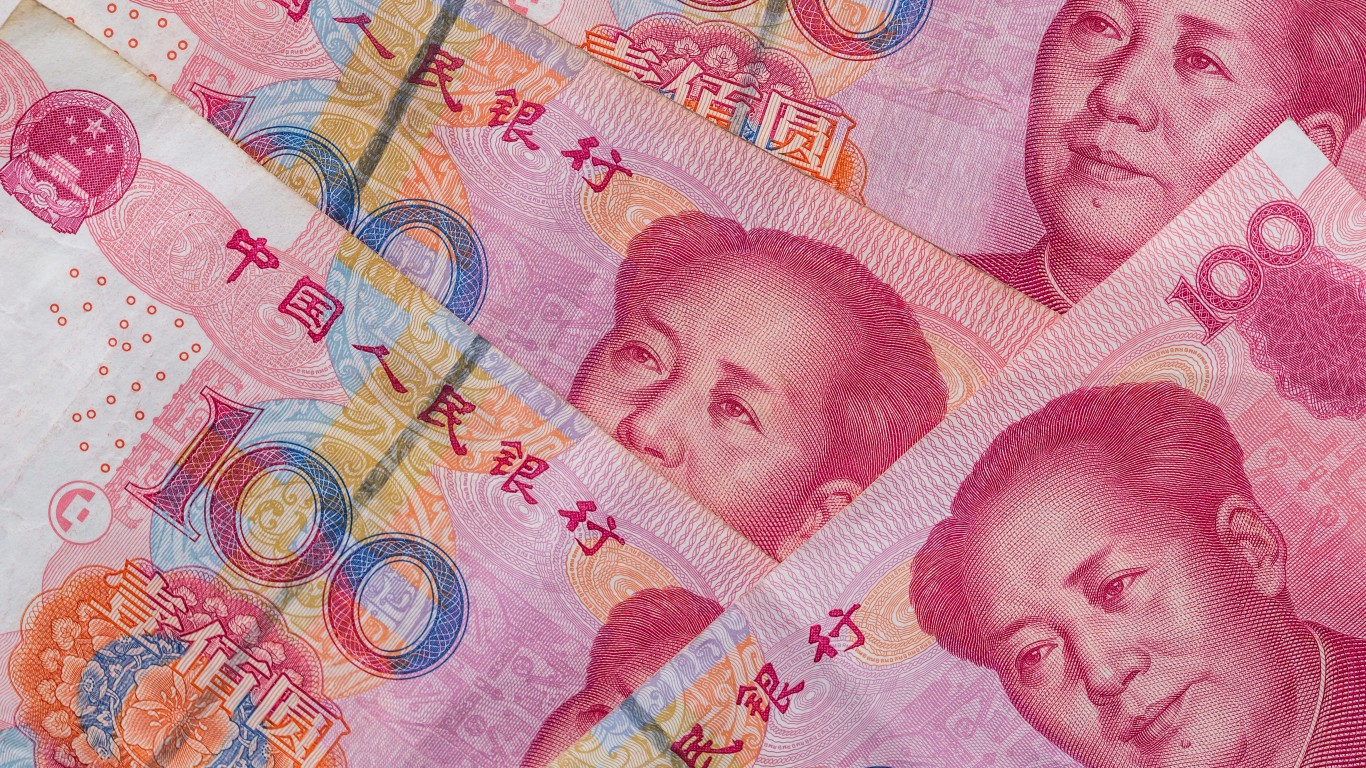
The possibility of anything serious breaking out on either front though is still remote, which leaves a sharp rise in interest rates before December 15 as the most realistic reason for another rate hike delay. One reason to see this as a possibility is China once again, where the unrelenting outflow of foreign exchange reserves continues. Most of that foreign exchange (forex) consists of U.S. Treasuries that are being sold to protect China’s currency, the yuan.
Chinese outflows have climbed $140 billion over August and September. Since its forex holdings peaked at just under $4 trillion in June 2014, China has sold $479 billion worth of mostly U.S. treasuries, and China’s recent interest rate cut will only encourage more outflows as the People’s Bank of China acts to protect the yuan further from its own rate cuts.
So far China’s Treasuries sales have failed to affect bond prices significantly, but that can change at any time. We did in fact see a 33% increase in interest rates on the 10-year Treasury over 45 days, from April 26 to June 14 in 2013. The 10-year yield went from a low of 1.61% to 2.15%. A similar rise now would push 10-year bond yields to 2.9%. They are now at 2.17%
If that happens by December 15, the Fed may yet again have an excuse to delay a rate hike. Otherwise, traders should position themselves for the Fed’s first rate hike in a decade, which is the far likelier scenario.






 Top Gaining Stocks
 Top Losing Stocks