



The United Nations Framework Convention on Climate Change that met and issued a report in December received a lot of attention then and virtually none thereafter. That could be due to the fact that the agreement is complicated or that it addresses the greenhouse gas emissions issue at a national and international level.
But those national and international emissions targets are predicated on individual action, because it is as individual efforts that add up to achieving national goals. Michael Sivak and Brandon Schoettle of the University of Michigan Transportation Research Institute (TRI) have just released a new report, “What Individual Americans Can Do to Assist in Meeting the Paris Agreement,” in which they estimate the effects of individual actions on emissions reductions target levels of 0.2%, 1%, 5% and 10%.
The TRI study separates emissions-reduction actions into two kinds: those that require governmental intervention and those that depend on individual initiatives. According to the TRI study, there are five sources of emissions to consider: Industry (currently responsible for 29% of greenhouse gas emissions), Transportation (27%), Residential (17%), Commercial (17%) and Agriculture (10%). Individual action can most directly influence transportation, residential and agricultural emissions.
The study also takes population growth into account, noting that the U.S. population grew by 0.8% in 2015. Using 0.8% annual population growth as a constant indicates that a reduction of 0.8% in greenhouse gas emissions is needed just to keep up with population growth. Because that growth compounds in succeeding years, over five years a total reduction in emissions of 4.1% is needed just to remain at today’s emissions level. In 10 years population growth dictates an emissions reduction of 8.3%.
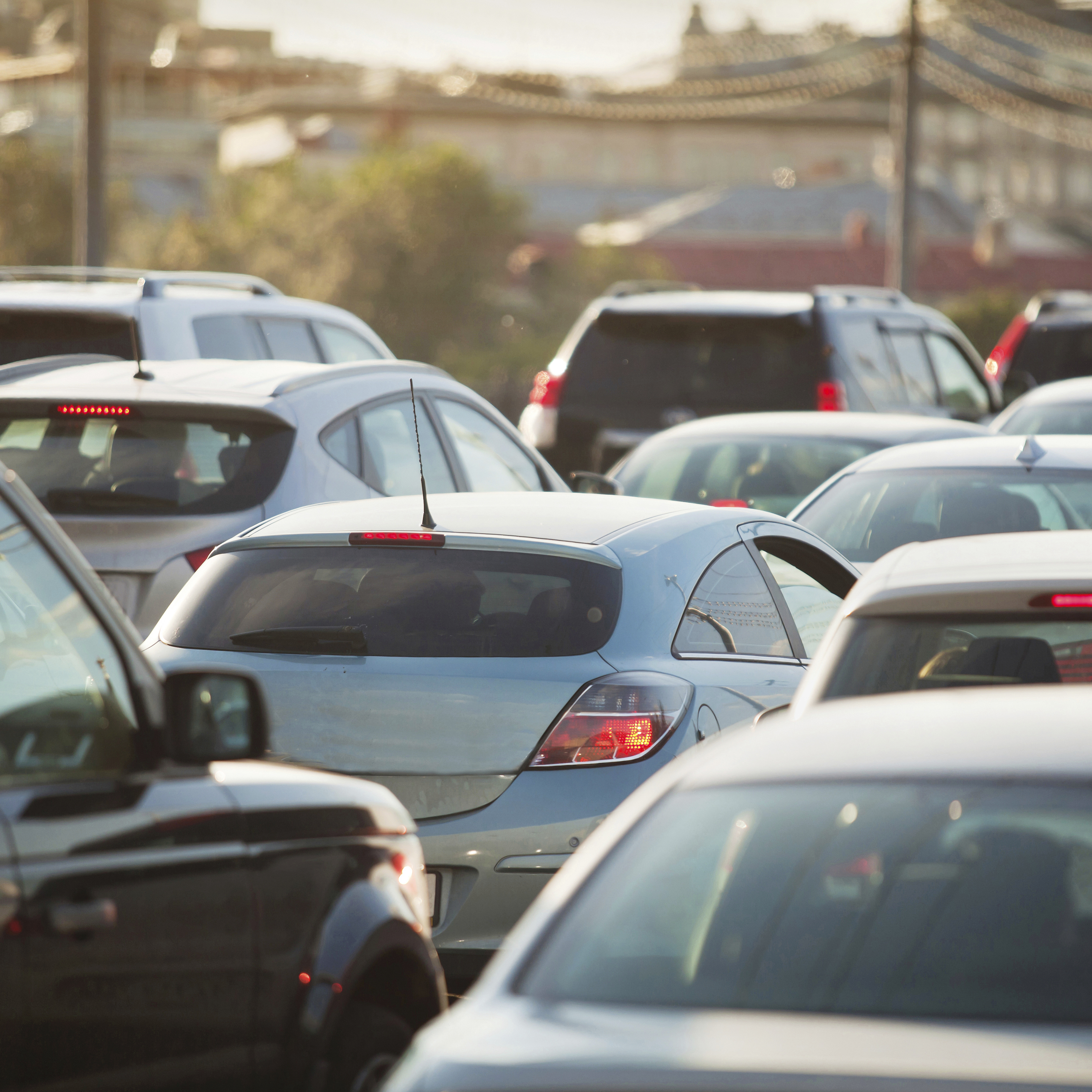
Light duty vehicles (cars, sport utility vehicles, pickups, vans and crossovers) account for 60% of greenhouse gas emissions in the transportation sector, or 16.2% of all U.S. greenhouse gas emissions. The TRI study offers several actions that individuals can take to reduce their own greenhouse gas footprint:
- Reduce driving by 10%; yields a 10% drop in driving emissions.
- Buy a vehicle that gets 26 mpg instead of 25 mpg; yields an emissions drop of 3.8%.
- Buy a vehicle that gets 50 mpg instead of 25 mpg; yields an emissions drop of 50%.
- Use passenger car tires with 30% better rolling resistance; yields a drop of 4.2% in driving emissions.
- Eliminate very high-speed and aggressive driving, reducing fuel consumption by 5% in both cases; yields a total drop of 10% in emissions.
[nativounit]
Airplanes spit out about 2.2% of total U.S. greenhouse gas emissions, and the TRI study points out that individuals can do their bit to conserve aircraft fuel by taking nonstop flights (probably everyone’s preference) or taking multi-hop flights with shorter overall distances traveled. For example, flying from Detroit to Jackson, Wyo., a city pair for which no nonstop flight is available, can mean a flight of 1,394 miles or up to 2,026 miles.
The largest residential source of emissions is space heating (45% of the total), followed by appliances, electronics gear and lighting (35%), heating water (18%) and air conditioning (6%). Turning the thermostat down five degrees for an eight-hour period during colder weather can save about 1.6% of residential emissions. Changing all incandescent bulbs remaining in a house to LED lighting can save up to 5.8% of emissions, if 50% of the bulbs remaining are still incandescent.
Some of the most interesting data points come in the agricultural sector, which accounts for a non-negligible 10% of all emissions. A favorite:
Taking into account the caloric content of foods, the energy efficiency of producing beef is 4%, compared to 15% for chicken, 31% for cheese, and 102% for corn (Ghanta, 2010). Consequently, it is not surprising that an average vegetarian diet is estimated to reduce emissions per person by about 32% compared to an average diet consisting of both meat and plant-derived foods (Scarborough et al., 2014).
A totally vegetarian diet would reduce greenhouse gas emissions by 29% of agriculture’s total and 2.9% of all emissions. Just eating 5% less food reduces agricultural emissions by 5% and total emissions by 0.5%.
The authors of the TRI study also note the unintended consequences of changing personal behavior to reduce greenhouse gas emissions. A cost-benefit analysis of the various trade-offs was beyond the study’s scope however.
The study’s conclusion should be no surprise:
[R]educing emissions does not have to be implemented by just one action. Nevertheless, the analysis indicates that improving vehicle fuel economy is by far the most effective action that an individual can take, and it would require several other actions to equal the effect of improved vehicle fuel economy.










 Top Gaining Stocks
 Top Losing Stocks