



This week was a very interesting one for the financial markets. It proved that, despite the massive selling in the first six weeks of 2016, the Dow Jones Industrial Average and the S&P 500 Index actually could close higher for the first quarter. With all eyes on the monthly unemployment and payrolls report on Friday morning, investors need to wonder if Federal Reserve Chair Janet Yellen tipped her hand that the markets might need to brace for a weak or soft payrolls report on Friday.
Before thinking that this is full of conspiracy, note that interpreting Federal Reserve language can sometimes feel like a game of guile, charm and deceit. The other side of the coin is that some Fed staff (presidents, chair, and their top deputies), as well as the president and other intra-governmental staff, often get to find out about economic data ahead of time. They might not get the exact picture or the full report, but they sometimes can get an idea of whether a given economic report will be strong or weak. This is not new for just recent years, nor will it be new in the future.
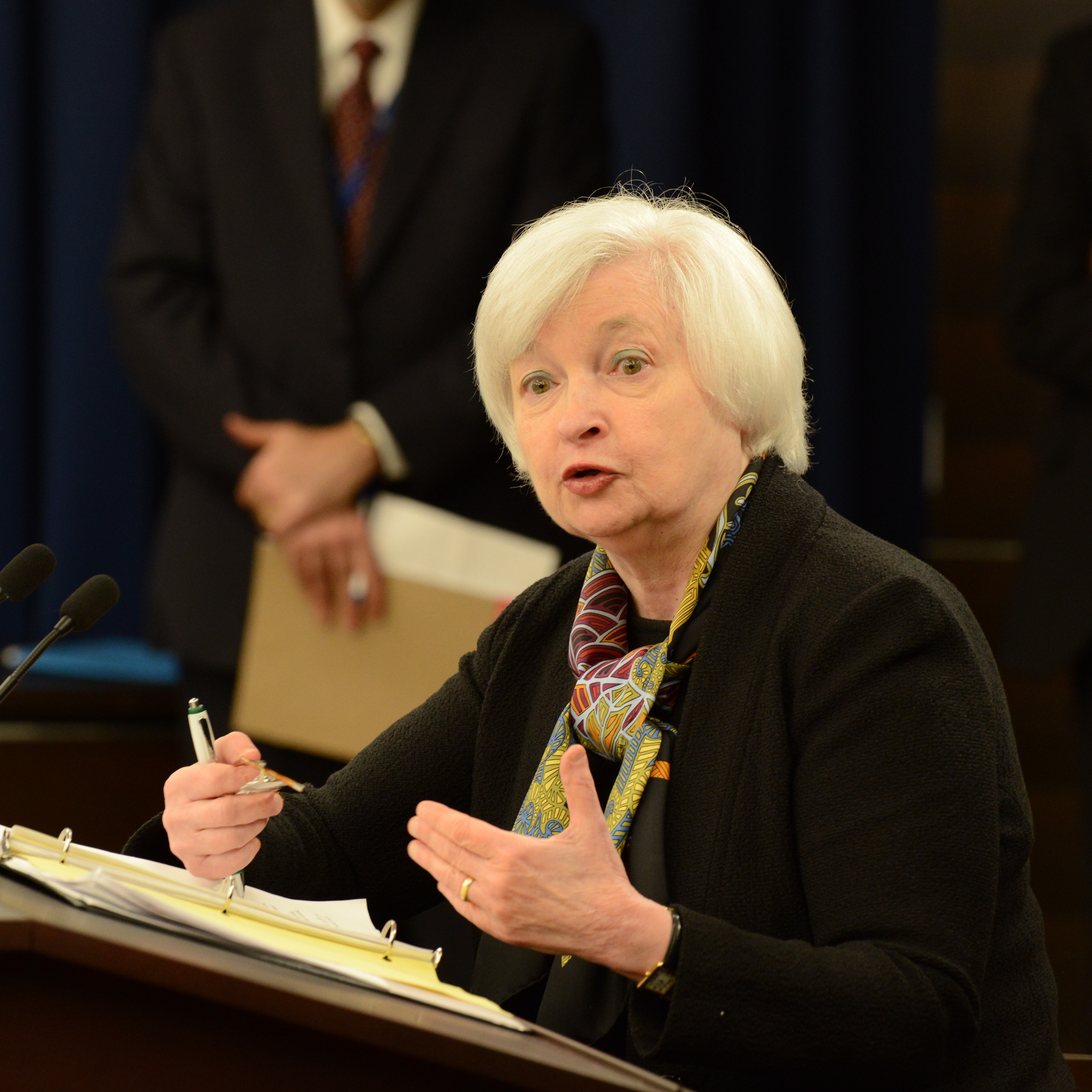
When Yellen gave her speech titled “The Outlook, Uncertainty and Monetary Policy” at the Economic Club of New York this week, the verbiage was full of caution and tempering of rate hike expectations. In fact, the caution given was in direct conflict with some of the more hawkish and less dovish Fed president comments from the prior week. Suddenly the markets felt like they were told “we just can’t raise rates anywhere as fast as we wanted to.”
Before you think of a conspiracy again, the reality is that this Employment Situation Report from the U.S. Labor Department would not have been formally been ready on Monday or Tuesday. Again, what Yellen likely would have had access to is if the trends of the report were looking very strong or normal, or whether they looked weak.
[nativounit]
Would Yellen have gone out of her way to topple the hawkish comments without knowing if Friday’s payrolls report was going to be a blowout to the upside? Anything is possible. It just seems unlikely if you think about the risks that a Fed chair would be taking by telegraphing such dovish and cautious statements if the market was going to seriously reverse itself. Literally, billions of dollars trade hands based on many Fed president comments throughout each month.
It was this comment inside of Yellen’s speech this week that should have been interpreted as the lynchpin:
I will explain why the Committee anticipates that only gradual increases in the federal funds rate are likely to be warranted in coming years.
Here are some other issues about Yellen’s speech:
- The word “gradual” was used 10 times, if you count the supporting notes.
- “Moderate” was said twice, “modest” was said five times and “data dependent” was said twice.
- “Inflation” was referred to about 50 times in her speech.
- “Labor” was said eight times and “unemployment” was said three times.
There may have been a hint that would support that Yellen meant the opposite — maybe that the jobs report would be just fine. This was one statement in her speech that might point to Yellen indicating a potentially strong payrolls report:
The labor market has added an average of almost 230,000 jobs a month over the past three months. In addition, the unemployment rate has edged down further, more people are joining the workforce as the prospects for finding jobs have improved, and the employment-to-population ratio has increased by almost 1/2 percentage point.
Another issue that took place this week was the Atlanta Federal Reserve’s own gross domestic product (GDP) forecasting model was revised lower. That was followed by economists largely cutting first-quarter GDP estimates.
24/7 Wall St. does not want to suggest that Yellen tipped her hand that there will be a bad jobs number on Friday’s payrolls data. What does seem logical though, coupled with the ADP report coming right in line with expectations, is that expecting a very strong jobs report might be too optimistic. Then again, maybe Yellen just wanted to see the stock market close up for the quarter.
For Friday’s employment situation report, Bloomberg has the consensus estimates for March as follows:
- 210,000 nonfarm payrolls (242K in Feb.)
- 200,000 private sector payrolls (230K in Feb.)
- 4.9% unemployment (flat)








 Top Gaining Stocks
 Top Losing Stocks