


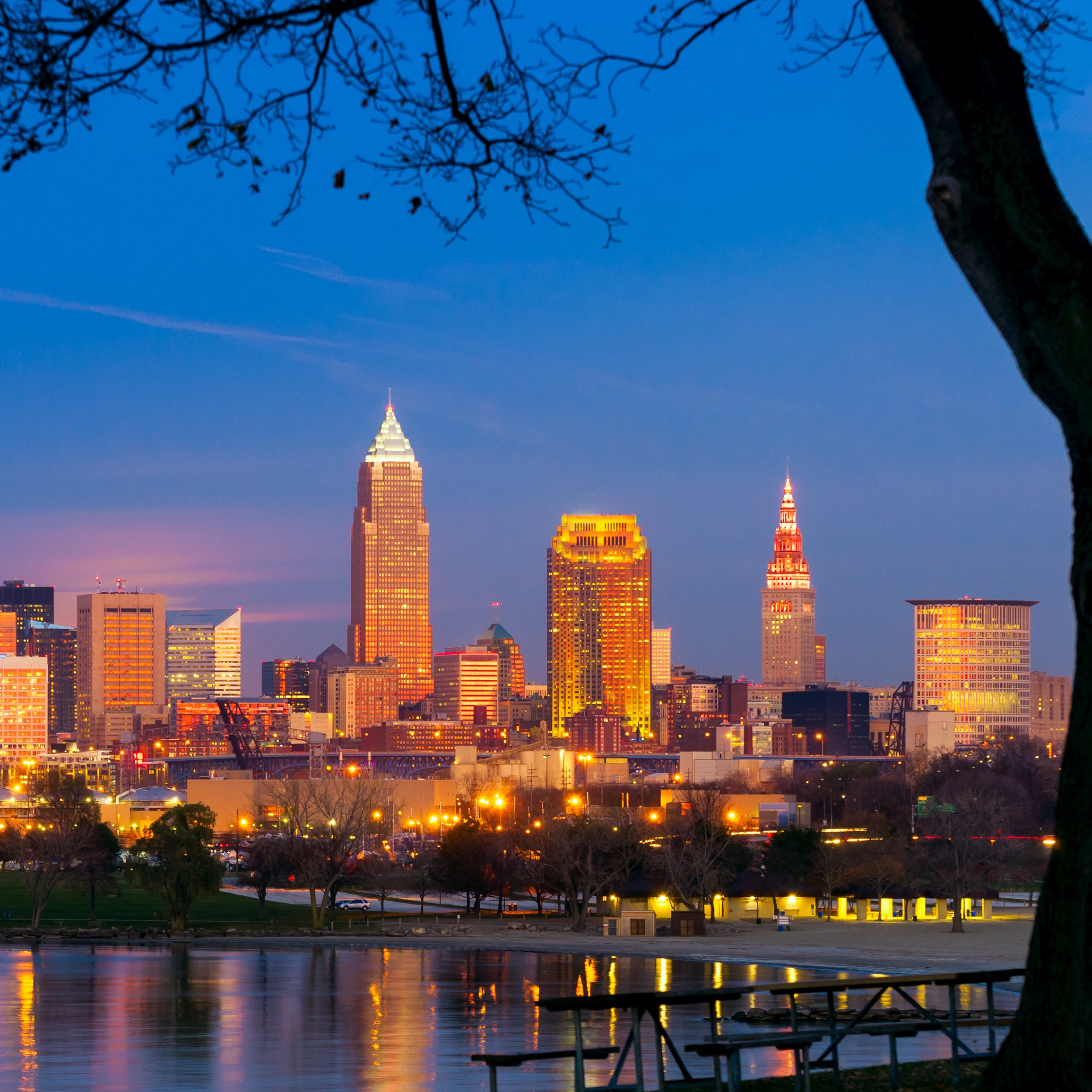
[cnxvideo id=”655222″ placement=”ros”]Cleveland, where the Republic National Convention will be held, has a number of deep problems. Among them is that it is one of the worst cities to live in, and also it is one of the most segregated.
According to 24/7 Wall St., the city is ninth among “The 50 Worst Cities to Live In.”
In the article, 24/7 Wall St. authors wrote:
To determine America’s worst cities to live in, 24/7 Wall St. reviewed data on the 550 U.S. cities with populations of 65,000 or more as measured by the U.S. Census Bureau. Based on a range of variables, including crime rates, employment growth, access to restaurants and attractions, educational attainment, and housing affordability, 24/7 Wall St. identified America’s 50 worst cities to live.
For Cleveland specifically:
Cleveland, Ohio
> Population: 389,524
> Median home value: $65,900
> Poverty rate: 39.2%
> Pct. with at least a bachelor’s degree: 15.1%The typical Cleveland household earns only $24,701 a year, the second lowest median household income of any U.S. city. The city’s 39.2% poverty rate is the fifth highest of any U.S. city. Likely as a result of poor economic conditions, the city’s population has declined by 9.7% in the last five years alone. The negative population growth is not doing much to help property values in Cleveland. The median home value in the city of $65,900 is worth less than in all but three other U.S. cities.
As in many cities where residents are suffering economically, crime is a major problem in Cleveland. Violent crimes, a category that includes murder and assault, are roughly 3.7 times more common in Cleveland per capita than they are across the country as a whole.
Check out the balance of “The 50 Worst Cities to Live In” and its methodology.
Cleveland’s problem with segregation is worse. According to the 24/7 Wall St. study titled “America’s Most Segregated Cities,” the Ohio city ranked first:
To identify the most segregated neighborhoods in America, 24/7 Wall St. constructed an index based on the share of a metro area’s population living in racially homogeneous zip codes — areas where more than 80% of the population is of a single race or ethnicity. In metro areas with complete integration, every zip code has the same racial/ethnic distribution as the area’s whole population. In areas with the worst segregation, no one lives in a zip code with anyone of a different race/ethnicity.
The specifics for Cleveland:
Cleveland-Elyria, Ohio
> Pct. of population living in segregated areas: 55.1%
> Black poverty rate: 33.6%
> White poverty rate: 9.3%
> Black unemployment rate: 20.2%
> White unemployment rate: 5.4%With more than 55% of its population living in homogeneous zip codes, the Cleveland metro area is the most segregated urban area in the country. Of the roughly 100 zip codes in the area, 63 are predominantly white and are home to nearly 70% of Cleveland’s white population. The metro area’s black population is similarly segregated, with 30.9% concentrated in just six zip codes.
Segregation by income is also a problem in Cleveland. In February, the Martin Prosperity Institute at the University of Toronto ranked the Cleveland metro area number one in income segregation among large metro areas. Median household income in just one of the primarily black zip codes in the area is greater than $24,000. By contrast, median income among white households in the area is nearly $57,000. Low incomes may be the result of a sluggish labor market. In 2013, 20.2% of black Cleveland residents were unemployed, the highest rate among large metro areas and nearly four times the white unemployment rate of 5.4%.
See the remainder of 24/7 Wall St.’s “America’s Most Segregated Cities” and its methodology.
Finally, Cleveland was also listed as one of the most miserable cities in which to live in the 24/7 Wall St. article, “The Happiest (and Most Miserable) Cities in America,” in which it ranked 22nd:
24/7 Wall St. reviewed polling company Gallup’s 2015 Healthways Well-Being Index, which measures the well-being of Americans in each metropolitan statistical area based on interviews conducted over the last two years. The index incorporates a range of metrics grouped into five essential categories: the purpose, social, financial, community, and physical elements of well-being. We examined the metro areas with the highest and lowest scores alongside a range of other social and economic measures.
As for Cleveland:
Cleveland-Elyria, Ohio
> Poverty rate: 15.9%
> 2016 unemployment rate: 4.9%
> Adult obesity rate: 28.5%
> Violent crimes per 100,000: N/AEconomic hardship is relatively common in Cleveland as 15.3% of metro area residents receive food stamps, a larger share than the 13.2% of Americans. Additionally, 24.2% of children in the area live below the poverty line, a larger share than the 21.7% of American children. A relatively unhappy place, people are leaving Cleveland faster than they are arriving. Over the past five years, the Cleveland metro area lost a net of 27,711 residents to migration alone, the third largest decline of any city in the country.
For the rest of “The Happiest (and Most Miserable) Cities in America” and the methodology, be sure to see the original article.
The Republican National Convention may be one of the best things that have happened to Cleveland in a long time, if it is relatively orderly. However, in just over a week, the convention will be over.










 Top Gaining Stocks
 Top Losing Stocks