



Quantitative easing is here to stay. Sort of. The U.S. Federal Reserve’s FOMC decision on interest rates is due at 2:00 p.m. Eastern Time on Wednesday, but the big quantitative easing news came from overseas. The Bank of Japan announced a policy overhaul in its latest efforts to stimulate the economy.
24/7 Wall St. already outlined close to a dozen reasons the U.S. stock and bond markets are not expecting a rate hike on Wednesday. Perhaps the real news is the Bank of Japan’s own efforts.
As expected, the Bank of Japan kept interest rates flat in its announcement. Its vote was seven to two, and it kept the official deposit rate unchanged at −0.1%.
What matters is that the Bank of Japan issued a series of changes to how it will approach stimulative efforts. Japan is seeking higher prices and higher growth — targets that have remained elusive in Japan and elsewhere.
[nativounit]
The Bank of Japan will seek yield curve control as a focal part of its policy framework. It plans to buy 10-year maturities in Japanese issued government bonds (JGBs) in an effort to keep the yields close to 0.00% and in an aim to keep short-term interest rates negative.
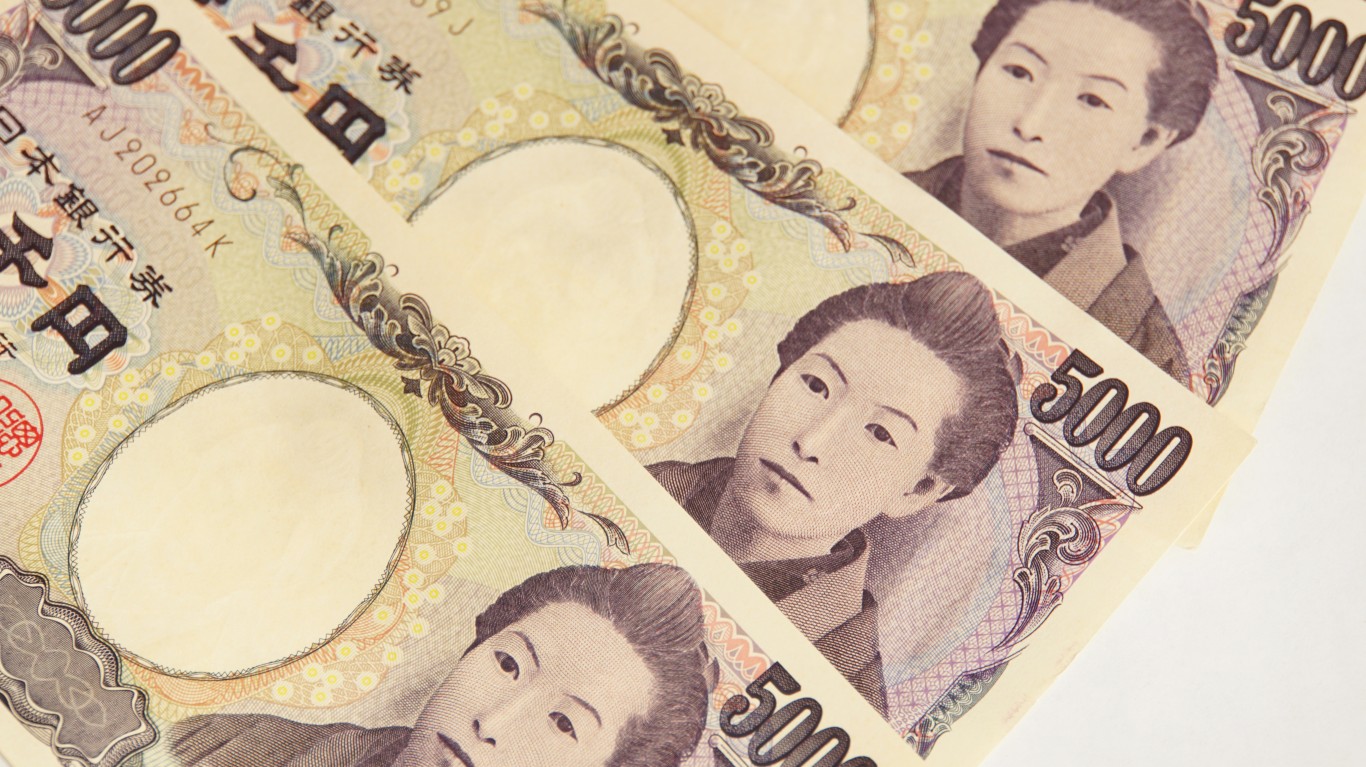
It will continue making Japanese government bond purchases roughly at the same 80 trillion yen level. That is roughly $787 billion in dollar terms. It said:
Specific purchase size per auction will be decided based on the latest amount of offer for each bond type and residual maturity. However, aiming to achieve the target level of a long-term interest rate specified by the guideline for market operations, the Bank may change the amount of offer, taking account of market conditions… Aiming to achieve the target level of a long-term interest rate specified by the guideline, the Bank may set a lower bound to purchasing yields, taking account of market conditions.
Bonds to be purchased shall be JGBs with coupons (2-year bonds, 5-year bonds, 10-year bonds, 20-year bonds, 30-year bonds, and 40-year bonds). Specifically, among these bonds, the Bank will purchase mainly on-the-run issues for each maturity segment. … Depending on market conditions, the Bank may set the purchase size per auction to a fixed amount or to an unlimited amount.
One issue that stands out is that the Bank of Japan appears to be ending its target of monetary expansion until prices exceed 2% growth.
[wallst_email_signup]








 Top Gaining Stocks
 Top Losing Stocks