


By David Callaway, Callaway Climate Insights
In the early days of environmental, social and governance (ESG) reporting, just getting companies to disclose environmental information can be a win. In that context, climate researcher CDP Worldwide’s release of its annual rankings Tuesday, showing a 37% increase in international companies reporting — some 13,000, was a success.
But everything goes downhill from there the deeper you get into the report. In its three primary categories, climate, forests and water security, only 272 of the companies achieved an A rating in at least one, down from 313 last year. Only 14 had top ratings in all three, among them public companies Unilever Plc (UL) and Philip Morris International (MO).
Wait? Philip Morris? The list is as unusual for who is on as it is for who is off. Only a few financial firms, such as UBS, BNY Mellon and Moody’s. Microsoft (MSFT) and HP made the list from tech, but none of the loudest ESG players in the space. And in autos, Ford (F) and GM (GM) both made it, but no Tesla (TSLA).
In short, it seems to be a list of the biggest global manufacturers who took the time to make sure they ticked the boxes. Still, you have to begin somewhere, and CDP deserves credit for pioneering what will certainly be a robust business.
But is there any correlation between ESG grades and stock performance? We ran the numbers on the top 14. Of them, HP (HPQ), up 50% year-to-date, and International Flavors and Fragrances (IFF), up 33.7%, were the big winners for investors this year. Perhaps not for their climate policies, but it’s a start.
More insights below. . . .
Book review: Back from the dead. How nature rebuilds the worst we can dish it.
. . . . Walk through a war zone, as former foreign correspondent Jack Hamilton has, and you can see the damage mankind can do to nature. But in a new book by Cal Flyn, called Islands of Abandonment: Nature Rebounding in the Post-Human Landscape, Hamilton finds example after example of nature adapting to the worst kinds of pollution and destruction that we can throw at it. From Chernobyl and Verdun to New Jersey, where they used to make Agent Orange, Flyn trekked around the world documenting the remarkable ways the environment comes back after the pollution stops. And gives a tough assessment of where climate change is taking us. . . .
Tuesday’s subscriber insights: Private power companies step in to help cure ‘range anxiety’
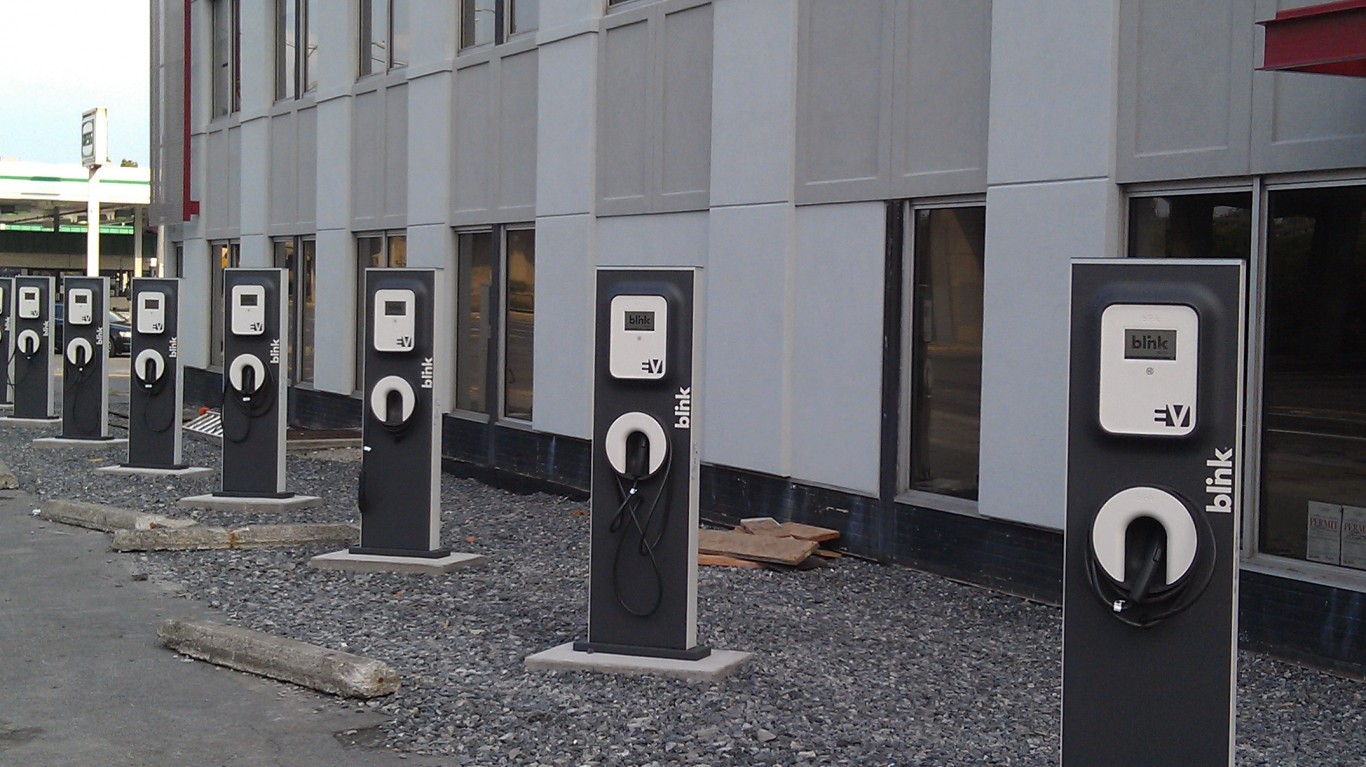
. . . . Just weeks after President Biden’s infrastructure bill passed with $7.5 billion targeted to building charging stations across the country for electric vehicles, a coalition of some 50 electricity companies has proposed a deal to build an early network. Edison Electric Institute said the group hopes to have them up and running by the end of 2023, that they would all be rapid charging, and yes, that they hope to get some of that federal money. Read more here. . . .
. . . . Electric vehicle fans waiting for Toyota (TM) to decide whether to stay with its popular hybrid models or jump into the EV pool full on got a signal this week when the world’s largest automaker said it would build a $1.3 billion battery plant in Greensboro, N.C., capable of delivering enough batteries for 200,000 vehicles. Where does that put it in the U.S. EV race? Read more here. . . .
. . . . Electric vehicle charging stations aren’t the only ones benefiting from the Biden infrastructure plan. A little-discussed part of the plan allows for more than $4 billion in tax subsidies for e-bikes, the fastest-growing part of the electric vehicle revolution. Pedestrians beware. Read more here. . . .
. . . . Lots being made of United Airlines’ (UAL) first flight last week under sustainable aviation fuel, with several others in the works. But lost in the hype is that SAF still pollutes. A British project to develop liquid hydrogen for flights might have more promise. Read more here. . . .
Editor’s picks: Hawaiian blizzard, Fashion and deforestation, and smoke gets in your eyes
Ugh. Fashion brands may contribute to Amazon deforestation
Several large fashion brands have been identified as possible contributors to deforestation in the Amazon rainforest because of complex supply chain issues, according to new research reported in The Guardian. The story points to the brands’ connections to tanneries and other companies involved in the production of leather. The research report “analyzed nearly 500,000 rows of customs data and found that brands such as Coach, LVMH, Prada, H&M, Zara, Adidas, Nike, New Balance, Teva, UGG and Fendi have multiple connections to an industry that props up Amazon deforestation.” The Guardian notes that more than 50 brands have multiple supply-chain links to the largest Brazilian leather exporter, JBS, which is known to engage in Amazon deforestation. “JBS recently made a commitment to achieve zero deforestation across its global supply chain by 2035, something environmental groups have called insufficient,” according to the report.
Wildfires in 2021 caused climate havoc around the world
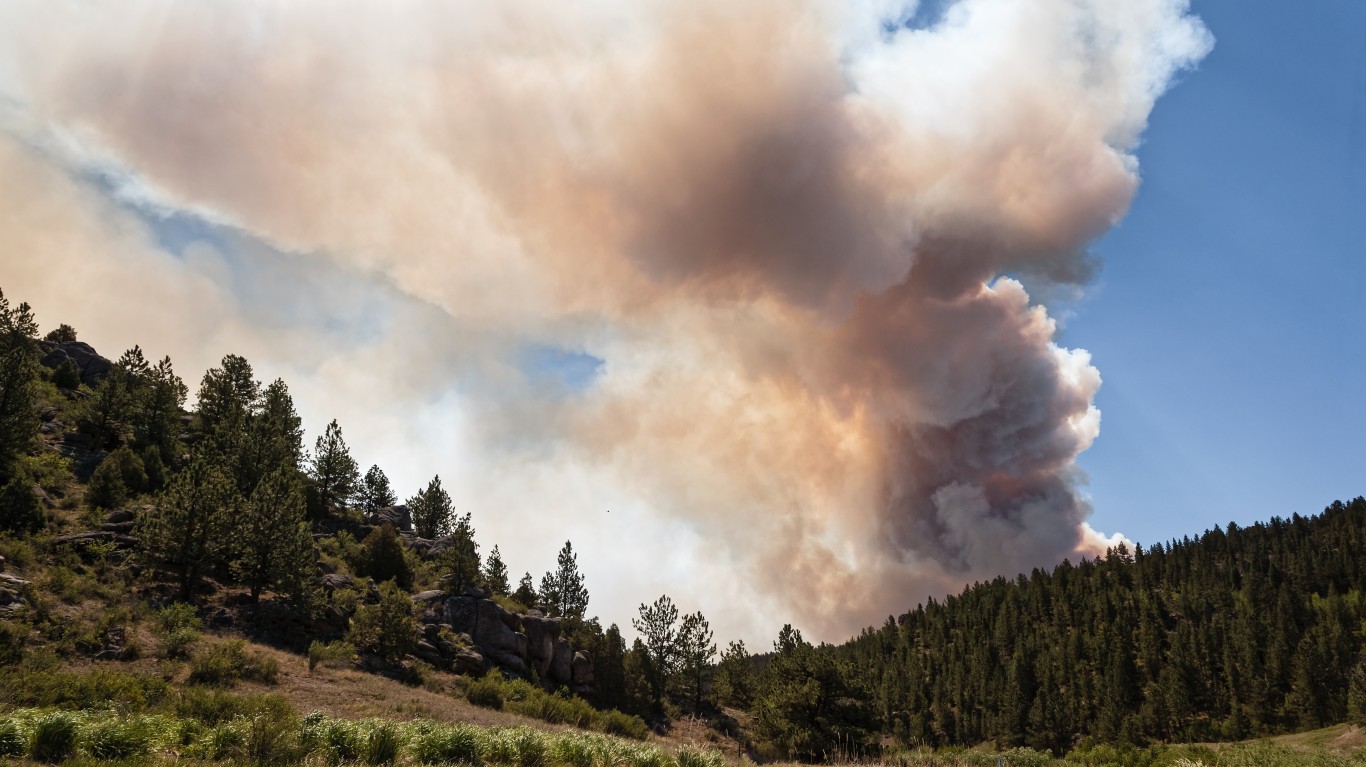
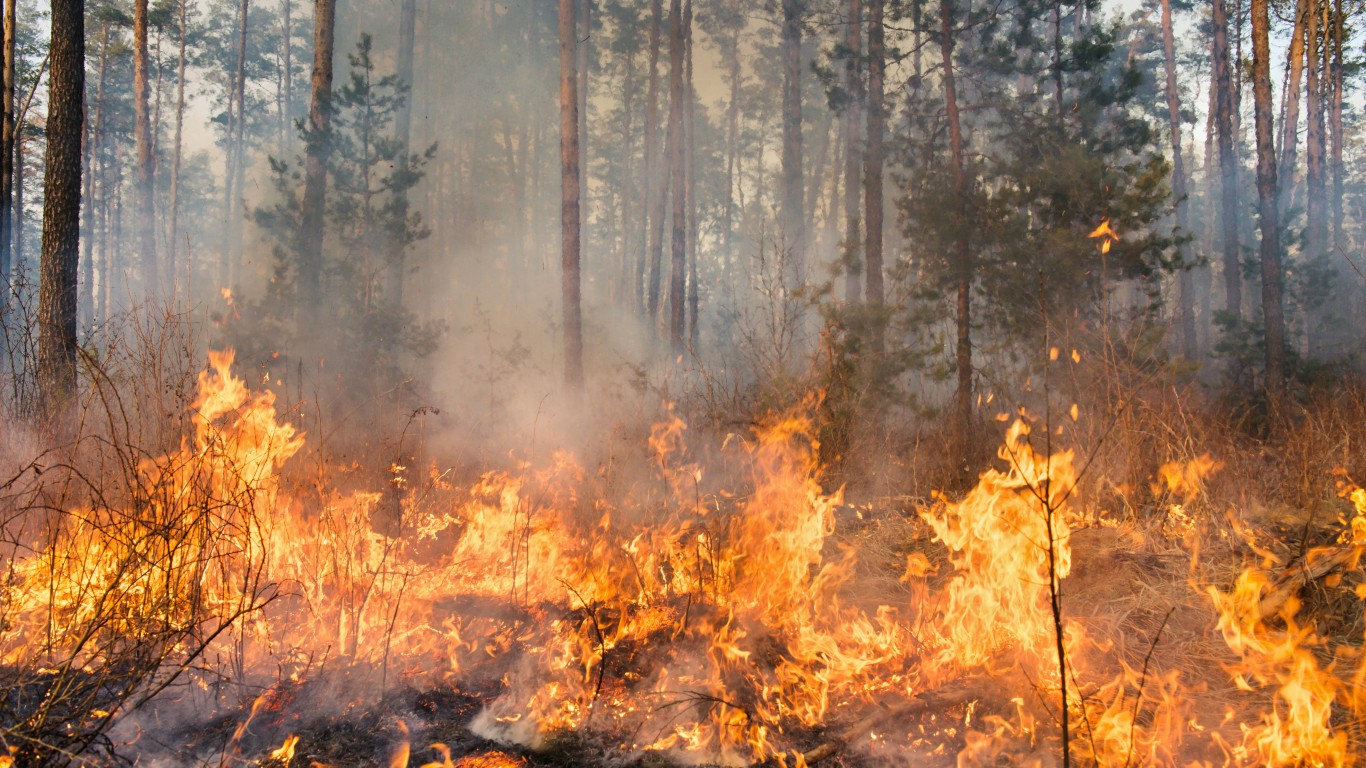
This year’s devastating wildfire seasons, on a global basis, produced an estimated total of 1760 megatonnes of carbon emissions, which is the equivalent of 6450 megatonnes of CO2, according to a report from the EU’s Copernicus Atmosphere Monitoring Service (CAMS). CAMS says: “To put this figure into some perspective, total CO2 emissions from fossil fuel in the EU in 2020 amounted to 2600 megatonnes. In other words, wildfires this year generated 148% more than total EU fossil fuel emissions in 2020. This year’s wildfire activity in some regions around the world was at a much larger scale than previously seen in the CAMS dataset. As a result, several regions around the globe saw some of their highest estimated emissions in 2021, based on the CAMS 19-year Global Fire Assimilation System (GFAS) dataset, going back to 2003.









 Top Gaining Stocks
 Top Losing Stocks