


Inflation, so tame for so long across much of the world, has begun to accelerate at a quick pace. Geopolitical problems get much of the blame. In particular, the Russian invasion of Ukraine has driven up oil prices as Europe has started to block the flow of oil and gas from the invader. The continent usually gets much of its energy from Russia. Ukraine and Russia provide a significant percentage of the world’s grain too, another reason for the jump.
The rise in inflation was already underway in several countries. Supply chain problems, brought on in part by the COVID-19 pandemic, have driven down the supply of widely used items, while demand has stayed the same or even risen.
A few countries have fought inflation for years. Among the most troubled is Venezuela. Impoverished and hurt by sanctions, inflation there has been in the double digits for the better part of the past five years.
To determine the country with the least affordable groceries, 24/7 Wall St. reviewed data on the cost of groceries from Numbeo and average earnings from the Organisation for Economic Co-operation and Development. OECD countries were ranked based on the estimated cost of a month worth of groceries as a percentage of monthly earnings. Our methodology, including the basket of foods used, is based on James Andrews’ Weekly Shop Index from February 2022. The basket includes such items as milk, cheese, eggs, fruit, vegetables, bread, rice and meat.
[nativounit]
People in lower-income countries often spend a higher percentage of their earnings on basics such as foodstuffs and fuel. People in richer countries have more disposable income and may not feel the pain of inflation quite as much. Countries in the OECD generally fall into the latter category. Membership is dominated by the countries of Europe and North America, with only one member in South America and none in Africa.
Mexico has the least affordable groceries. Though it has the fifth cheapest basket of groceries, at about $63, it is also the country with the lowest earnings on our list at $1,352. Residents of Mexico, therefore, spend 4.65% of their earnings on groceries, the most of the 35 countries considered.
The United States ranks number five in affordability. Though it has the ninth highest price of the basket of groceries at $121, the United States also has the highest monthly earnings of any country. Americans spend just over 2% of their earnings on groceries, the fifth least of countries considered.
Here is the data on Mexico:
- Groceries cost as percentage of earnings: 4.65%
- Estimated monthly groceries cost: $62.87
- Average monthly earnings: $1,352
- Total population: 128.93 million
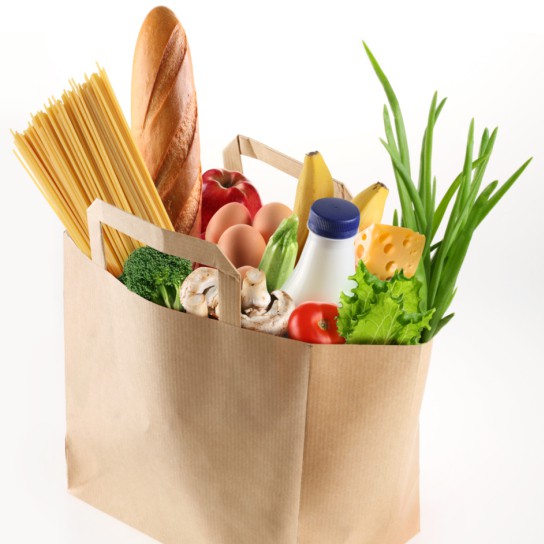
Estimated monthly grocery costs were calculated by multiplying the cost of a weekly basket of groceries by 4.345, the average number of weeks in a month. The weekly basket of groceries contained a liter of regular milk, a dozen eggs, 350 grams of cheese, 500 grams of apples, 600 grams of bananas, 600 grams of oranges, 300 grams of tomatoes, a kilogram of onions, a head of lettuce, a 500-gram loaf of white bread, 250 grams of white rice, a kilogram of potatoes, 300 grams of chicken filets and 100 grams of beef rounds.
Average monthly earnings were calculated using data on average annual earnings in 2020 from the OECD. Total population figures in 2020 were from the World Bank.
[wallst_email_signup]
Click here to see which countries have the most and least affordable groceries.









 Top Gaining Stocks
 Top Losing Stocks