


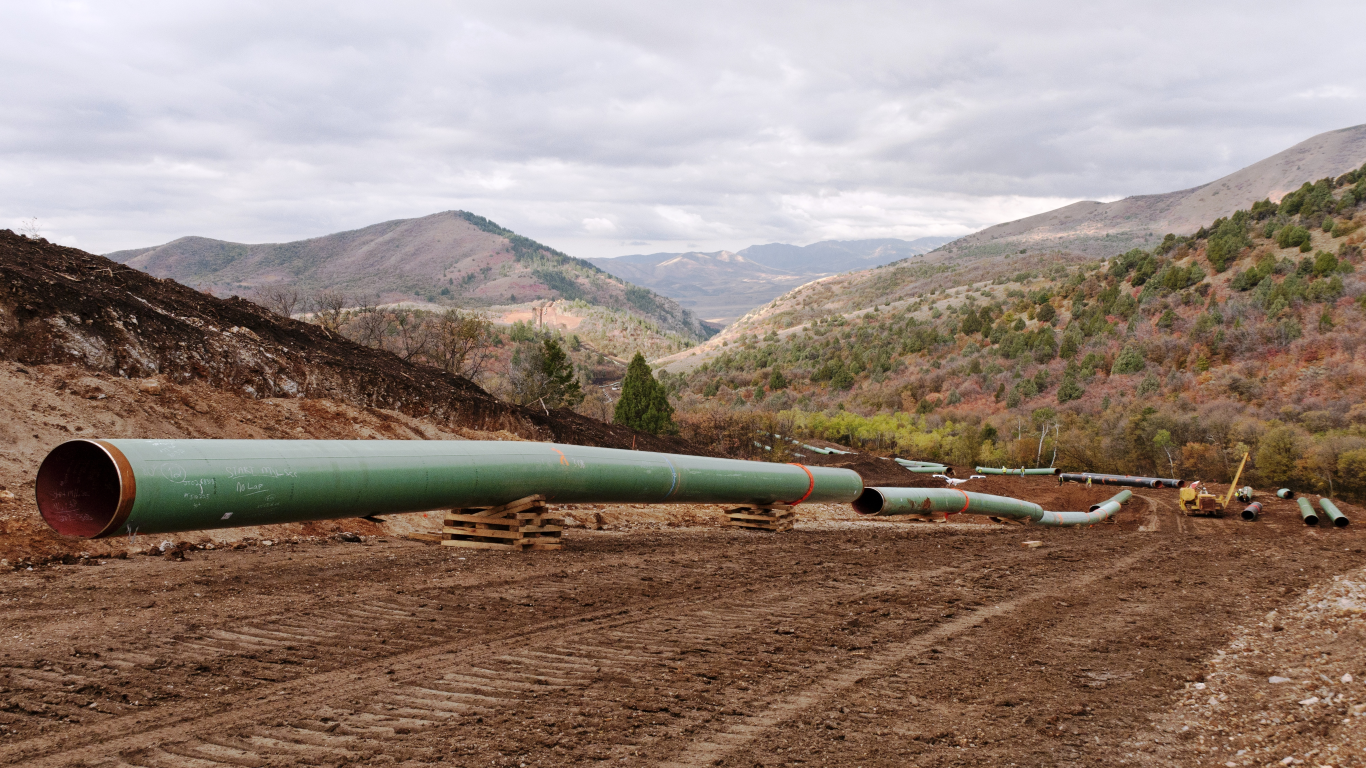
 The so-called East Siberia-Pacific Ocean (ESPO) crude oil pipeline from Russian oilfields in western Siberia will be more than 3,000 miles long when it is completed. Part of the project to transport Russian crude to new markets in China, Japan, and Korea is a spur from the ESPO pipeline into China, the first Russian pipeline to carry crude oil anywhere except domestically and to Europe.
The spur cost China $25 billion in loans to Russia’s state-owned oil and pipeline companies, Rosneft and Transneft. Transneft will get $10 billion at 6% interest to build the 40-mile spur, which will transport about 300,000 barrels of crude per day to China. China receives the oil for 20 years from Rosneft. Construction of the spur to China is expected begin this month, and the pipeline will be fully operational by January 2011.
The pipeline is important to China because it cuts the amount of oil that needs to be transported by ship, mostly from the Middle East and Africa, through the pirate-infested waters of the Indian Ocean and the Straits of Malacca. An oil pipeline carrying up to 120,000 barrels/day from Kazakhstan to western China has been in operation since 2007.
Strategically, the ESPO pipeline is a great coup for China and it was willing to pay handsomely for it. Russia, which needs oil revenue, was willing to pay with oil in order to diversify its markets.
This won’t be the only imported oil for China and it certainly won’t take China off the global stage as a buyer of petroleum. But for a country with over 1.3 billion people, it should alleviate pressure on its supplies and its ability to meet demand.
Paul Ausick
April 17, 2009







 Top Gaining Stocks
 Top Losing Stocks