


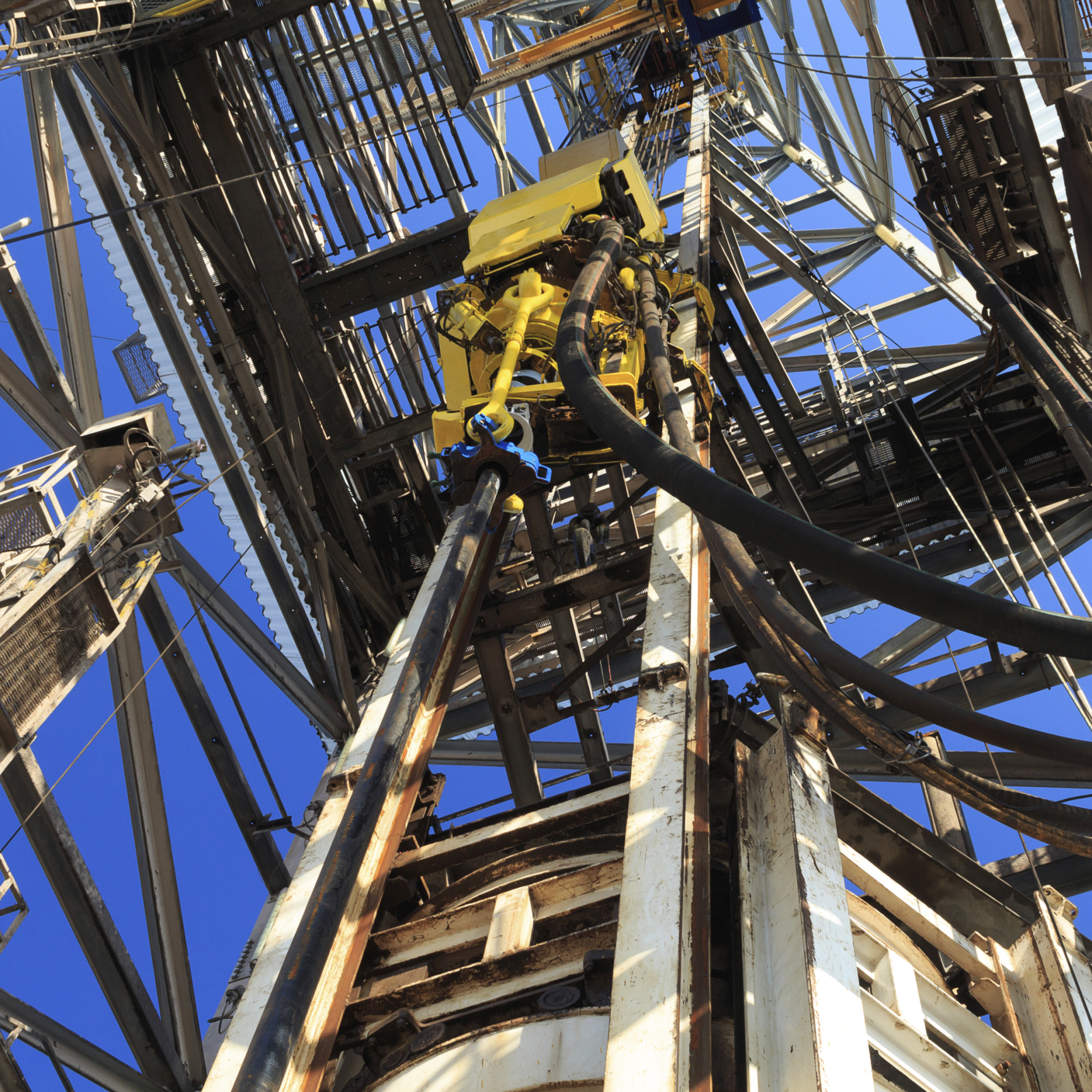
If there was ever a topic for heated discussion, it’s the deal the United States has made with Iran that essentially lets the country out of the penalty box and back on to the world stage. At 24/7 Wall St. we leave the political discussion to others and focus on how blockbuster deals like this can affect companies in which investors hold shares. Needless to say, after years offline, the Iranians will be looking to the west for help in restarting their oil industry.
In a new research report from UBS and its highly regarded oil services analyst, Angie Sedita, she makes the case that while Iran has far better overall infrastructure and wants to retake its position as the number two Middle East oil producer behind Saudi Arabia, it has issues from its years out of the game. She also points out that with limited oil services technology, and capital that is only slowly creeping back in, it will be a challenge for Iran to ramp up production quickly.
There are some big positives for Iran in addition to the overall better infrastructure. The populace is well educated, and the risks of having to deal with ISIS is far less of a concern, as compared to the situation in Iraq. Plus corruption at government levels is far lower, and the contract structure for vendors is expected to be “risk adjusted” with a fee multiple for higher risk fields as well as for beating production goals.
So who will benefit? The UBS team thinks two industry leaders will be the main players in what could prove to be a volatile, but growth-oriented landscape. It’s important to note that U.S. oil and oil services companies are still prohibited from entering Iran. Only European and Asian companies currently can go there.
[recirclink id=323466]
Halliburton
This stock is still down over 30% since last May and could be offering investors a very tempting entry price point. Halliburton Co. (NYSE: HAL) now seems to be in the final stretch of getting the merger with Baker Hughes completed, and the trick is to find the right buyers for the businesses that are required for the divestitures required by the U.S. Department of Justice and European Union regulators.
The oil field giant announced last year a $1 billion investment to develop huge potential oil fields in Ecuador, and it has entered into a long-time deal with Petroamazonas, an Ecuador-based company involved in the exploration and development of the country’s oil reserves.
The UBS team thinks the company will be very interested in entering the region when the Iranian sanctions are lifted. In fact, the analysts point out that company executives have expressed an interesting in entering the region, and the industry giant has the capacity and wherewith all to make an immediate impact.
With the price of oil being absolutely demolished over the past year, this top oil service company is a great stock to buy on sale.
Halliburton investors are paid a 2% dividend. The UBS price target for the stock is $45, and the Thomson/First Call consensus target is set at $40.13. The shares closed most recently at $36.02.
Schlumberger
This is hardly a company that many investors would view as a value stock, but given the debacle in the energy sector over the past year, the decline in share prices has pushed it almost to value levels. Schlumberger Ltd. (NYSE: SLB) remains the largest oilfield services company in the world for now, with far-reaching operations all around the globe.
The company could be poised for years of solid growth despite the huge turndown in oil pricing. Top Wall Street analysts think the company will continue to drive margins on execution, technologies and efficiencies. Russia, Saudi Arabia, Iraq and China are expected by some to be the strongest markets, if geopolitical concerns remain somewhat in check.
The company announced last August it would buy oil field services giant Cameron International in a deal expected to cost about $12.7 billion in cash and stock. Wall Street analysts note what they term the company’s “drive to disrupt the status quo,” which includes transformation initiatives like the gigantic purchase of Cameron. Trading at a low 6.6 times the firm’s normalized EBITDA estimates, the stock looks cheap.
The company reported solid fourth-quarter earnings, although revenues came in slightly under Wall Street estimates. The company also announced a new share repurchase program of $10 billion was approved, as Schlumberger continues to return capital to shareholders.
The UBS report notes the company was operating in the region before with exceptionally high margins. It also notes that some reports indicated the company may be looking to buy back its former Iranian unit. Schlumberger sold Well Services of Iran to Nima Energy, a Hong Kong-based holding company, when it left Iran, and the sales-agreement reportedly included a provision that could give the oil services giant “first right to buy back the company when sanctions were lifted,” per Dow Jones news.
Schlumberger investors are paid a solid 2.69% dividend. UBS has an $87 price objective on the stock, and the consensus target is lower at $82.22. The shares closed Wednesday at $74.41.
[recirclink id=323265]
The bottom line is that despite some reservations, at least for now, Iran is resuming the process of getting back into the oil export game. It should come as little surprise to investors that the sector leaders would be the ones that may benefit. They have the infrastructure, manpower, logistics capabilities, balance sheets and, most importantly, the expertise to take on the job.








 Top Gaining Stocks
 Top Losing Stocks