Gas Prices Slide Lower, Threat of $4 Disappears

Photo of Douglas A. McIntyre
By Douglas A. McIntyre Published
This post may contain links from our sponsors and affiliates, and Flywheel Publishing may receive compensation for actions taken through them.

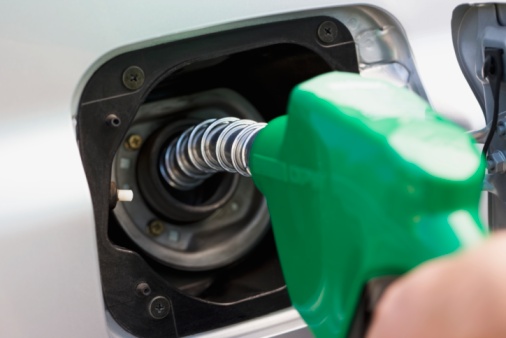
Gasoline prices have started to drop in earnest, as many economists suggested. Nationwide, after peaking at $3.66 two weeks ago, the average price of a gallon of regular has dipped to $3.62.

According to GasBuddy, the drop-off has been significant in many of the states with the highest prices. They have fallen recently in California, Connecticut, Ohio and Pennsylvania. And the price increases have flattened in New York and Illinois.

While most experts suggest the drop will continue until Memorial Day, crude oil still trades above $100. And it would not take much more instability in Ukraine, Nigeria or several other hot spots in the Middle East or Central Africa to press that price higher.

READ MORE: Gas Prices Move Toward $4

However, in the meantime, as prices fall, their threat to the American economy recedes. Gas prices at $4 have often been considered a psychological barrier that causes consumers to pull back because their discretionary income disappears or is threatened. The math is not that simple. Gas does not have to get to $4 to damage consumer spending among low-paid and some middle-class Americans. But, on balance, the drop will free up money households might have spent on fuel, and perhaps allowing this money to flow into the consumer economy.

READ MORE: Can Refineries Help Lower Gas Prices?

While gross domestic product (GDP) and employment improvements have been robust, there is still a sense that the recovery has not taken hold entirely. Minorities, the young and the poorly educated continue to have trouble finding jobs. The housing recovery has stalled in many regions. Falling gasoline prices may offset some of these threats, although the threats have become persistent.

Gas may drop as low as $3.50 this summer. The price was $3.43 in early March. With GDP increases still hovering below 3%, the help would be welcome.


Photo of Douglas A. McIntyre
About the Author Douglas A. McIntyre →

Douglas A. McIntyre is the co-founder, chief executive officer and editor in chief of 24/7 Wall St. and 24/7 Tempo. He has held these jobs since 2006.

McIntyre has written thousands of articles for 24/7 Wall St. He is an expert on corporate finance, the automotive industry, media companies and international finance. He has edited articles on national demographics, sports, personal income and travel.

His work has been quoted or mentioned in The New York Times, The Wall Street Journal, Los Angeles Times, The Washington Post, NBC News, Time, The New Yorker, HuffPost USA Today, Business Insider, Yahoo, AOL, MarketWatch, The Atlantic, Bloomberg, New York Post, Chicago Tribune, Forbes, The Guardian and many other major publications. McIntyre has been a guest on CNBC, the BBC and television and radio stations across the country.

A magna cum laude graduate of Harvard College, McIntyre also was president of The Harvard Advocate. Founded in 1866, the Advocate is the oldest college publication in the United States.

TheStreet.com, Comps.com and Edgar Online are some of the public companies for which McIntyre served on the board of directors. He was a Vicinity Corporation board member when the company was sold to Microsoft in 2002. He served on the audit committees of some of these companies.

McIntyre has been the CEO of FutureSource, a provider of trading terminals and news to commodities and futures traders. He was president of Switchboard, the online phone directory company. He served as chairman and CEO of On2 Technologies, the video compression company that provided video compression software for Adobe’s Flash. Google bought On2 in 2009.

Featured Reads

Our top personal finance-related articles today. Your wallet will thank you later.

Continue Reading

Top Gaining Stocks

CBOE Vol: 1,568,143
PSKY Vol: 12,285,993
STX Vol: 7,378,346
ORCL Vol: 26,317,675
DDOG Vol: 6,247,779

Top Losing Stocks

LKQ
LKQ Vol: 4,367,433
CLX Vol: 13,260,523
SYK Vol: 4,519,455
MHK Vol: 1,859,865
AMGN Vol: 3,818,618


