


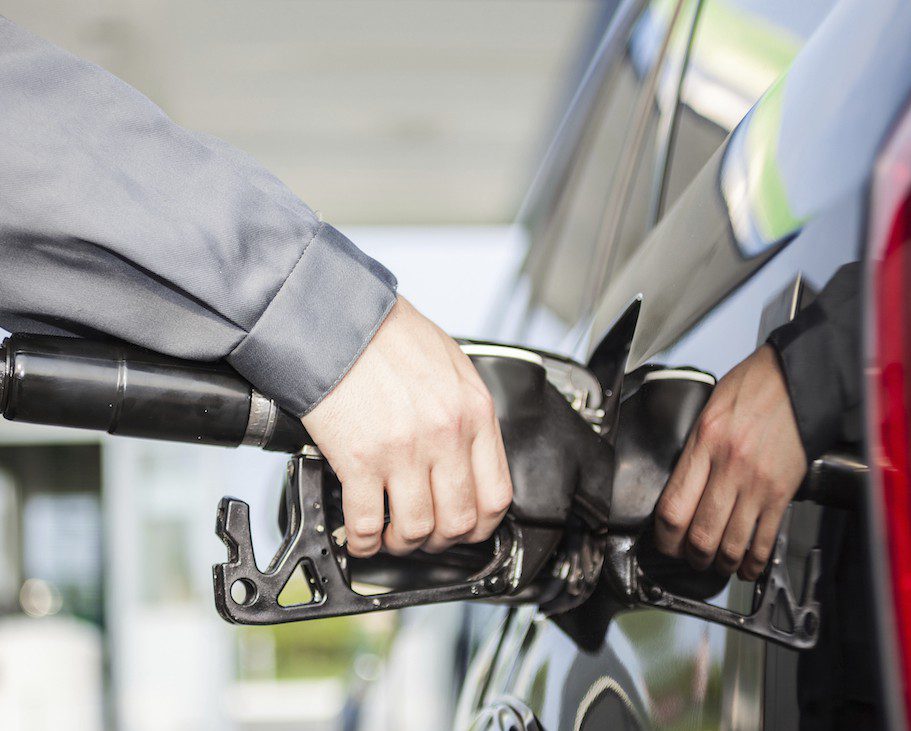
The average price across the United States for a gallon of gasoline last week rose 6.4 cents to $1.817 as of Monday morning. Gas prices are now at their highest level since late January, according to GasBuddy.
Only three states experienced price declines last week: Alaska (7.1 cents per gallon), Hawaii (1.4 cents) and Connecticut (0.001 cent). A thousandth of a cent?
Prices increased the most in Michigan (14.1 cents), Colorado (13.1 cents), West Virginia (12 cents), Kansas (11.3 cents) and North Dakota (10.5 cents).
GasBuddy noted:
In a sign of rapidly disappearing cheap gas, the nation today sees 93.1% of gas stations selling over $1.50 per gallon, a spike from the 76.7% of stations selling over $1.50 a month ago, and nearly 8% higher than the 85.2% of stations selling over $1.50 a week ago.
[nativounit]
The states with the highest pump prices Monday are: Hawaii ($2.538), California ($2.456), Alaska ($2.105), Washington ($2.097) and Nevada ($2.041).
The state with the lowest average price per gallon Monday morning is Arizona, with a pump price of $1.525. And if you’re near South Tucson, you can find a gallon of regular gas for $1.13. Trailing Arizona at the low end of the price scale are South Carolina ($1.545), New Jersey ($1.576), Mississippi ($1.585) and Alabama ($1.590).
The current most common price for regular gasoline is $1.799 a gallon, and more than half (57.2%) of U.S. gas stations are selling gas for more than $1.75 a gallon.
GasBuddy noted that this is the 12th consecutive day that gas prices have increased and attributed the rise to seasonal factors. That means the switch from cheaper winter-grade fuel to more expensive to produce summer-grade fuel, and refinery downtime for maintenance and turnaround.
But with gasoline inventories at near-record levels, it seems that marketers would want to drain the winter-grade fuel from their stockpiles before they can no longer sell it and have to hold onto it until October. In fact, one might argue that prices are higher because consumers expect to pay more for gas in March and April, and so refiners and gas stations can charge more.







 Top Gaining Stocks
 Top Losing Stocks