


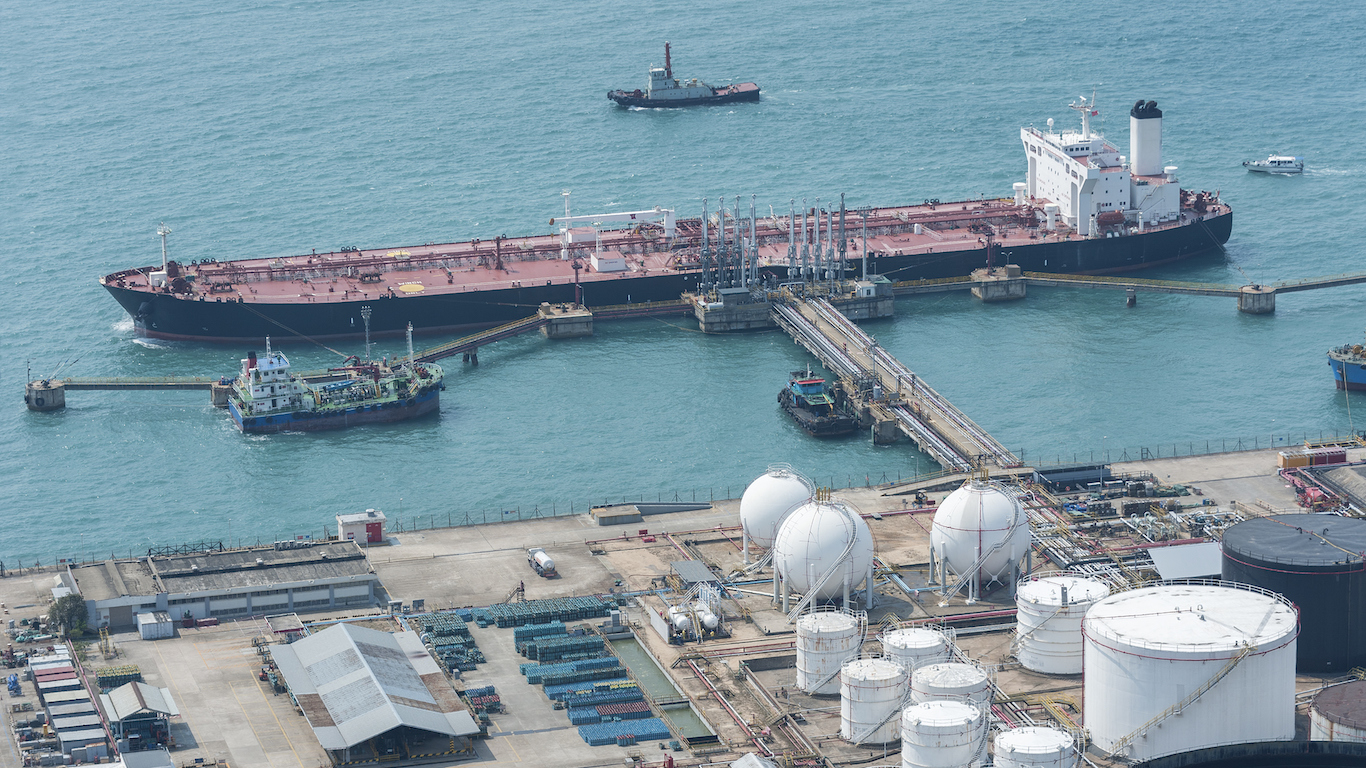
U.S. Secretary of State Mike Pompeo and Treasury Secretary Steve Mnuchin on Monday announced the reimposition of U.S. sanctions on Iran related to that country’s nuclear development program. The sanctions primarily restrict oil exports from Iran under threat of U.S. action against countries that continue to import Iranian crude.
Eight countries have been granted waivers of the restriction on imported Iranian crude: China, India, Italy, Greece, Japan, South Korea, Taiwan and Turkey.
The Treasury’s Office of Foreign Assets Control (OFAC) also has designated more than 700 people who have been added to the Specially Designated National (SDN) list. In general, people on the SDN list have had their assets blocked and U.S. companies and people are prohibited from doing business with them.
Crude prices pushed higher Monday morning, but the reasons for the hikes are a bit murky. When the Trump administration first announced the sanction on Iran six months ago, crude prices shot higher as traders sought to lock in barrels. Over the intervening months, however, production increases from Saudi Arabia, Russia and the United States have nearly erased the supply deficit expected.
[nativounit]
More production, combined with the U.S. waivers, means the supply shortfall will not be nearly as damaging as first believed. The somewhat weaker global economy also will crimp demand.
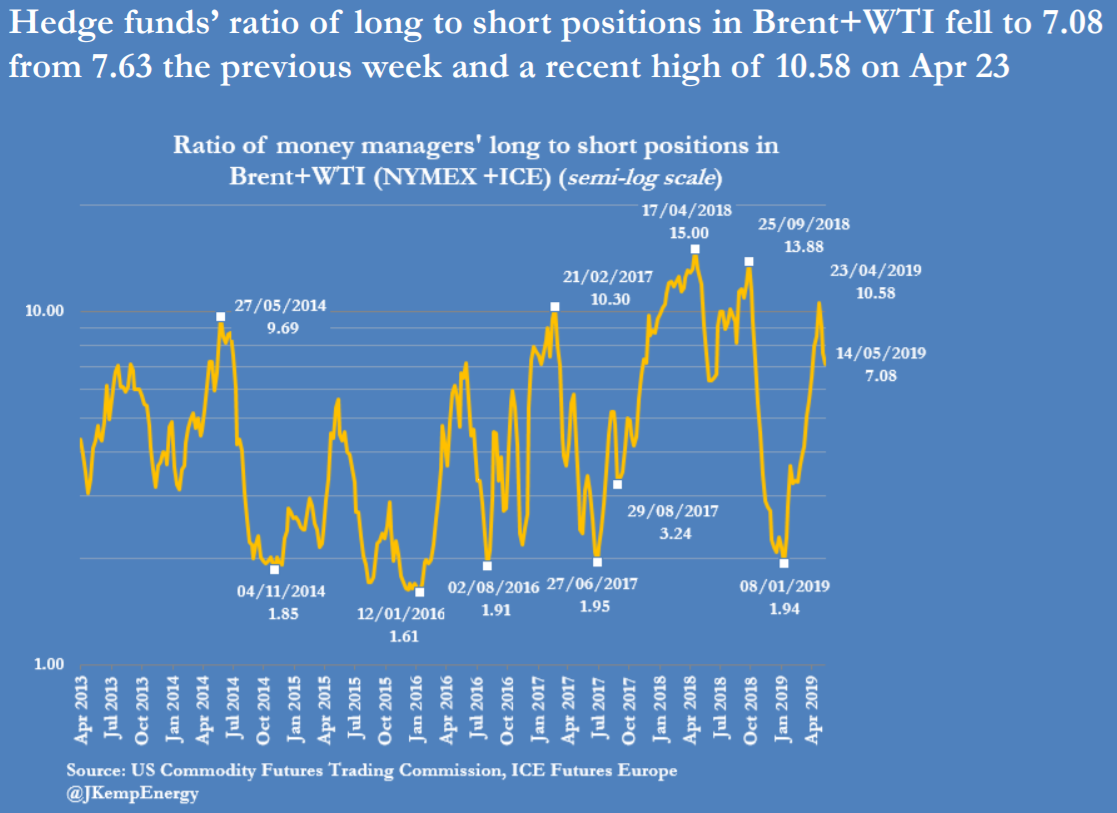
The hedge funds speculating in futures and options market has been closing long contracts for the past five weeks, according to John Kemp of Reuters. Long positions were cut by 73 million barrels last week and have dropped by 371 million barrels since the end of September.
Not only are hedgies selling their long positions, but they also are beginning to place bets on further price declines. Short positions over the six most important petroleum contracts have risen by 192 million barrels in the past five weeks, the highest level in 10 months. Longs remain the fund managers’ favorite position by a ratio of 5:1 over shorts, but five weeks ago the ratio was 12:1.
West Texas Intermediate (WTI) for December delivery traded up 0.7% at $63.79 Monday morning on the NYMEX, while Brent crude for January delivery traded up about 1% at $73.58 in London.
[recirclink id=502385]
[wallst_email_signup]










 Top Gaining Stocks
 Top Losing Stocks