


Energy infrastructure giant Kinder Morgan Inc. (NYSE: KMI | KMI Price Prediction) announced Wednesday morning that it has agreed to sell the U.S. portion of its Cochin pipeline system to Canada’s Pembina Pipeline Corp. (NYSE: PBA) for $1.55 billion. At the same time, Pembina has agreed to acquire all the outstanding common equity in Kinder Morgan Canada, including Kinder Morgan’s 70% stake.
The completion of the two transactions is expected in the fourth quarter of this year or the first quarter of 2020. Both must be completed in order for either deal to be completed.
Kinder Morgan will receive 0.3068 shares of Pembina for each Kinder Morgan share in Kinder Morgan Canada. That amounts to approximately 25 million shares of Pembina stock and is slightly less than 5% of Pembina’s common equity.
At Tuesday’s closing price of C$49.27, Pembina’s offer represents a premium of 38% to Kinder Morgan Canada shareholders.
[nativounit]
The agreement values Kinder Morgan Canada at approximately C$2.3 billion and the U.S. portion of the Cochin system at C$2.05 billion. The total value of the deal is C$4.35 billion (US$3.3 billion).
Kinder Morgan CEO Steve Kean said:
This is an attractive transaction for KMI and [Kinder Morgan Canada] stockholders. It enables KMI to reduce leverage and gives us the flexibility to create additional value for shareholders through share buybacks, project investments, or both.
The company said it planned to use proceeds of the sale of the Cochin system to reduce net debt. If the transaction closes by the end of the year and at the expected price, Kinder Morgan’s ratio of net debt to adjusted EBITDA would drop from an earlier projection 4.6 to 4.4.
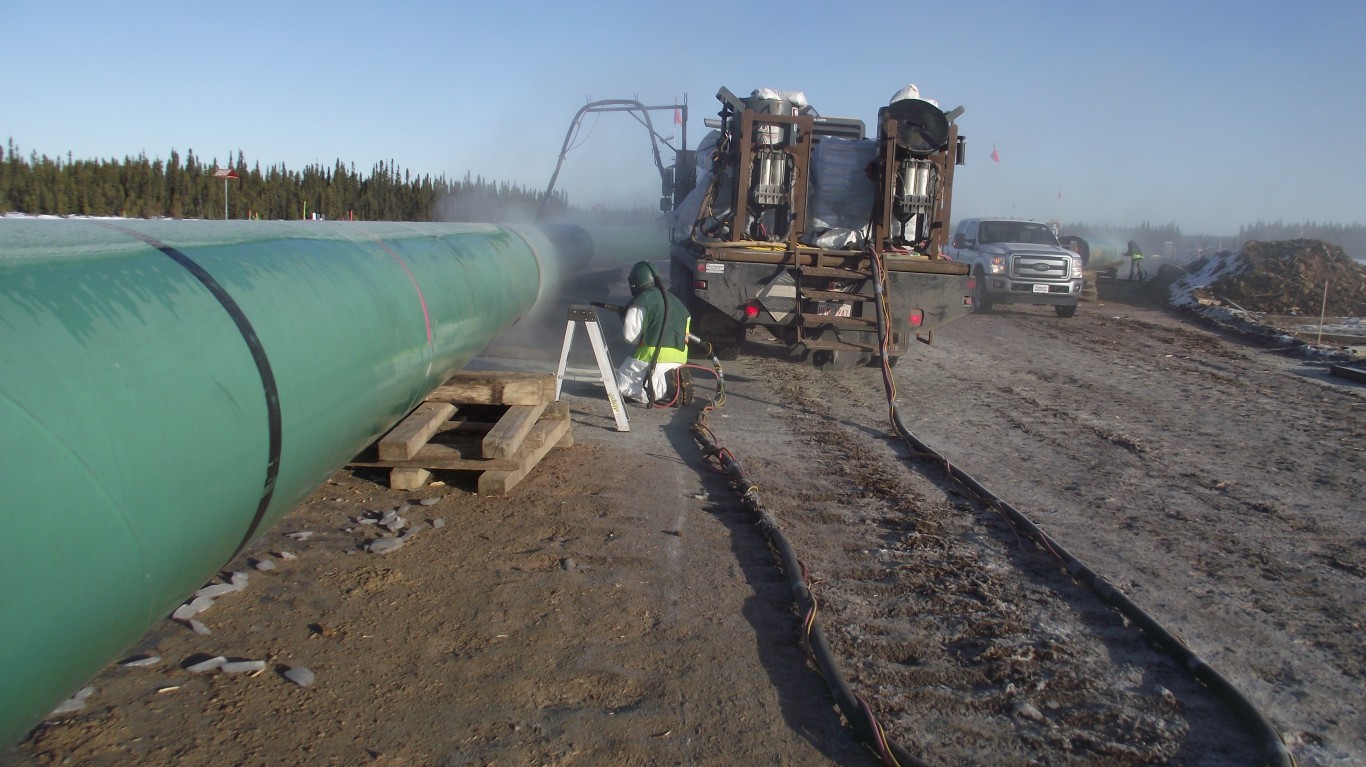
The Cochin system is a 1,900-mile product pipeline that operates between Fort Saskatchewan, Alberta, and Windsor, Ontario. The pipeline crosses the U.S.-Canada border in western North Dakota, rounds the southern shore of Lake Michigan, and terminates back in Windsor. The pipeline originally transported propane from Alberta to Windsor, but Kinder Morgan received approval in 2013 to reverse the pipeline’s flow to transport light condensates north from Kankakee, Illinois, to Fort Saskatchewan. The reversed flow began operations in July 2014.
The sale of Kinder Morgan Canada follows last year’s sale of the Trans Mountain pipeline system to the Canadian federal government.
[recirclink id=570322]
[wallst_email_signup]





 Top Gaining Stocks
 Top Losing Stocks