


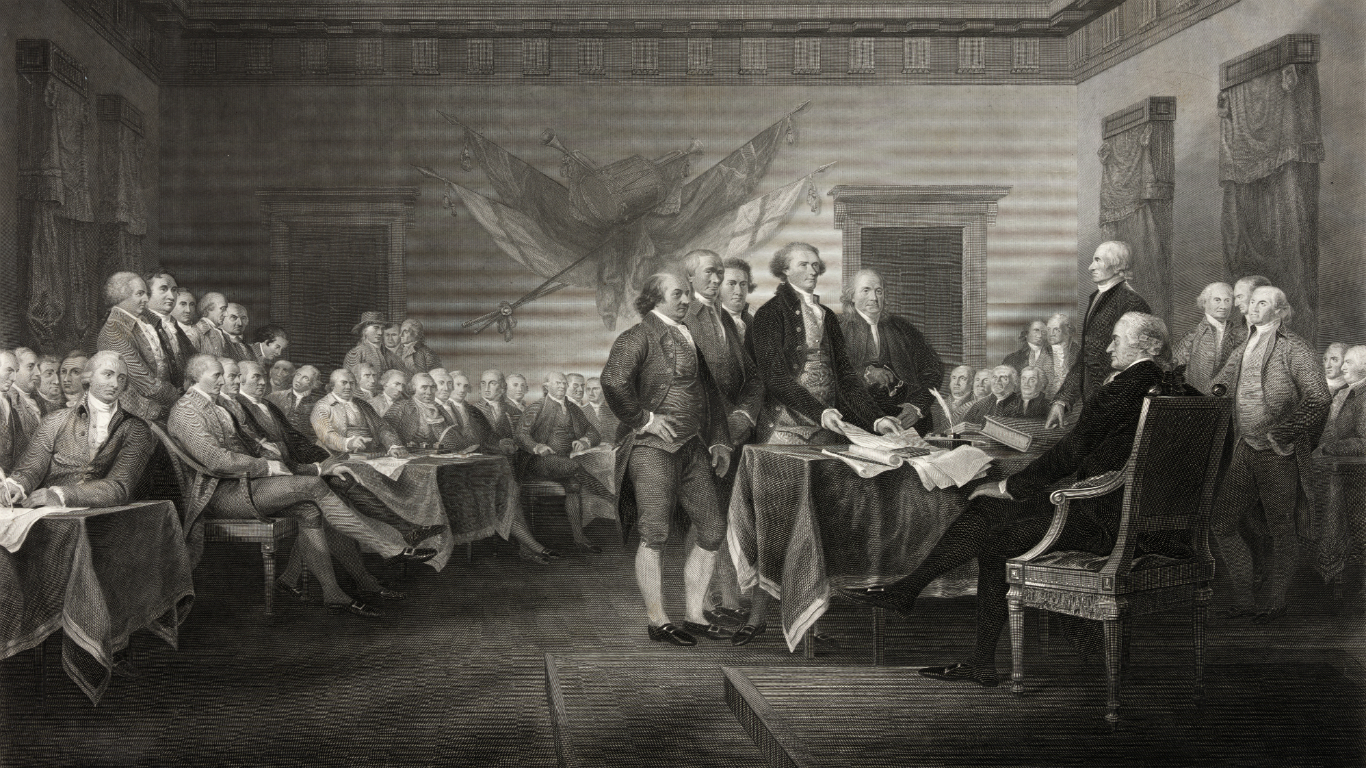
The Fourth of July this year will be hot and rainy in Philadelphia — the birthplace of the Declaration of Independence, according to the Weather Channel’s weather.com site. The forecast calls for scattered thunderstorms, with a high of 92 degrees F.
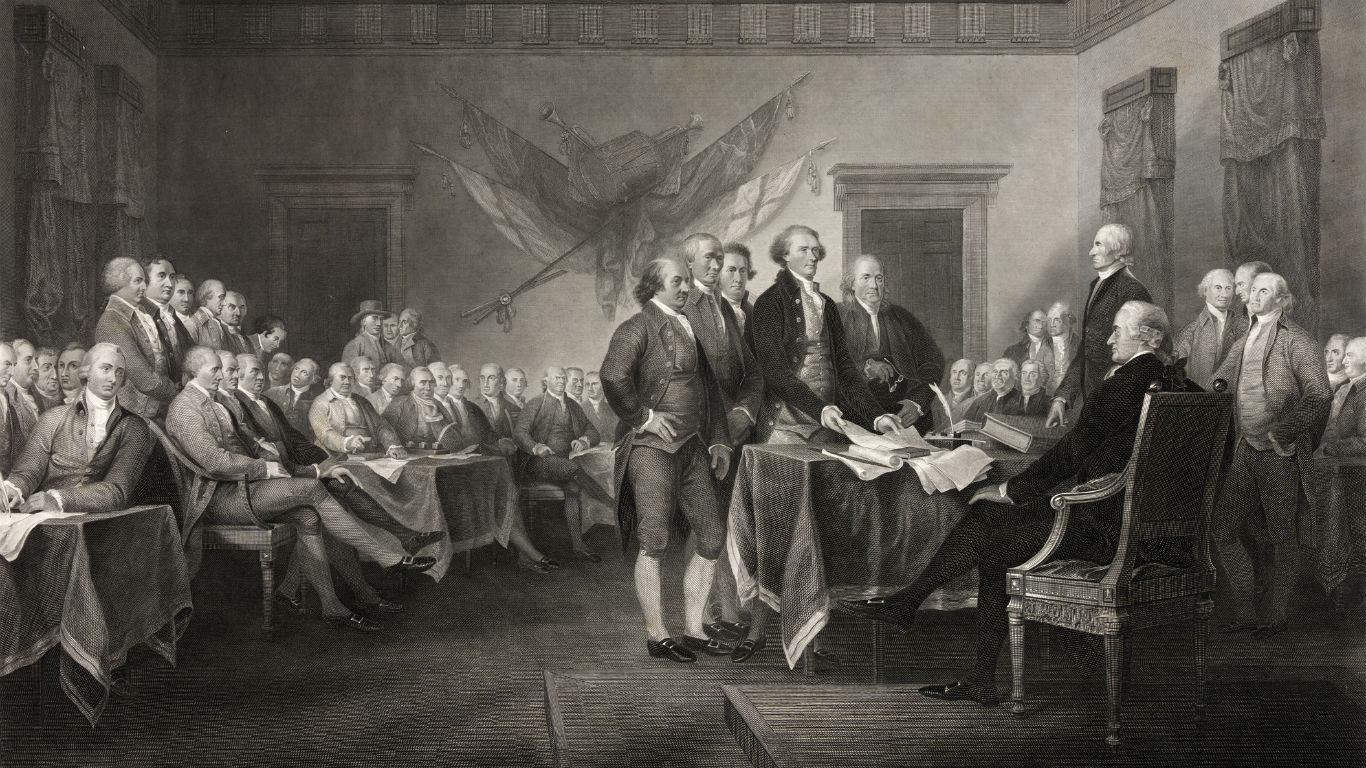
It was apparently much more pleasant on the “original” Fourth of July — the one back in 1776, which we commemorate as the day the 13 colonies declared their independence from Great Britain and established the United States of America.
How do we know? According to that same Weather Channel site, Thomas Jefferson and at least two prominent Philadelphians kept records of local weather conditions at the time.
Using a thermometer he’d bought from a Philadelphia merchant for the equivalent of $300 in today’s currency — it must have been a serious scientific instrument — Jefferson liked to log the temperature twice a day, first around sunrise and again between 3 and 4 p.m. He also wrote down observations on cloud cover, humidity, and precipitation.
Another weather diary is attributed, by weather.com and just about everybody else, to Phineas Pemberton, a member of a prominent Philadelphia Quaker family who became speaker of the Pennsylvania Assembly in the colonial era. However, since Pemberton died in 1702, it was more likely one of his sons — Israel, James, or John — who recorded the weather in the Pemberton name.
The third amateur meteorologist was Christopher Marshall, an Irish-born Philadelphia chemist and pharmacist who, in his retirement, kept diaries of personal and public events from about 1774 to 1795 — climatic conditions included.
Jefferson and Pemberton agreed that the afternoon temperature in Philadelphia on July 4th, 1776, was 76 degrees F. Jefferson observed increasing clouds, while Pemberton found it cloudy with southwesterly winds. According to Marshall, winds shifted from southeast to southwest in the course of the afternoon, and humidity increased.
There is no record of what the weather was like in Philadelphia on August 2nd, the day when most of the 56 people who signed the Declaration of Independence actually affixed their signatures.
According to some sources, however, Jefferson later complained that Congress members were so plagued by blackflies that day that they hurried through the ceremony as fast as possible. Blackflies have been a problem in the city for a long time, despite efforts to reduce the population. In a few years, they may not have to try anymore. Philadelphia is one of the U.S. cities in which the weather will be unrecognizable in 30 years.)





 Top Gaining Stocks
 Top Losing Stocks