Google Bests Doctors in Eye Disease Treatment

Photo of Douglas A. McIntyre
By Douglas A. McIntyre Updated Published
This post may contain links from our sponsors and affiliates, and Flywheel Publishing may receive compensation for actions taken through them.
Google Bests Doctors in Eye Disease Treatment

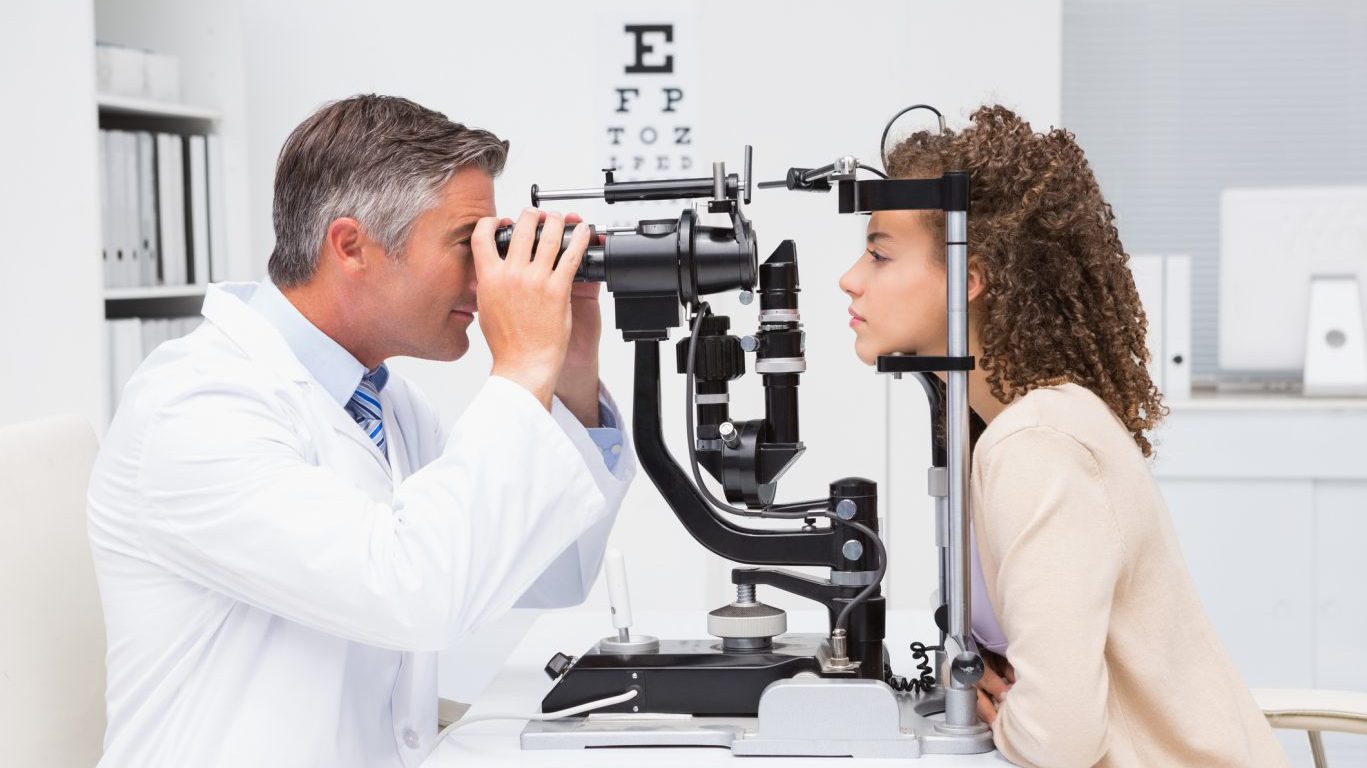
© Thinkstock

In another sign that artificial intelligence can outthink humans, Google announced it was able to more quickly detect eye disease problems than medical professionals. Google said this is a leap forward in the treatment of as many as 50 conditions.

The results are from research firm DeepMind, which Google bought in 2014, and it is now a division of Google parent Alphabet Inc. (NASDAQ: GOOGL). In a blog post titled “A major milestone for the treatment of eye disease,” Mustafa Suleyman, co-founder and head of Applied AI, wrote about his company’s ability to rapidly diagnose 50 “sight-threatening” eye conditions:

The time it takes to analyse these scans, combined with the sheer number of scans that healthcare professionals have to go through (over 1,000 a day at Moorfields alone), can lead to lengthy delays between scan and treatment – even when someone needs urgent care. If they develop a sudden problem, such as a bleed at the back of the eye, these delays could even cost patients their sight.

The system we have developed seeks to address this challenge. Not only can it automatically detect the features of eye diseases in seconds, but it can also prioritise patients most in need of urgent care by recommending whether they should be referred for treatment. This instant triaging process should drastically cut down the time elapsed between the scan and treatment, helping sufferers of diabetic eye disease and age-related macular degeneration avoid sight loss.

[nativounit]

The research was done in a partnership with Moorfields Eye Hospital, and the results were published in the journal Nature Medicine. Deep Mind scientists described this as a major advance in medical science. If the claims are accurate, this is true.

The research does not suggest AI replace humans, at least for now. Suleyman wrote:

This functionality is critically important, since eyecare professionals are always going to play a key role in deciding the type of care and treatment a patient receives. Enabling them to scrutinise the technology’s recommendations is key to making the system usable in practice.

Will eye care professionals actually keep their role indefinitely? DeepMind experts did not say.

[wallst_email_signup]

Photo of Douglas A. McIntyre
About the Author Douglas A. McIntyre →

Douglas A. McIntyre is the co-founder, chief executive officer and editor in chief of 24/7 Wall St. and 24/7 Tempo. He has held these jobs since 2006.

McIntyre has written thousands of articles for 24/7 Wall St. He is an expert on corporate finance, the automotive industry, media companies and international finance. He has edited articles on national demographics, sports, personal income and travel.

His work has been quoted or mentioned in The New York Times, The Wall Street Journal, Los Angeles Times, The Washington Post, NBC News, Time, The New Yorker, HuffPost USA Today, Business Insider, Yahoo, AOL, MarketWatch, The Atlantic, Bloomberg, New York Post, Chicago Tribune, Forbes, The Guardian and many other major publications. McIntyre has been a guest on CNBC, the BBC and television and radio stations across the country.

A magna cum laude graduate of Harvard College, McIntyre also was president of The Harvard Advocate. Founded in 1866, the Advocate is the oldest college publication in the United States.

TheStreet.com, Comps.com and Edgar Online are some of the public companies for which McIntyre served on the board of directors. He was a Vicinity Corporation board member when the company was sold to Microsoft in 2002. He served on the audit committees of some of these companies.

McIntyre has been the CEO of FutureSource, a provider of trading terminals and news to commodities and futures traders. He was president of Switchboard, the online phone directory company. He served as chairman and CEO of On2 Technologies, the video compression company that provided video compression software for Adobe’s Flash. Google bought On2 in 2009.

Featured Reads

Our top personal finance-related articles today. Your wallet will thank you later.

Continue Reading

Top Gaining Stocks

CBOE Vol: 1,568,143
PSKY Vol: 12,285,993
STX Vol: 7,378,346
ORCL Vol: 26,317,675
DDOG Vol: 6,247,779

Top Losing Stocks

LKQ
LKQ Vol: 4,367,433
CLX Vol: 13,260,523
SYK Vol: 4,519,455
MHK Vol: 1,859,865
AMGN Vol: 3,818,618