


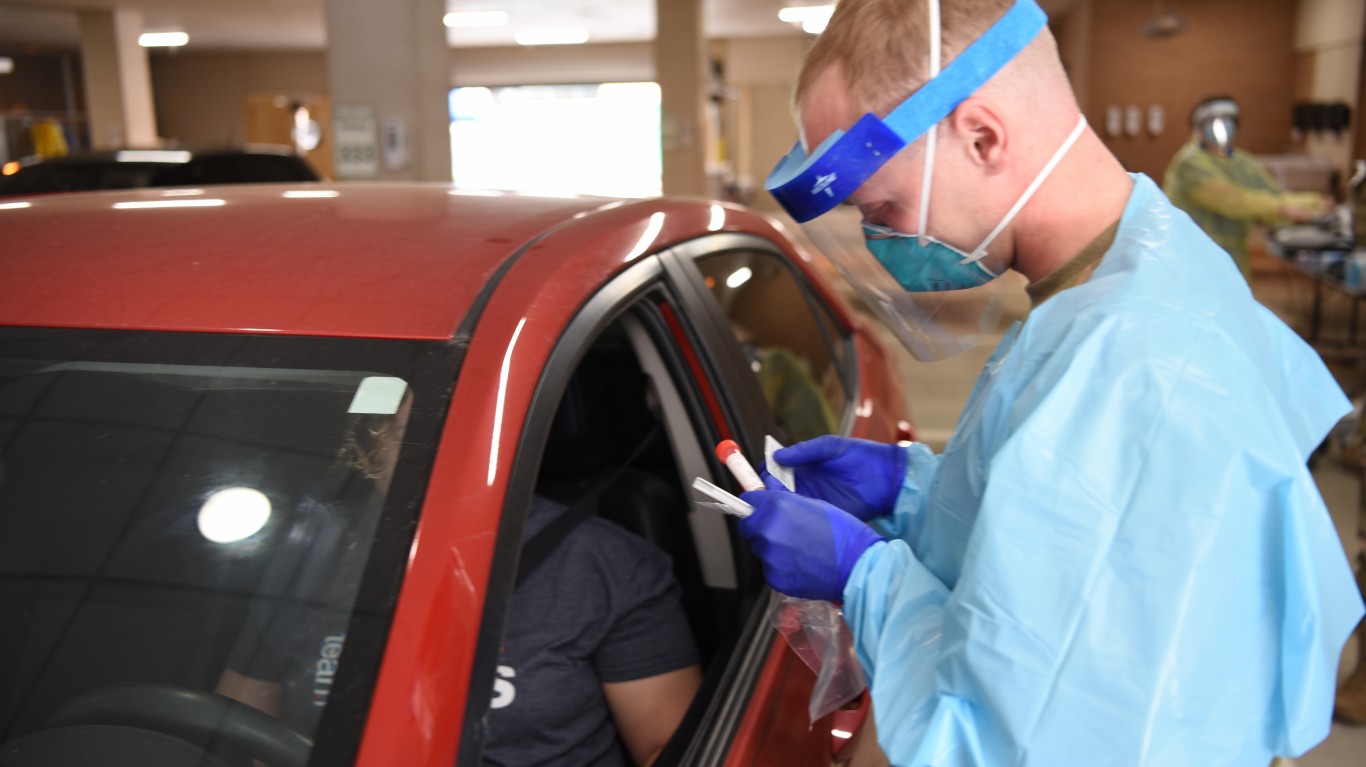
New daily confirmed COVID-19 cases in America have risen sharply in the past few weeks, taking counts to record levels. For several days in the past month, new confirmed cases have risen above 250,000 a day. Yesterday, according to the Microsoft Bing COVID-19 Tracker, cases rose by 274,906 to 23,489,378. Recent figures may not be entirely up to date because some counties and states did not report every day due to the holidays.
The next three months will be worse. Fatal case rates are as bad as when the nation was hardest hit by this measure from early April to mid-May, when the counts rose above 2,500 nationwide on some days. The number of coronavirus fatalities has begun to hit or exceeded 3,500 a day recently. Total fatal cases in the United States now total 390,738, after a one-day gain of 3,8963,896.
Another key marker of the spread of the disease is hospitalizations, which have moved above 125,000 nationwide, a record. Intensive care units in some cities have reached full capacity
The Institute for Health Metrics and Evaluation at the University of Washington’s School of Medicine, which has a well-followed model for the rise in COVID-19 cases and deaths, forecasts U.S. fatal cases will reach over 567,000 by April 1, if social distancing and mask wearing do not improve. If states loosen restrictions, that number may go as high as 729,000 by the same date.
[nativounit]
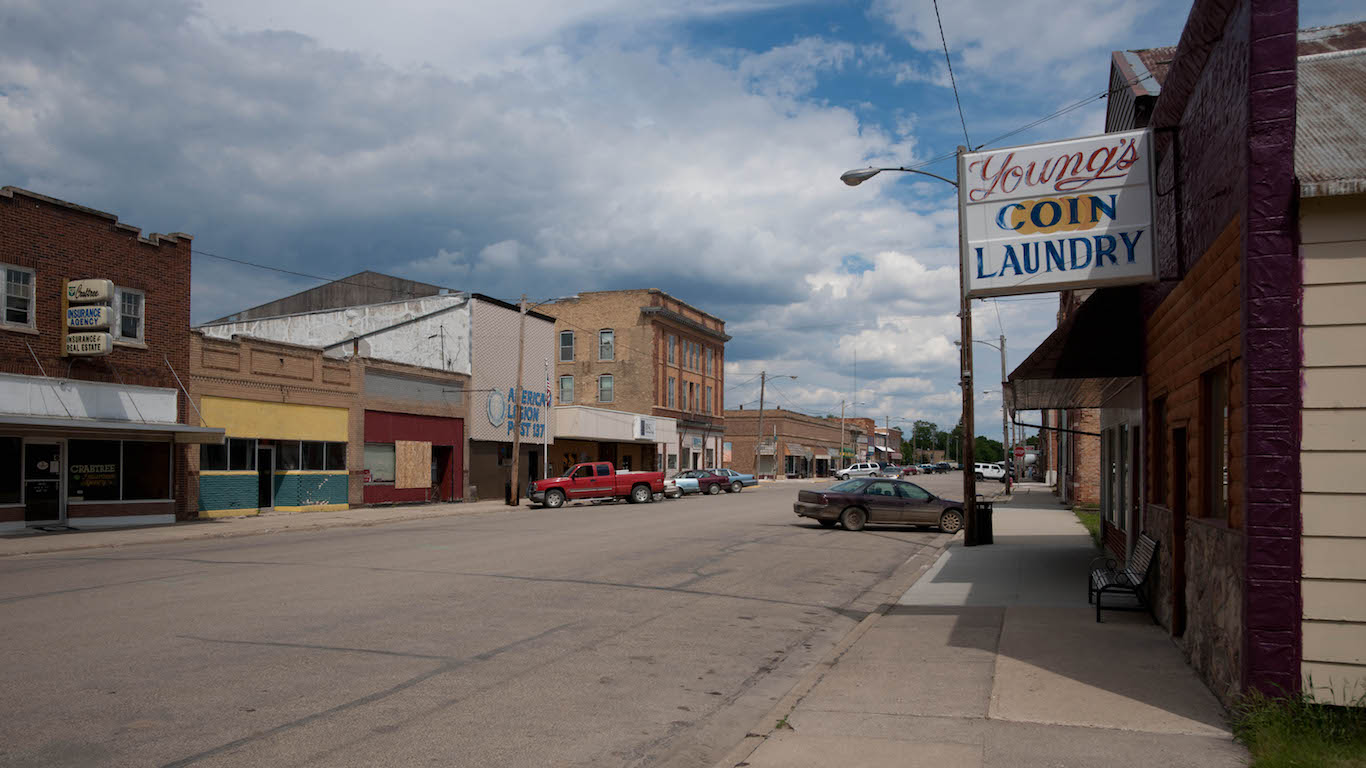
Rates of both confirmed and fatal cases are highly uneven across the nation. The county with the worst rate of fatal cases per 1,000 people is Jerauld County, South Dakota. It has a five-year average population of 2,029. Deaths per 1,000 stand at 7.89, many multiples of the national average.
Jerauld County is in the center of the state. It has been steadily losing population since 1930, according to information from the U.S. Census. Over 98% of the population is white. Almost 20% of the population lives below the poverty line, which is well above the national average.
According to The New York Times, South Dakota recently topped all states based on COVID-19 deaths per 100,000 people. However, its place among states based on that measure has dropped behind several others, including California, Kentucky, Rhode Island and Pennsylvania
Next on the list based on deaths per 1,000 is Dickey County, North Dakota, at 6.44. It has a five-year population average of 4,970.
The next county is Gregory, South Dakota, with 6.19 deaths per 1,000 people on January 13. It has a five-year average population of 4,201. It is in the southern part of the state, west of the Missouri River.
Hamlin County, South Dakota, is fourth on the list with 6.17 deaths per 1,000 people. Its five-year population average is 6,000.
In fifth place is Turner County, South Dakota, at 5.93 deaths per 1,000. Its population based on the same measure is 8,264
Another measure of how hard a county has been hit is confirmed cases per 1,000. On January 13, this figure was highest in Crowley, Colorado, where the number was 299.82. The county’s average five-year population is 5,630.
In second place was Trousdale, Tennessee, where the number was 237.54. It has a five-year average population of 9,573.
Dewey County, South Dakota, in third place, has 234.12 confirmed cases per 1,000. It has a five-year average population of 5,779.
Bon Homme County, South Dakota, is next with 215.10 confirmed cases per 1,000. Its five-year population average stands at 6,969.
Bent County, Colorado, is next at 213.46 per 1,000. Its five-year average population is 5,809.
Most of these counties are in the hard-hit areas of the upper Midwest, based on the lists of both confirmed death rates and confirmed case rates. Without exception, they are in rural areas.
[recirclink id=829741]
[wallst_email_signup]









 Top Gaining Stocks
 Top Losing Stocks