Buying a House for 36% Off

Photo of Douglas A. McIntyre
By Douglas A. McIntyre Published
This post may contain links from our sponsors and affiliates, and Flywheel Publishing may receive compensation for actions taken through them.

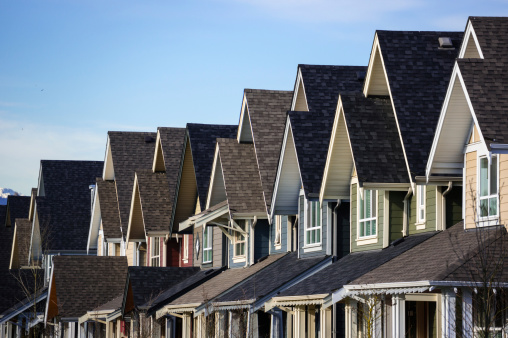
The median price for a home sold in the United States in October was $199,500. The price of what is called a “distressed home” was $127,000, or 36% less, according to RealtyTrac. “Distressed home” is another phrase for a foreclosure home. While the difference between the two numbers cannot be bridged, the gulf is bad for both the housing market and the broader economy.

One theory about the housing market is that the price, and probably the ultimate sale, of a foreclosure home hurts other home prices within the same neighborhood. The argument makes sense. A home sold for $100,000 that sits next to one worth $200,000 would make many buyers wonder why the difference is so great. An intrepid buyer, willing to take a risk on the condition of the cheaper property, might take it ahead of the better maintained home. Like a falling domino, the effect on other home prices in the same area should be damaging.

Banks are inclined to dump homes that come into their possession, since they are in neither the real estate nor rental business. The irony of the practice is that banks may also have mortgages held by homeowners in the same area where the foreclosed home is located. The bank, in essence, has hurt the value of something on which it has a loan. In some parts of the country where foreclosure rates are high — say some large cities in Florida — the likelihood of banks suffering from such self-inflicted damage is highest.

The only potential winner in the purchase of a foreclosed home is the buyer who receives the discount, and perhaps Home Depot Inc. (NYSE: HD), which sells the items for upgrades. The buyer only benefits though if his or her estimate of what it will cost to repair the home so it is livable is close to accurate. Perhaps after all the financial work and rebuilding, the home will be worth what others in the neighborhood are worth. That is a tortured was to improve real estate prices.


ALSO READ: America’s 50 Best Cities to Live

Photo of Douglas A. McIntyre
About the Author Douglas A. McIntyre →

Douglas A. McIntyre is the co-founder, chief executive officer and editor in chief of 24/7 Wall St. and 24/7 Tempo. He has held these jobs since 2006.

McIntyre has written thousands of articles for 24/7 Wall St. He is an expert on corporate finance, the automotive industry, media companies and international finance. He has edited articles on national demographics, sports, personal income and travel.

His work has been quoted or mentioned in The New York Times, The Wall Street Journal, Los Angeles Times, The Washington Post, NBC News, Time, The New Yorker, HuffPost USA Today, Business Insider, Yahoo, AOL, MarketWatch, The Atlantic, Bloomberg, New York Post, Chicago Tribune, Forbes, The Guardian and many other major publications. McIntyre has been a guest on CNBC, the BBC and television and radio stations across the country.

A magna cum laude graduate of Harvard College, McIntyre also was president of The Harvard Advocate. Founded in 1866, the Advocate is the oldest college publication in the United States.

TheStreet.com, Comps.com and Edgar Online are some of the public companies for which McIntyre served on the board of directors. He was a Vicinity Corporation board member when the company was sold to Microsoft in 2002. He served on the audit committees of some of these companies.

McIntyre has been the CEO of FutureSource, a provider of trading terminals and news to commodities and futures traders. He was president of Switchboard, the online phone directory company. He served as chairman and CEO of On2 Technologies, the video compression company that provided video compression software for Adobe’s Flash. Google bought On2 in 2009.

Featured Reads

Our top personal finance-related articles today. Your wallet will thank you later.

Continue Reading

Top Gaining Stocks

CBOE Vol: 1,568,143
PSKY Vol: 12,285,993
STX Vol: 7,378,346
ORCL Vol: 26,317,675
DDOG Vol: 6,247,779

Top Losing Stocks

LKQ
LKQ Vol: 4,367,433
CLX Vol: 13,260,523
SYK Vol: 4,519,455
MHK Vol: 1,859,865
AMGN Vol: 3,818,618

