


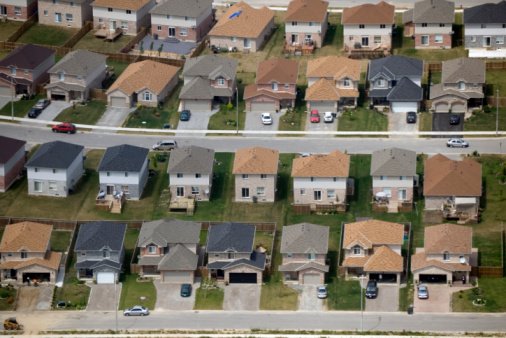
The largest year-over-year gains came in Denver (up 10%), San Francisco (up 9.7%), and Dallas up (8.4%). The largest month-over-month gains came in Boston and Cleveland, where prices rose 1.5% from April.
The S&P/Case-Shiller home price index for May increased by 4.9% year-over-year for the 20-city composite index and by 4.7% for the 10-city composite index. The national index rose 4.4% year-over-year compared to a 4.3% gain in April. The consensus estimate for the year-over-year 20-city index called for growth of 5.6%.
Month-over-month the 10-City index, the 20-City index, and the national index gained 1.1%. On a seasonally adjusted basis the 10-City and 20-City indexes fell 0.2% from April to May. All 20 cities reported increases in May before seasonal adjustment; after seasonal adjustment, 10 were down, eight were up, and two were unchanged.
The index tracks prices on a three-month rolling average. May represents the three-month average of March, April, and May prices.
Average home prices for May remain comparable to their levels in the winter of 2005.
Compared with their peak in the summer of 2006, home prices on both indexes remain down about 13% to 15%. Since the low of March 2012, home prices are up 32.5% and 33.5% on the 10- and 20-city indexes, respectively.
The chairman of the S&P index committee said:
Nationally, single family home price increases have settled into a steady 4%-5% annual pace following the double-digit bubbly pattern of 2013. Over the next two years or so, the rate of home price increases is more likely to slow than to accelerate. Prices are increasing about twice as fast as inflation or wages. Moreover, other housing measures are less robust. Housing starts are only at about 1.2 million units annually, and only about half of total starts are single family homes. Sales of new homes are low compared to sales of existing homes.











 Top Gaining Stocks
 Top Losing Stocks