



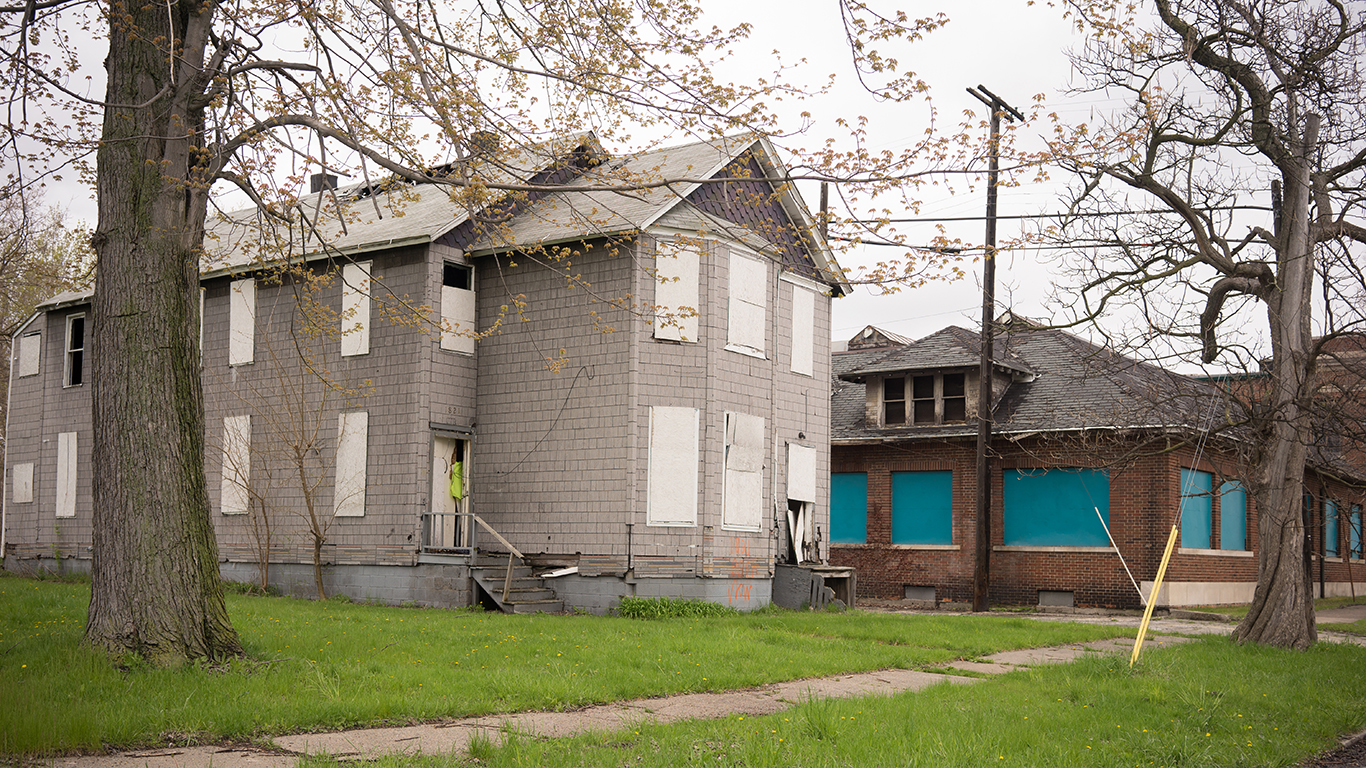
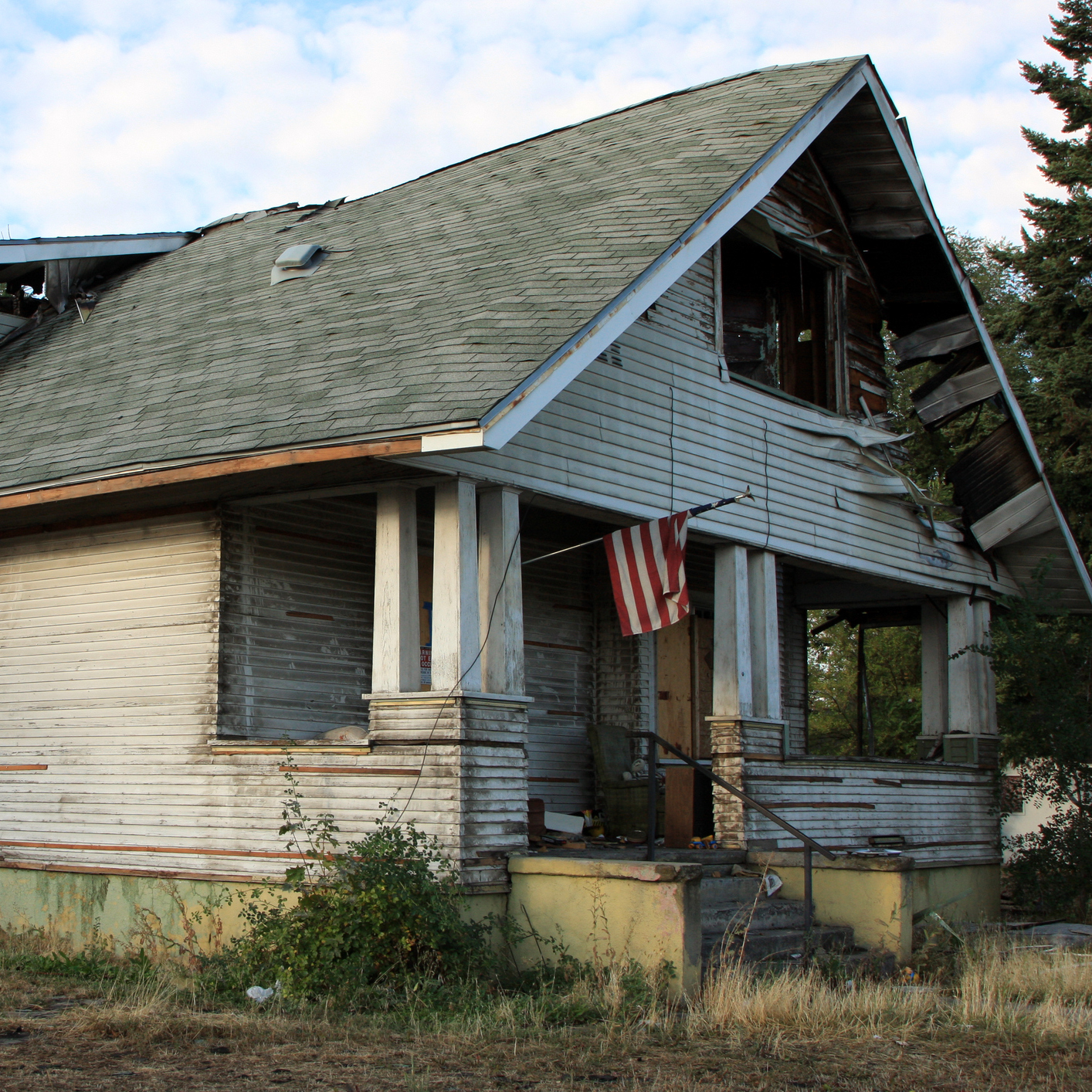
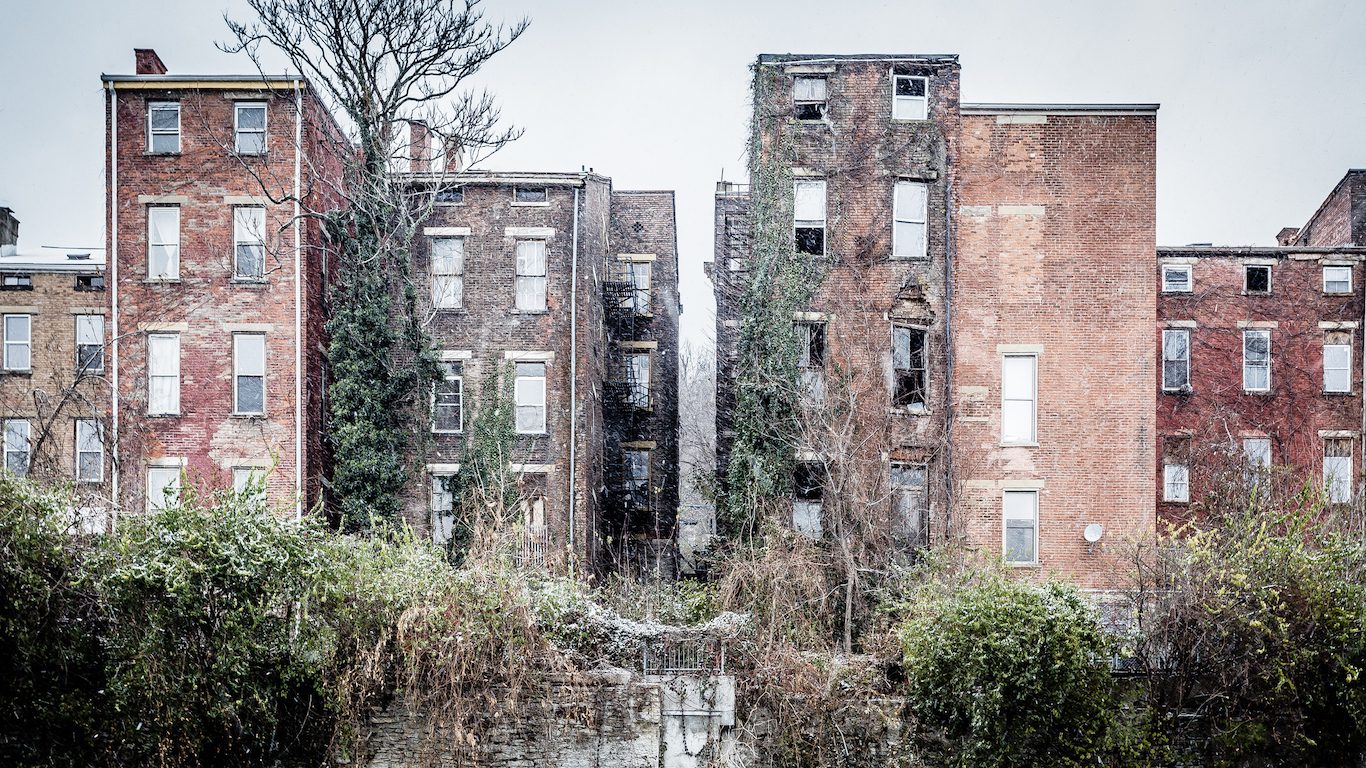
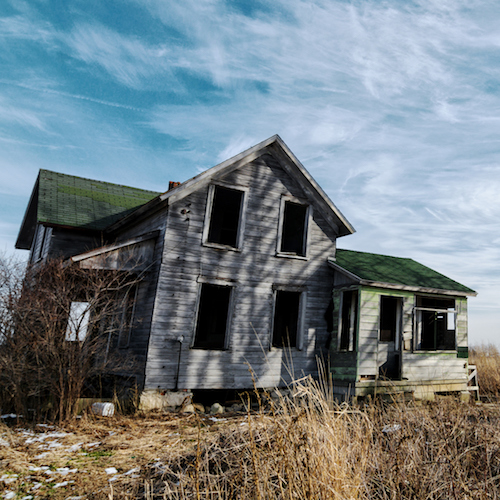
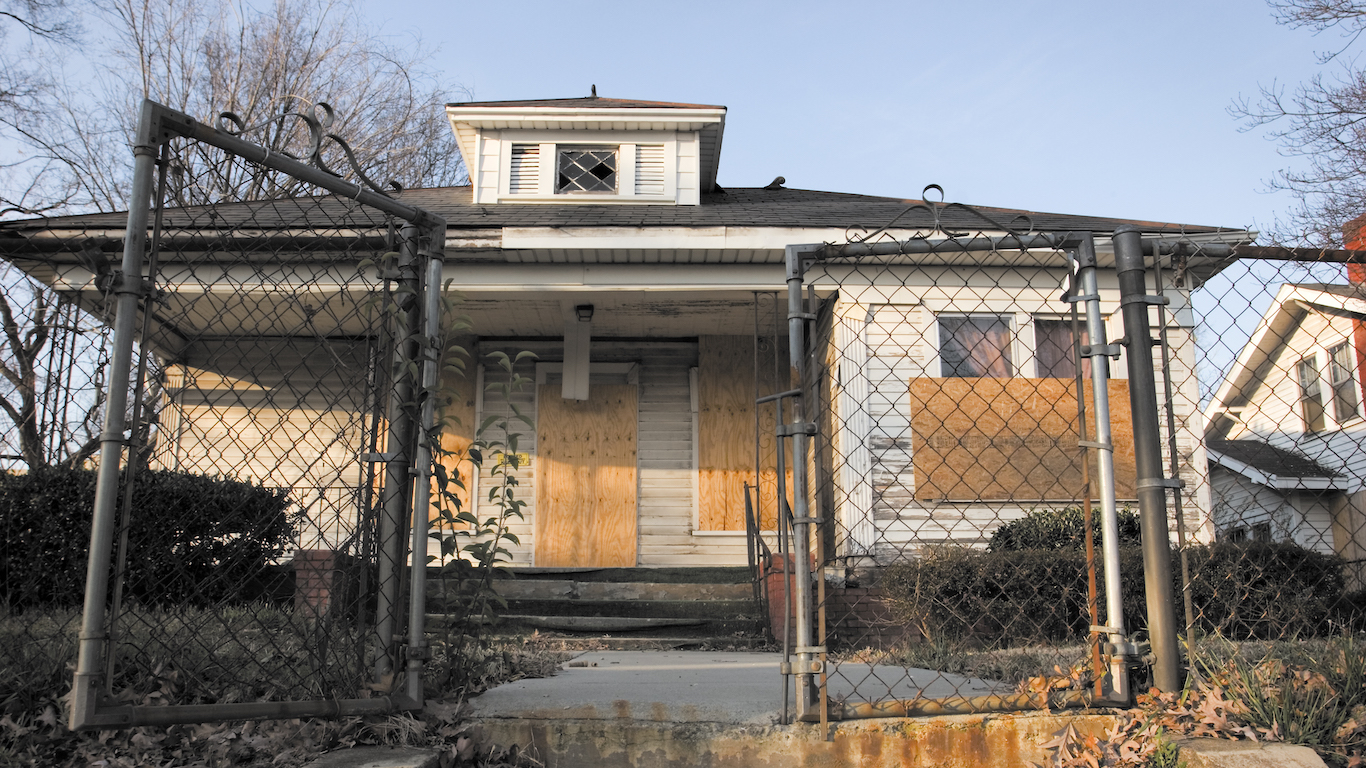
Across the United States, the average vacancy rate was 1.6% at the beginning of February, according to new data from real estate research firm RealtyTrac. Several of cities with the highest vacancy rates in America stretch across areas ruined by the end of major manufacturing of cars and related materials. Those with the lowest vacancy rates sit around the Silicon Valley and in resort areas in Vermont, New Hampshire and Utah. The city with the highest vacancy rate is deeply troubled Flint (7.5%). The one with the lowest vacancy rate is San Jose (0.2%).
A cluster of cities with high vacancy rates stretches from Flint to Detroit, to Cleveland and Youngstown. RealtyTrac gives the top 10 cities by vacancy measures:
Among 147 metropolitan statistical areas with at least 100,000 residential properties, those with the highest share of vacant properties were Flint, Michigan (7.5 percent), Detroit (5.3 percent), Youngstown, Ohio (4.4 percent), Beaumont-Port Arthur, Texas (3.8 percent), and Atlantic City, New Jersey (3.7 percent).
Other major metro areas with vacancy rates above the national average included Indianapolis (3.0 percent), Tampa (2.9 percent), Miami (2.8 percent), Cleveland (2.8 percent), and St. Louis (2.6 percent).
Atlantic City suffered from a string of casino closings and then the effects of Hurricane Sandy. Tampa and Miami were hurt by the explosion of the real estate bubble that was married to the Great Recession.
[nativounit]
Those with the lowest vacancy rates:
Metro areas with the lowest share of vacant properties were San Jose, California (0.2 percent), Fort Collins, Colorado (0.2 percent), Manchester, New Hampshire (0.3 percent), Provo, Utah (0.3 percent), Lancaster, Pennsylvania (0.3 percent), and San Francisco (0.3 percent).
Other major metro areas with vacancy rates below the national average included San Francisco (0.3 percent), Los Angeles (0.4 percent), Boston (0.5 percent), Denver (0.5 percent), and Washington, D.C. (0.5 percent).
The net effect of the vacancy rates across the United States is good for home sellers and poor for home buyers. That in theory should help home prices and further the recovery of the market, which in some cities has passed the 2006 real estate bubble peak:
“With several notable exceptions, the challenge facing most U.S. real estate markets is not too many vacant homes but too few,” said Daren Blomquist, vice president at RealtyTrac. “The razor-thin vacancy rates in many markets are placing upward pressure on home prices and rents. While that may be good news for sellers and landlords, it is bad news for buyers and renters and could be bad news for all if prices and rents are inflated above tolerable affordability thresholds.”
What the data show is that all house vacancy rates are local and swing widely from the national average. Flint’s industrial base died a long time ago. Silicon Valley has thrived for decades.





 Top Gaining Stocks
 Top Losing Stocks