


This weekend there were reports that Merrill Lynch had boosted their Uranium forecasts by some 78% for 2008. While this isn’t a normal equity upgrade at all, it serves to offer a better potential safety net for long-term investors in the companies that actually mine and process the radioactive material need to run the world’s nuclear power plants.
In Summer of this year you had to wonder if Uranium prices were getting bubbly or not, and that was back at $45 per pound in July or August. Hedge funds, private equity, and commodity funds drove the price of Uranium higher during the soaring oil prices of 2005 to 2006. Yet here we sit at roughly $68 per pound as of Friday, up from $63 at the end of November.
The report puts spot Uranium prices to average $75 per pound in 2007 and $80 in 2008. Another report in November out of Canada’s RBC Dominion said prices could even reach $100 per pound next year, before easing to $75 in 2009.
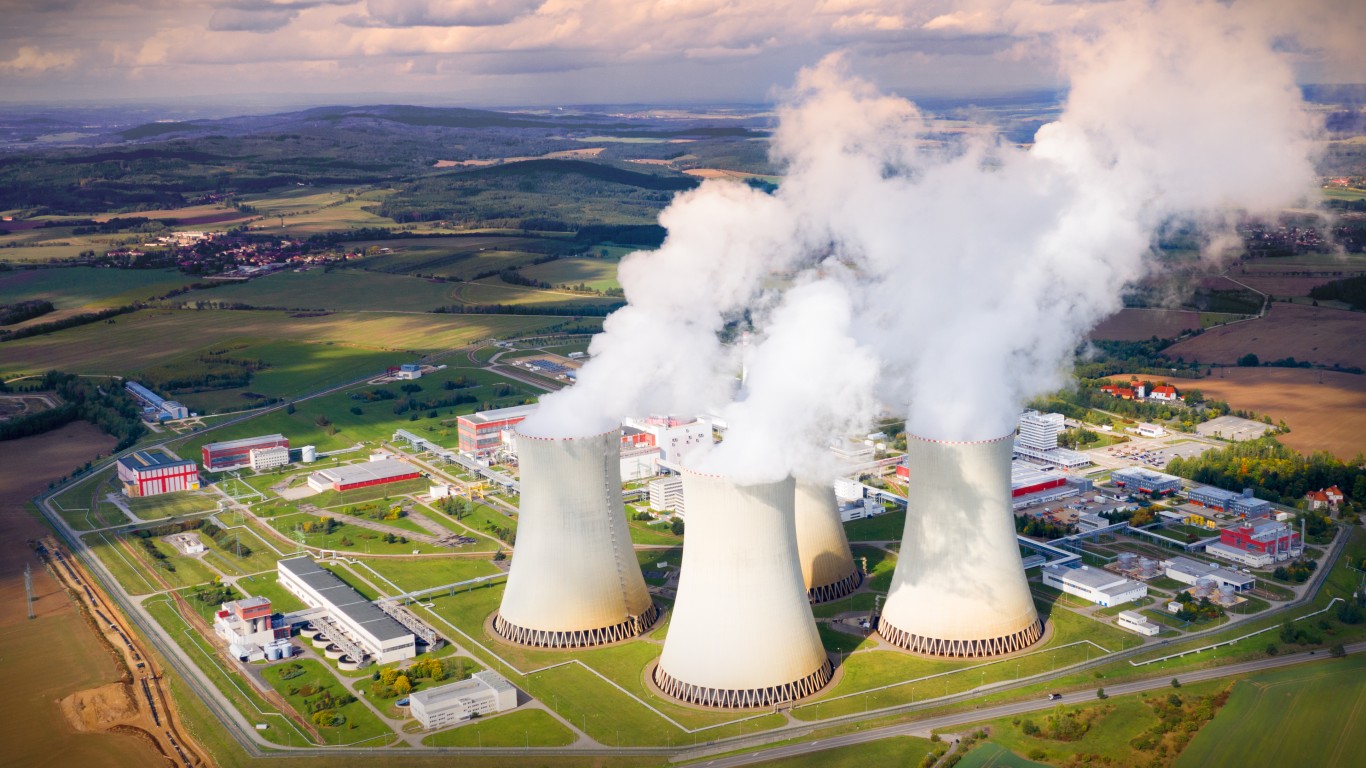
Prices are also higher since Cameco in Canada had to delay its Cigar Lake project because of flooding in October, which took a potential 10% of global supply off the market for maybe 2 years (we won’t know until its February target timeline). There has been a push out of Congress to increase the potentiality of more nuclear power plants in the US. The US and Canada aren’t the only games in town, either. Japan and France are highly dependent on nuclear power almost exclusively, and China and India are powering up for more nuclear power plants. Russia has far more power needs out of its nuclear power plants as well. There are almost 30 nuclear power plants around the globe that are currently under contruction, and there are more than 50 nuclear power plants in the planning and evaluation stage.
All of these converging factors are leaning toward a belief that newer investors looking to make equity investments in some of the established companies around nuclear power may not be just cathching the top. That is for each investor to decide based on risk profiles, but this report hasn’t caught much attention while oil prices seem to have a caught a bid over the last month and while many oil stocks have revovered sharply in the last 30 to 60 days. This at least might act as a mental ease that investing in nuclear power opportunities hasn’t yet entirely passed.
There are many stocks involved in Uranium production, and here is a partial list:
Cameco (CCJ-NYSE; also CCO-Toronto)
USEC (USU-NYSE)
Paladin Resources Ltd. (PDN-Toronto)
UrAsia (UUU-Vancouver)
UEX Corp. (UEX-Totonto)
Strathmore Minerals (STM-Vancouver)
Uranium Resources (URRE-OTC/NASDAQ)
Uranerz Energy Corporation (URZ-AMEX)
Uranium Energy Corp (URME-NASDAQ/OTC)
U.S. Energy Corp. (USEG-NASDAQ)
Nufcor (JV of AngloGold-"AU-NYSE" and FirstRand)
RioTinto (RTP-NYSE, but very diversified so not pure play)
BHP Billiton (BHP-NYSE, but very diversified)
And all throughout the report, you will notice that the report says "NUCLEAR," properly pronounced "new-klee-urr." There is no such word as "nucular" nor "nukular," although modernists are starting to adapt to constant "mis-improper" usage of the word.
Jon C. Ogg
December 11, 2006






 Top Gaining Stocks
 Top Losing Stocks