


As the dispute drags on between Ukraine and Russian over the price of Russian natural gas, the weather gets colder in Europe and the European Union has demanded an immediate solution to the problem. Good luck with that.
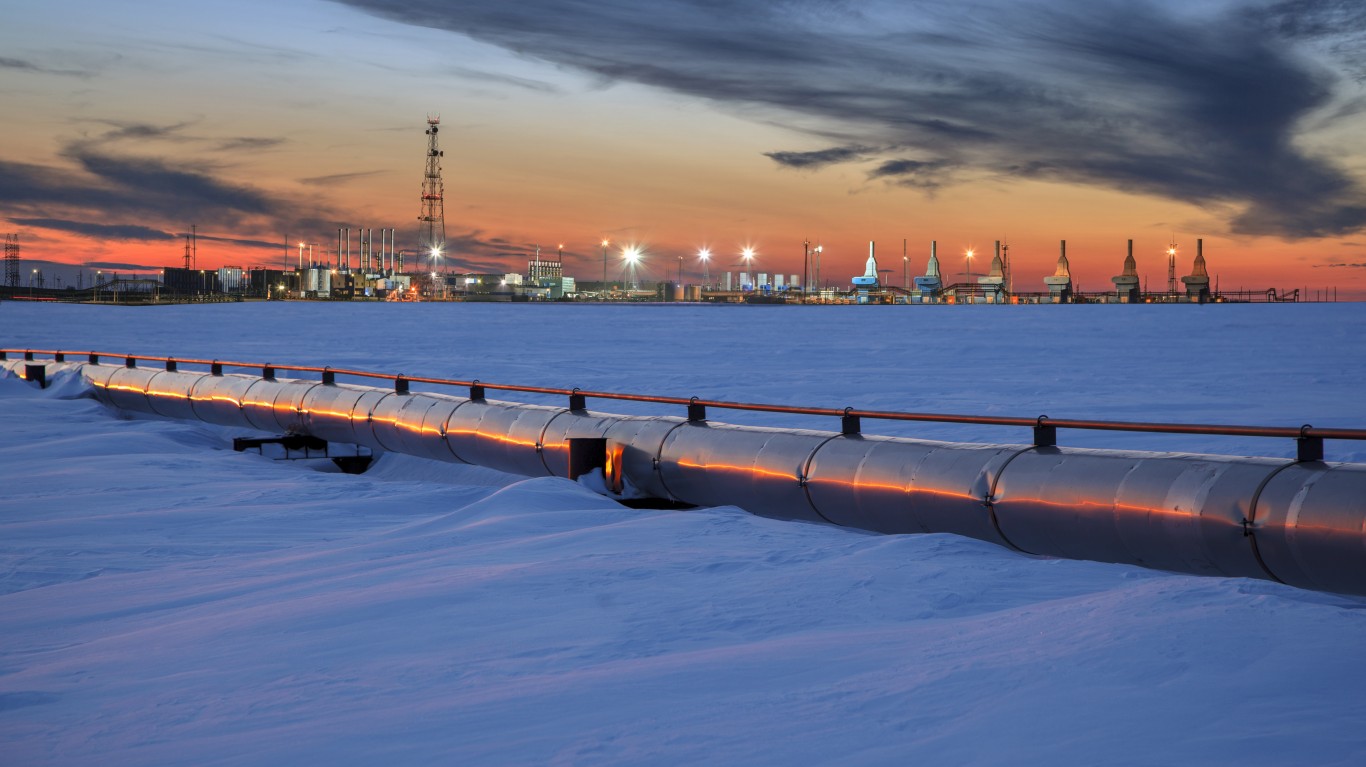
Ukraine claimed yesterday that the Russians had shut off all gasshipments that transit Ukraine on their way to European markets. Ifthat is true, Europe has just lost about 20% of its gas supply. Nearly80% of Russian gas exports to Europe transit Ukraine, and the Russiansprovide about 25% of Europe’s total gas supply. The Russians, ofcourse, claim that Ukraine turned off the gas and is stealing gasintended for European delivery. The Russians do admit that supplieshave been reduced by the amount that Ukraine normally takes.
We’ve noted the similarities between thecurrent Russia-Ukraine dispute with the 2006 dust-up. Some of thedetails aredifferent, but the effect is the same. The big difference from threeyears ago, though, is that Russia is better placed to gain someadvantage this time.
Strategically, Russia wants to prevent the European Union from buildingpipelines that would deliver gas from Central Asia to Europe withouttraveling over Russian territory. At present, Russia has no naturalgas or oil pipelines that carry gas or oil to the east. Everything ispointed toward Europe. The country has no alternative market. So, whileit can’t afford to cut off European supplies altogether, it can flexits muscle to demonstrate its power.
The Europeans want to limit Russia’s energy hegemony by building gaspipelines that dodge Russian control. There are at least two proposedpipelines, both through Turkey across the Bosphorous and on intoEurope, avoiding both Ukraine and Russia. The proposed Nabucco pipelineis the best-known, and has six equal partners: Austria, Hungary,Romania, Bulgaria, Turkey, and Germany.
The gas, more than 30 billion cubic meters a year, would come fromAzerbaijan’s massive Shah Deniz field in the Caspian Sea. Maybe. Russiahas increased pressure on Azerbaijan to supply gas to a competingGazprom-backed pipeline project. The last thing the Europeans want isanother pipeline controlled by Russia or Gazprom.
Iran has offered to solve that problem by supplying gas to the Nabucco pipeline. The US is absolutely opposed to that solution.
Iran’s reserves of natural gas are second in size only to Russia’s. Thecountry now exports virtually no gas, using it instead for domesticconsumption and to re-inject into oil wells to increase oil production.Building the infrastructure to move Iranian gas to Europe would be verycostly and time consuming. To say nothing of the political consequencesunless the US and Iran can somehow improve their relationship.
The dispute between Russia and Ukraine, coupled with the shooting warbetween Israel and Hamas, has driven oil prices up to near $50/barrel.Part of that increase is due to greater dependence on oil as a heatingfuel as the Russia-Ukraine dispute lingers. The bigger part, however,is simply fear of what will happen in the Middle East. Once theshooting stops and Russian gas again flows to Europe, oil prices willdrop, following in the footsteps of the overall global economicslowdown.
Paul Ausick
January 7, 2009






 Top Gaining Stocks
 Top Losing Stocks