


 American management began to do what it could to make office environments more pleasant sometime after the bad economic patch in 2001 and 2002. At some companies such as Wal-Mart (WMT) workers have been called “associates” for years. More and more companies began to refer to employees as “partners” and “team members” in the last decade. Even middle management at many firms got into the habit of sending memos to “The Team”.
Collegiality is a trait prized in the Girl Scouts, but this is a recession; it weakens the system of most companies. Workers begin to think that they are at the same level as their bosses. Senior people lose authority in the eyes of their charges. And, people begin to think that their co-workers are their friends rather than individuals competing with them for jobs in a shrinking workplace.
One of the positive things about a recession is that it removes the perception that “getting along” is important in the workplace. It reinforces the idea that people are paid to work and not socialize. People who view others employed at their company as “co-workers” are likely to feel that they should not be asked to fire anyone or discipline subordinates for poor performance.
While there may be no statistics about this, companies that run their operations like a revival meeting are almost certainly less likely to be successful or have high employee productivity compared to their competition. When William Clay Ford ran Ford Motor Company (F) from 2001 to 2006 he wandered the halls of company offices and assembly plants kissing babies and shaking hands. In the meantime the company went to hell. Jerry Yang was everyone’s favorite CEO at Yahoo! (YHOO) until he turned down a generous offer from Microsoft (MSFT) to buy the portal company. After that, he had to worry about his safety in the company’s own cafeteria. Dick Parsons, the former head of Time Warner (TWX), was another affable CEO who took his company nowhere.
Most people who began reading the business press after 1995 think of Jack Welch as a business genius with the intellectual capacity to keep GE’s (GE) earnings growing year after year. Anyone who spent time reading the business press 25 years ago knows that Welch was a bastard who would do whatever he felt was necessary to improve GE’s operations. He may have been the smartest persons in the room but he was also the meanest. The same can be said for Oracle (ORCL) founder and CEO Larry Ellison, whose company continues to beat Wall St. forecasts quarter after quarter.
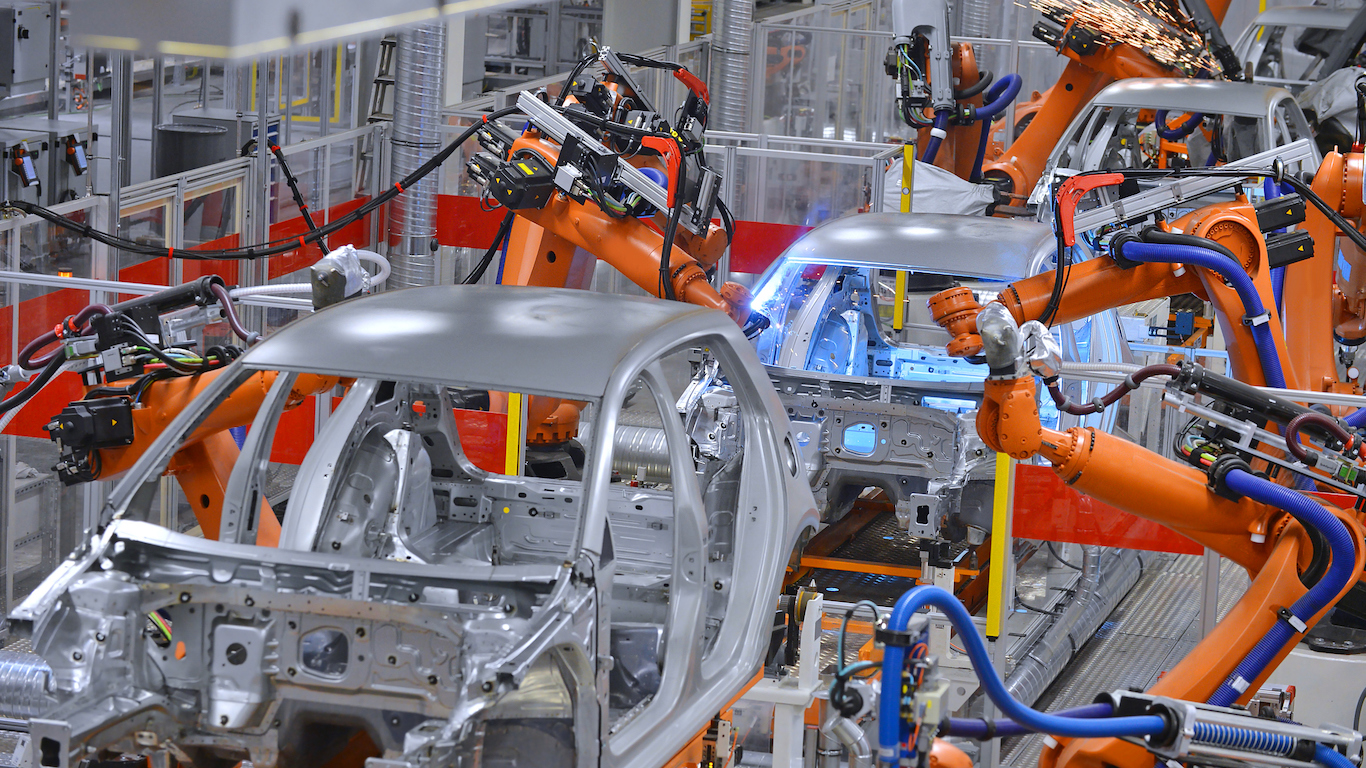
Now that even some of the largest corporations in America are fighting for their lives, it has almost certainly dawned on most workers that someone standing near them on an assembly line or sitting in an office down the hall will be out of a job. Alternatively, they may be fired and their teammate may get to keep their jobs.
The long knives are out now and the notion that companies are groups of “partners” is gone and will not come back while this generation of workers is still on the job.
Douglas A. McIntyre






 Top Gaining Stocks
 Top Losing Stocks