


 Last week, there was more continued media coverage of the death of David Carradine about the weekend elections in Iran. Yet, here we sit on Monday and there have been riots in the streets of Tehran over the election results. And the price oil is trading lower today….
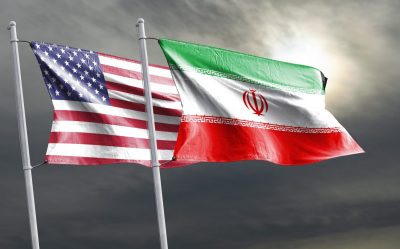
The “open and free election” is being questioned. We are not relying on any reported percentages of who secured which percentage of the vote, particularly since no one really knows which Iranian leader is the one that ultimately calls the shots. President Mahmoud Ahmadinejad won the election, but the opposition protesters are claiming that the vote was a farce due to rigged ballots. And this comes on the heels of Iran’s supreme leader Ayatollah Ali Khamenei calling for unity behind Ahmadinejad.
Much of today’s oil price drop is probably tied to more of a stronger dollar than geopolitics. It was just on Thursday that the Euro was at $1.415, yet on Monday morning the Euro is down to $1.38. In the first week of June we saw a peak weakness of roughly $1.43 per Euro. To illustrate just how weak the dollar had been, the Euro cost only $1.30 just on April 22.
Foreign Policy magazine ran a piece detailing what happens to human rights in developing and dictatorial government regimes. It was titled “The First Law of Petropolitics” and was written by Thomas Friedman, who also wrote “The World is Flat.” Iran is one of the top countries as a reference in the article.
Iran is one of the linchpins of any geopolitical risk scenario by any definition. Iran is the second largest supplier of oil from OPEC nations. It also borders Persian Gulf, the Strait of Hormuz, and the Gulf of Oman. We have an estimate of 40% as the total percentage of daily oil shipments are tied to the Strait of Hormuz. Yet, here we sit with oil trading down over $2.00 per barrel and challenging the $70.00 per barrel level to the downside. When you see what happens in emerging and developing nations where there are questionable elections, the laws of petropolitics are rather easy to see. But when you see oil trading lower on the news, it does beg a serious question: Just how much geopolitical risk is really supporting the price of oil?
The $140+ super-spike prices of mid-2008 has been tied to major money flows of investors and a trade against the weakening US dollar. It also showed that the ability of traders to chase up the price of commodity can create more reaction that the actual market fundamentals. The imbalances of supply versus demand never justified those prices and the major oil giants never believed in the prices being that high as sustainable. Now, $70.00 oil still seems cheap, but when there is a sell-off of this magnitude in one day on the first day after a questionable election in Iran it brings up the question of just how much the price of oil is dictated by money flows and currencies rather than the actuality of geopolitical risk.
It seems that it may be easier to sell the fears and the worries of geopolitical risks than it is to show day in and day out that the price of major commodities ever fully reflect the uncertainties in the world.
Does this mean that there is no geopolitical risk? Absolutely not. Does this mean Iran is not relevant in calculating oil prices? Absolutely not. Any real standoff in the region that involves in Iran would likely drive prices higher. But there is still just this nagging question of how much faith you can place in the reality of geopolitical risks compared to the herd mentality and the fears in geopolitical risks.
The United States Oil (NYSE: USO) ETF is down by 3% at $38.23 so far today. The iPath S&P GSCI Crude Oil Total Return Index ETN (NYSE: OIL) is down 3.1% at $25.24.
Jon C. Ogg
June 15, 2009








 Top Gaining Stocks
 Top Losing Stocks