


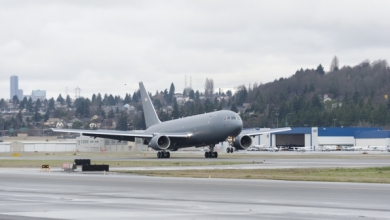
The Friday flight allowed Boeing’s pilots to perform operational checks on the engines, flight controls, and environmental systems. The flight lasted four hours and the plane flew to its maximum altitude of 35,000 feet before landing.
Air Force Colonel Christopher Coombs, the KC-46 system program manager said:
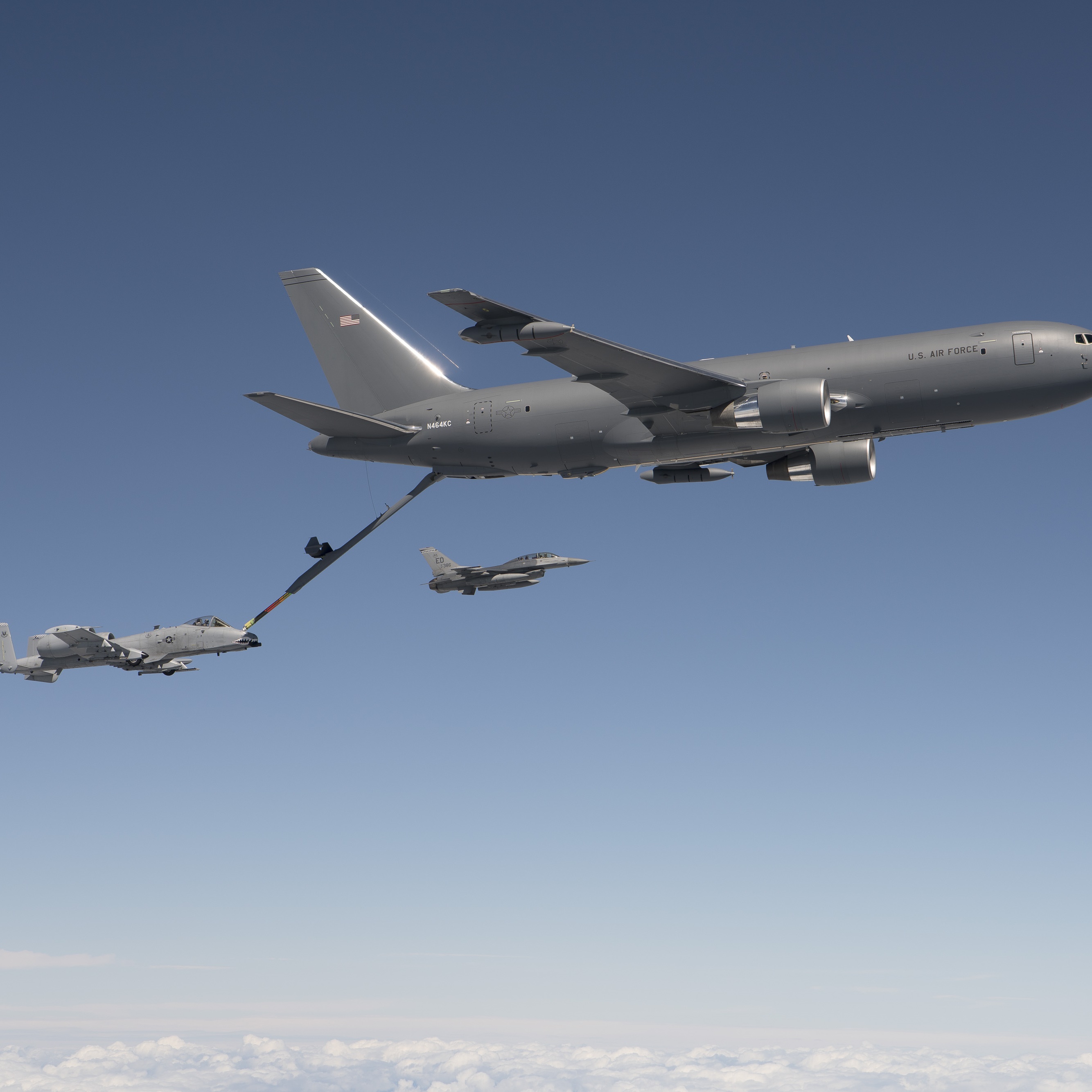
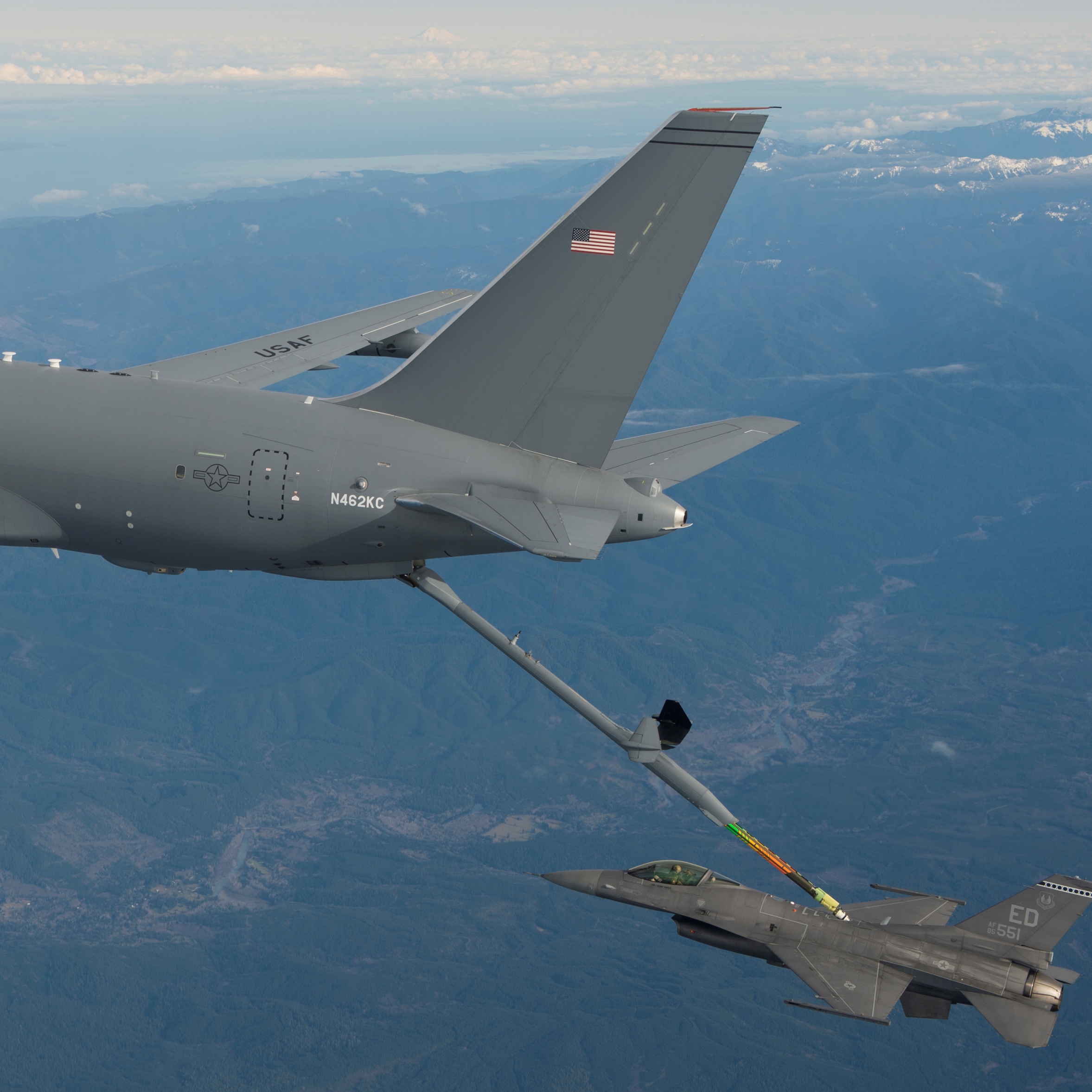
This first tanker flight is a key milestone for the program and we’ll now begin free air stability tests and flight controls of the boom and wing aerial refueling pods (WARPs) before conducting aerial refueling tests where the KC-46 will make contact with other military aircraft down the road.
That “down the road” timeframe is pretty tight. This part of the testing and evaluation of the new plane is due to be completed in four months, after which the Air Force is supposed to make a go-no go decision in April. Under the terms of the contract, Boeing needs to deliver the first 18 planes to the Air Force by August of 2017. Here’s how the company expects to proceed:
The Boeing team now will conduct a post-flight inspection and calibrate instrumentation prior to the next series of flights, during which the tanker boom and WARPs systems will be deployed. Before the end of the year, the KC-46 will begin conducting aerial refueling flights with a number of U.S. Air Force aircraft. Those flights, along with the mission systems demonstrations and a recently completed ground cargo handling test, will support the planned Milestone C decision in 2016.
So, within three months, Boeing will start testing the new tanker capability to refuel planes in the air. The aircraft will have to pass a refueling milestone with each of at least five different Air Force, Marine, and Navy aircraft before the April (Milestone C) decision.






 Top Gaining Stocks
 Top Losing Stocks