


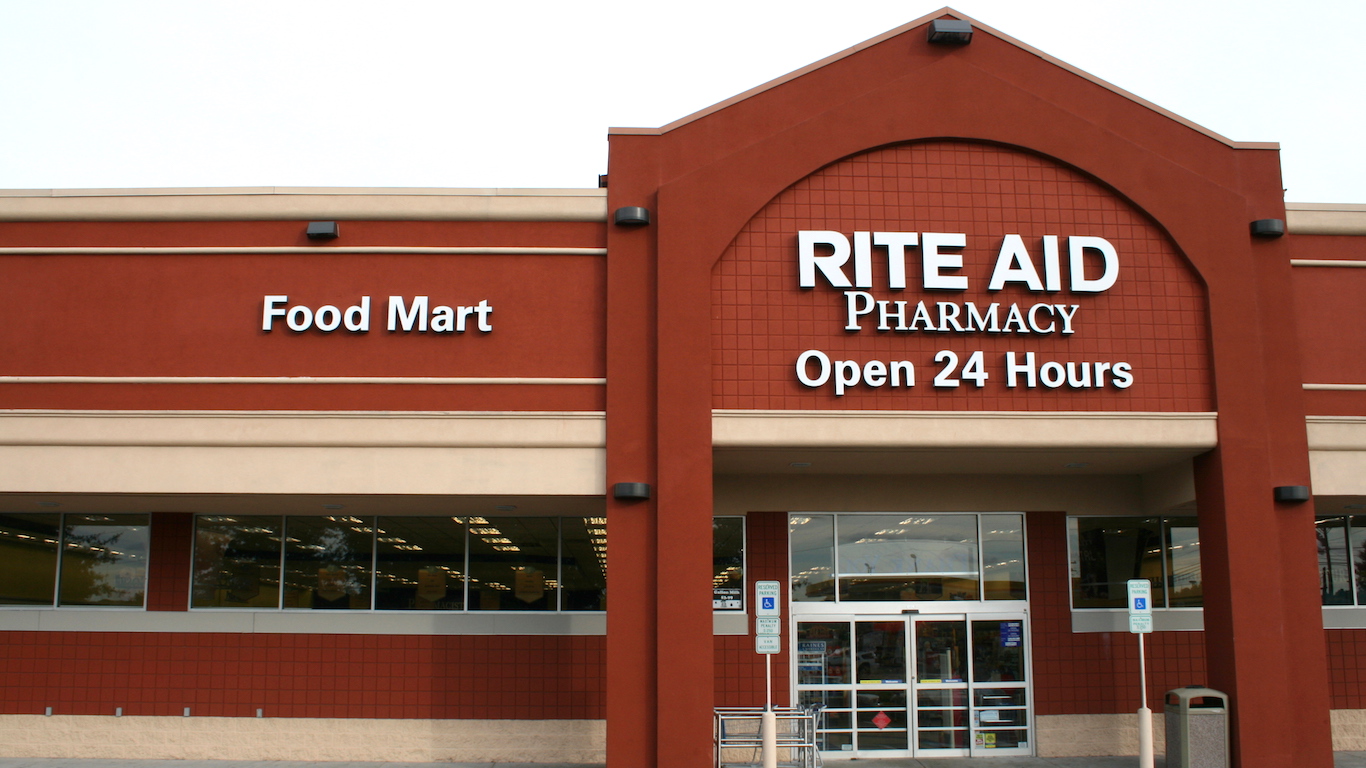
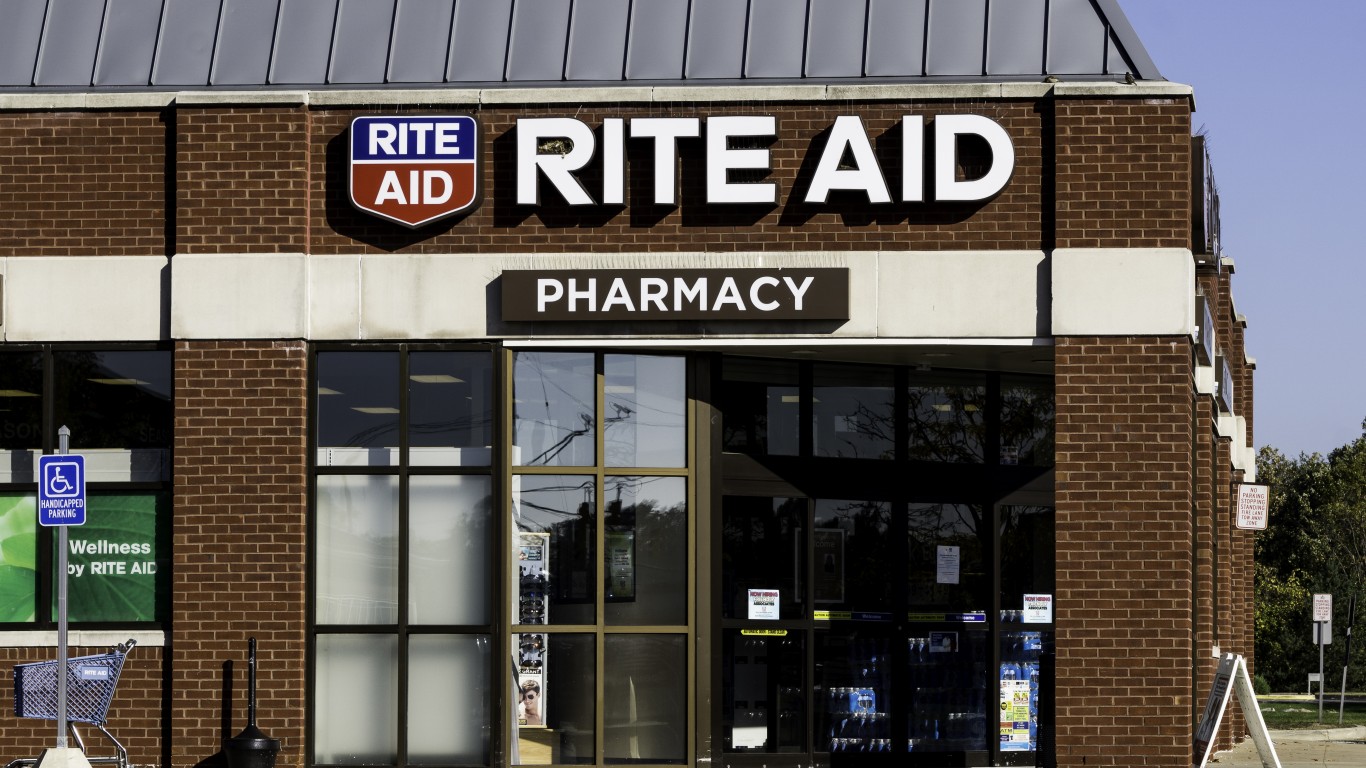
When rumors started to fly regarding Walgreens’ purchase of Rite Aid Corp. (NYSE: RAD) in the summer of 2015, Rite Aid’s stock soared to an all-time high of almost $190. On Friday, shares closed at $0.65. On Sunday, the drug store operator filed for Chapter 11 bankruptcy protection, primarily due to its part in the nation’s opioid crisis.
In its press release, the company said it had reached an agreement with some of its senior secured noteholders “on the terms of a financial restructuring plan” that will speed up its “ongoing business transformation.” In the next sentence, the company said that “implementing the contemplated restructuring plan” would, among other things, enable Rite Aid to reduce its debt. The only way to make this happen, of course, was to file for protection from creditors.
Rite Aid also announced that it had appointed board member Jeffrey Stein as its new chief executive and chief restructuring officer. Interim CEO Elizabeth Burr stepped down and remains on the company’s board.
The immediate problem is a pile of lawsuits related to Rite Aid’s sale of opioids. In March, the U.S. Department of Justice filed suit against the company, joining a whistleblower lawsuit filed in Ohio in 2019. The suits allege that the company knew it was filling unlawful prescriptions, helping propel the nation’s opioid epidemic. The illegal sales were alleged to have occurred between May 2014 and June 2019.
[nativounit]
Rite Aid is one of many companies that have been sued over their roles in the opioid crisis. Drug distributors Amerisource Bergen, McKesson and Cardinal Health reached settlements totaling nearly $20 billion with 46 states in 2022. Johnson & Johnson separately settled lawsuits totaling $5 billion with 45 states. None of the companies admitted to wrongdoing. The three distributors and Johnson & Johnson also settled claims from Native American tribes for $590 million in 2022.
Drug store operators Walmart, Walgreens, and CVS have also agreed to pay more than $13 billion for filling unlawful opioid prescriptions. Rite Aid paid roughly $45 million last year to settle some lawsuits, but more than 1,000 remain outstanding.
Rite Aid also announced Sunday that certain of its lenders have agreed to supply $3.45 billion in new financing to the company. The company expects the money to be enough to get it through the bankruptcy process.
[recirclink id=1324228]
When Rite Aid reported first-quarter fiscal 2024 earnings last month, it also reported just over $6 billion in net debt and long-term debt of $3.33 billion. Whatever resolution emerges from the bankruptcy filing will have to make adjustments to those totals. The bankruptcy filing’s primary purpose, though, is to resolve the lawsuits against Rite Aid “in an equitable manner.”
Rite Aid currently operates more than 2,100 stores in 17 states. It employs more than 6,100 pharmacists among its 47,000 workers.







 Top Gaining Stocks
 Top Losing Stocks