Apple Battered in China

Photo of Douglas A. McIntyre
By Douglas A. McIntyre Published
This post may contain links from our sponsors and affiliates, and Flywheel Publishing may receive compensation for actions taken through them.
Apple Battered in China

© JohanSjolander / E+ via Getty Images

China is Apple’s largest market. Rivals there include Samsung, along with several local smartphone manufacturers. Apple’s revenue can be badly damaged by slow Chinese sales, particularly of the new iPhone 15. And those sales appear to be slow. (These are the 25 biggest product flops of the past decade.)

According to CounterPoint Research, Apple’s iPhone 15 sales in China are lagging behind what they were during the first 17 days on the market for the iPhone 14. “China’s headline numbers for the 15 series are in the red, and this is a reflection of the broader decline in consumer spending,” says Mengmeng Zhang. He added that U.S. sales were robust over the same period.

Apple may no longer rely on the iPhone to drive revenue to the extent it used to, yet it remains Apple’s flagship. In the most recent quarter, iPhone sales were $38.6 billion of Apple’s total of $81.6 billion. Apple is fortunate that its Services unit has grown quickly enough to make up for a dip in iPhone demand.

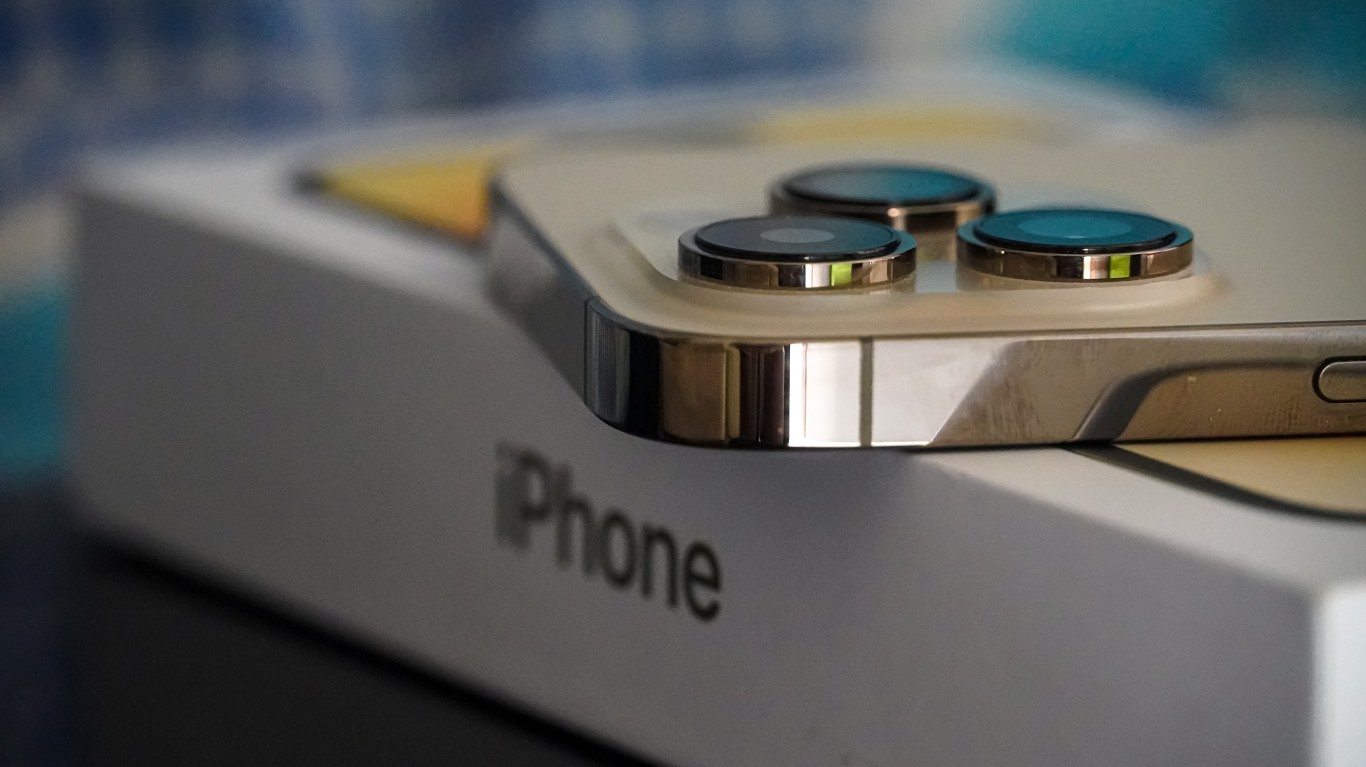
Among the theories about Apple’s problems is that the iPhone 15 is too much like the iPhone 14, so customers will not upgrade. There is some support for this. The new iPhone’s camera may be better, but not to the extent that most people would care. The same is true of the iPhone’s new, faster processor
[nativounit]
Apple also may face a large challenge from Samsung, which has been the top smartphone seller in the world for many years. Plus, Samsung has launched a new generation of foldable phones that have caught the eyes of many consumers. Early indications show sales have been brisk.
[recirclink id=1172911]
Finally, there are simply the headwinds of a slowing economy, which have been felt acutely in China. Its GDP increase rates have slowed. If so, as is true in any recession, people cut back their spending.

Photo of Douglas A. McIntyre
About the Author Douglas A. McIntyre →

Douglas A. McIntyre is the co-founder, chief executive officer and editor in chief of 24/7 Wall St. and 24/7 Tempo. He has held these jobs since 2006.

McIntyre has written thousands of articles for 24/7 Wall St. He is an expert on corporate finance, the automotive industry, media companies and international finance. He has edited articles on national demographics, sports, personal income and travel.

His work has been quoted or mentioned in The New York Times, The Wall Street Journal, Los Angeles Times, The Washington Post, NBC News, Time, The New Yorker, HuffPost USA Today, Business Insider, Yahoo, AOL, MarketWatch, The Atlantic, Bloomberg, New York Post, Chicago Tribune, Forbes, The Guardian and many other major publications. McIntyre has been a guest on CNBC, the BBC and television and radio stations across the country.

A magna cum laude graduate of Harvard College, McIntyre also was president of The Harvard Advocate. Founded in 1866, the Advocate is the oldest college publication in the United States.

TheStreet.com, Comps.com and Edgar Online are some of the public companies for which McIntyre served on the board of directors. He was a Vicinity Corporation board member when the company was sold to Microsoft in 2002. He served on the audit committees of some of these companies.

McIntyre has been the CEO of FutureSource, a provider of trading terminals and news to commodities and futures traders. He was president of Switchboard, the online phone directory company. He served as chairman and CEO of On2 Technologies, the video compression company that provided video compression software for Adobe’s Flash. Google bought On2 in 2009.

Our $500K AI Portfolio

See us invest in our favorite AI stock ideas for free

Our Investment Portfolio

Continue Reading

Top Gaining Stocks

CBOE Vol: 1,568,143
PSKY Vol: 12,285,993
STX Vol: 7,378,346
ORCL Vol: 26,317,675
DDOG Vol: 6,247,779

Top Losing Stocks

LKQ
LKQ Vol: 4,367,433
CLX Vol: 13,260,523
SYK Vol: 4,519,455
MHK Vol: 1,859,865
AMGN Vol: 3,818,618