


Founded in 1975 by Bill Gates and Paul Allen, Microsoft revolutionized the software industry
Microsoft Corporation (NASDAQ: MSFT | MSFT Price Prediction) has changed how millions worldwide interact with technology. Microsoft’s best-known software products are the Windows operating system line, the Microsoft 365 suite of productivity applications, and the Edge web browser.
Released in 1985, Windows became the go-to software for many, and by the late 1980s, Microsoft had achieved the status of the world’s largest personal computer software company.
Microsoft went public in 1986, and since the initial public offering, the increase in the shares price minted three billionaires and an estimated 12,000 millionaires who were Microsoft employees.
After a spectacular rise over the last year and the incredible impact of Azure, the company’s cloud operating system debuted in 2008, investors have pushed shares to astronomical heights. We found five reasons investors may want to think twice before buying shares now.
Microsoft is very expensive
The stock is expensive on many metrics when trading at almost 37 times trailing earnings. Over the last ten years, Microsoft has sold an average of 28.55 at a price-to-earnings. So, currently, the stock is trading at a 28% premium to the historic level.
Over the years, Microsoft has faced numerous ethics issues
From anti-competitive corporate behavior to privacy issues to labor troubles and environmental concerns, the company has faced many criticisms and is often pressed to improve accountability.
Azure cloud computing faces very stiff competition

While Azure has been a big success for the company, the competition is big and very strong. Competing with Amazon.com, Inc. (NASDAQ: AMZN) and their Amazon Web Services division is no small task. The company also competes in mobile computing with Apple Inc. (NASDAQ: AAPL) and Alphabet, Inc. (NASDAQ: GOGL). The path forward can be complicated when you face the biggest and the best.
Will the antitrust movement finally catch up with Microsoft?

For over 20 years, the company has faced antitrust challenges and, for the most part, has avoided being sanctioned in a big way. However, there are still many that maintain that the company holds a monopoly on more than a few tech silos. The company’s recent $68.7 billion deal to acquire Activision Blizzard Inc. will immediately make the company the third-largest gaming company.
The perception of Bill Gates has changed dramatically over the years.

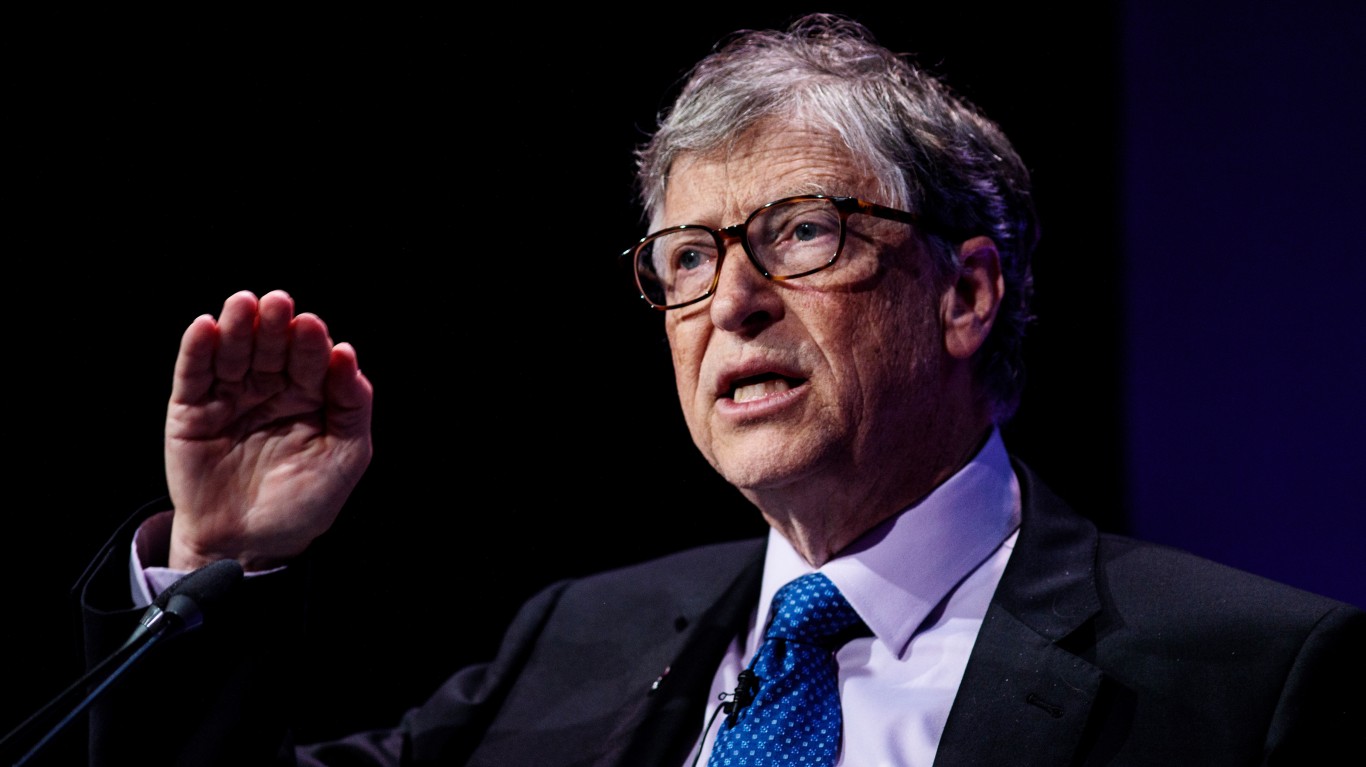
Once heralded as a modern-day Thomas Edison, the public perception of founder Bill Gates has drastically changed over the last five years. While no longer running the day-to-day business at the company, Mr. Gates has been scrutinized over everything from Covid-19 to comments on the world population to a relationship with Jeffrey Epstein.
ChatGPT investment is not necessarily a game-changer

While the $10 billion investment in the chatbot company ChatGPT was a brilliant decision, the reality for generative Artificial Intelligence is that it will be a highly competitive and closely scrutinized business silo. While a path for the future, it will likely be different from the panacea for the company many had hoped for.
Microsoft will still be around 50 years from now
Despite the many negatives surrounding the company, the reality for investors is that as we approach the middle of the century, the company will still be a giant in the technology field and likely will continue to expand its efforts in software, cloud computing, gaming, and more.
For now, investors should wait for a pullback in the shares and look for the price-to-earnings ratio to fall back to the historic range of 28 times trailing earnings. That would occur if the shares dropped to $305 from the current $375 trading level.








 Top Gaining Stocks
 Top Losing Stocks