


A key component of income investing is a portfolio that includes safe dividends, those that are unlikely to shrink or disappear. Recognizing when a dividend is stable and safe can be a challenge, but certain metrics can offer clear signs for the investor looking to establish or shore up such a portfolio.
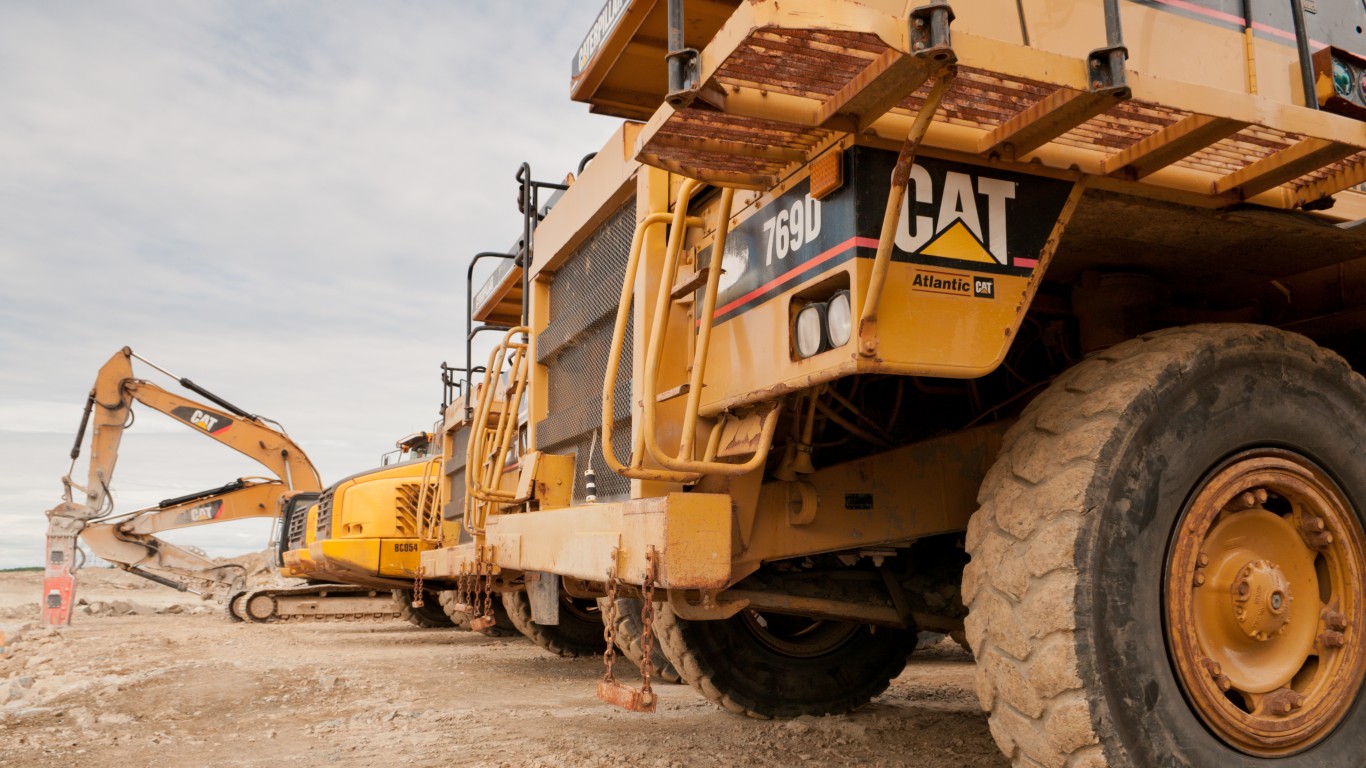
Take the dividend at Caterpillar Inc. (NYSE: CAT | CAT Price Prediction) for instance. The next payout is scheduled for February 20, and the yield is about 1.8%, which is not huge. However, it is better than payouts from such competitors as Deere & Co. (NYSE: DE) and Oshkosh Corp. (NYSE: OSK), as well as the farm, construction and mining equipment manufacturing industry average.
Dividend Aristocrat?

Other Valuation Metrics

The dividend payout ratio indicates how much of a company’s earnings are paid out as a dividend. It is a sign of how safe a company’s dividend is and how much room it has for future growth. The higher the ratio, the greater the risk. Income investors often look for a dividend payout ratio of less than 60%. Compared to that benchmark, Caterpillar’s dividend payout ratio of less than 28% looks quite attractive. It’s a little higher than the industry average, but well below Caterpillar’s average of around 40% in the past decade.
A look at free cash flow reveals whether the company has the funds required for its payout, or for share repurchases or even paying down debt or making acquisitions. As of last September, Caterpillar’s free cash flow was more than $8 billion for the trailing 12 months, up from about $6 billion for both 2021 and 2020. Income investors prefer growing free cash flows, and that has been the trend for Caterpillar since 2016.
Return on invested capital is a measure of how well a company allocates its capital to profitable projects or investments. Again, the thing to look for is stability, specifically a double-digit ROIC over many years. Caterpillar has met this benchmark in five of the past six years, while competitor Deere has not.
Operating margin is a measure of the percentage of revenue a company keeps as operating profit. Here too the preference is for a stable double-digit percentage. Caterpillar has met this benchmark since 2018, as has Deere.
A look at sales growth offers a clue to the volatility or cyclical nature of the business. Steady, moderate growth, say 3% to 7%, is ideal. Caterpillar is in a cyclical industry and its sales growth shows it, ranging from about 22% to -22% in the past few years.
A company’s net debt to capital ratio also can signal whether a dividend may be at risk. Too much debt can put dividends at risk in hard times. So a lower ratio is considered better. Caterpillar’s ratio near 0.7 in recent years looks attractive. (These are the seven Warren Buffett dividend stocks that every total return investor should own.)
Probably the most popular valuation metric is the price-to-earnings (PE) ratio. This indicates whether a stock is expensive or cheap at its current market price, compared to the broader market or to competitors. Caterpillar has a PE ratio above 16, more or less in line with the industry average. That is a little above the historical benchmark of 15 but below the broader market’s current 24 or so.
And finally, the number of shares outstanding is worth a look. When companies buy back their shares, that number shrinks. But secondary offerings of stock increase that number. Investors tend to prefer a declining total, as that increases their stake over time. For Caterpillar, the number of shares decreased or remained the same in every year but one between 2012 and 2022.
Summary

| Dividend Aristocrat | ✔ |
| Dividend payout ratio | ✔ |
| Free cash flow | ✔ |
| Return on invested capital | ✔ |
| Operating margin | ✔ |
| Sales growth | 🗙 |
| Net debt to capital ratio | ✔ |
| PE ratio | ✔ |
| Shares outstanding | ✔ |
The only mark against Caterpillar is sales growth, which is not much of a surprise, given the cyclical nature of the business. As mentioned above, it is more remarkable that Caterpillar is a Dividend Aristocrat, given that cyclicality.
The conclusion here, then, is that Caterpillar’s dividend, while not as generous as some others, appears to be reasonably safe.













 Top Gaining Stocks
 Top Losing Stocks