


The Right Real Estate Decisions Can Make You Rich
Doug McIntyre and Lee Jackson discuss reverse mortgages, explaining their function and the potential drawbacks compared to other options like home equity loans. They highlight that reverse mortgages allow homeowners to use their home as collateral without making mortgage payments, but they accrue interest and fees, and the home is usually sold to pay off the loan. They also mention that rising interest rates affect reverse mortgages similarly to traditional loans, making them more costly. Jackson suggests that a home equity loan might be a cleaner and simpler alternative for those looking to tap into their home’s equity.
And So Can Picking A Few World Class Stocks
That’s why we recently released a 38 page guide titled ‘The Next Nvidia’. In in, our leading tech analysts outlines three stocks they believe can go on to world changing returns. For a limited time, 24/7 Wall St. readers can access the research report, totally free, just by clicking here.
Transcript:
So when I’m watching TV, maybe because I’m older and they direct commercials at me for things like, you know, drugs, I keep seeing things about reverse mortgages.
Now, when you watch those TV commercials, all the TV commercial says it’s a good idea and you get to stay in your home.
That really doesn’t tell you anything. That’s why it’s a TV commercial.
It doesn’t.
No, it doesn’t. So what is it?
Well, they bombard. It’s on the legacy news and anything that skews to an older demographic.
I mean, ostensibly what it is is you’re using your home as a collateral for a loan.
I mean, the title stays in your name, but you don’t have to make mortgage payments.
But every month, you will pay the interest on the loan and any fees that the reverse mortgage company puts on there.
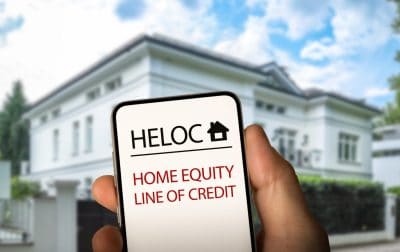
And I mean, typically, if you really want to draw money out of your home, if you have equity, it’s better to just get a HELOC, a home equity loan, and just draw it out there and bring down your equity.
But in the case of a reverse, you stay in the home.
Again, like I said, you don’t have a mortgage payment, but you have interest and fees, and you do have to pay taxes and insurance.
And you’re responsible, of course, for the upkeep of the home.
And typically, when the loan ends, the home is sold to pay back the bank that loans.
Now, is this the same problem as we’ve got with mortgage rates right now?
So doing a reverse mortgage when rates were at 3%, now they’re at 7%.
So that affects this the same way as if it was just a HELOC or a rental?
Oh, absolutely. Sure. Because, I mean, I’m not a reverse mortgage specialist, but it’s probably LIBOR plus or whatever, or funds plus, or the 30-year FHA plus, you know?
So yeah, I would suspect that if it’s, if it’s an, and there’s, I think there’s, and again, I’m not a reverse mortgage expert, but I think there are different lengths that you can put on one depending on your age.
And, but I think for most people, it’s just till the home is sold.
Well, at least at my bank, you don’t have to do any of that.
You do just take a home equity loan and you don’t have to go to another financial institution.
You just go into your bank and say, I want a home equity loan.
The bank knows how much equity you’ve got.
Right. I can, you do the deal with them. To me, that’s a cleaner deal.
Well, and again, it’s a decision people have to make based on the mortgage total or the amount that’s owed is going to continue to go up because the fees and interest are added on to the loan.
So it will continue to grow through the life of it.
But again, typically the home is sold at the end of the loan to pay off the loan.
Right.










 Top Gaining Stocks
 Top Losing Stocks