


24/7 Wall St. Insights
- Exchange-traded funds (ETFs) have numerous advantages over open-end mutual funds.
- Some top ETFs pay monthly dividends, while most pay quarterly. That is a plus for passive income investors.
- Grab this free report now: Access 2 legendary, high-yield dividend stocks Wall Street loves.
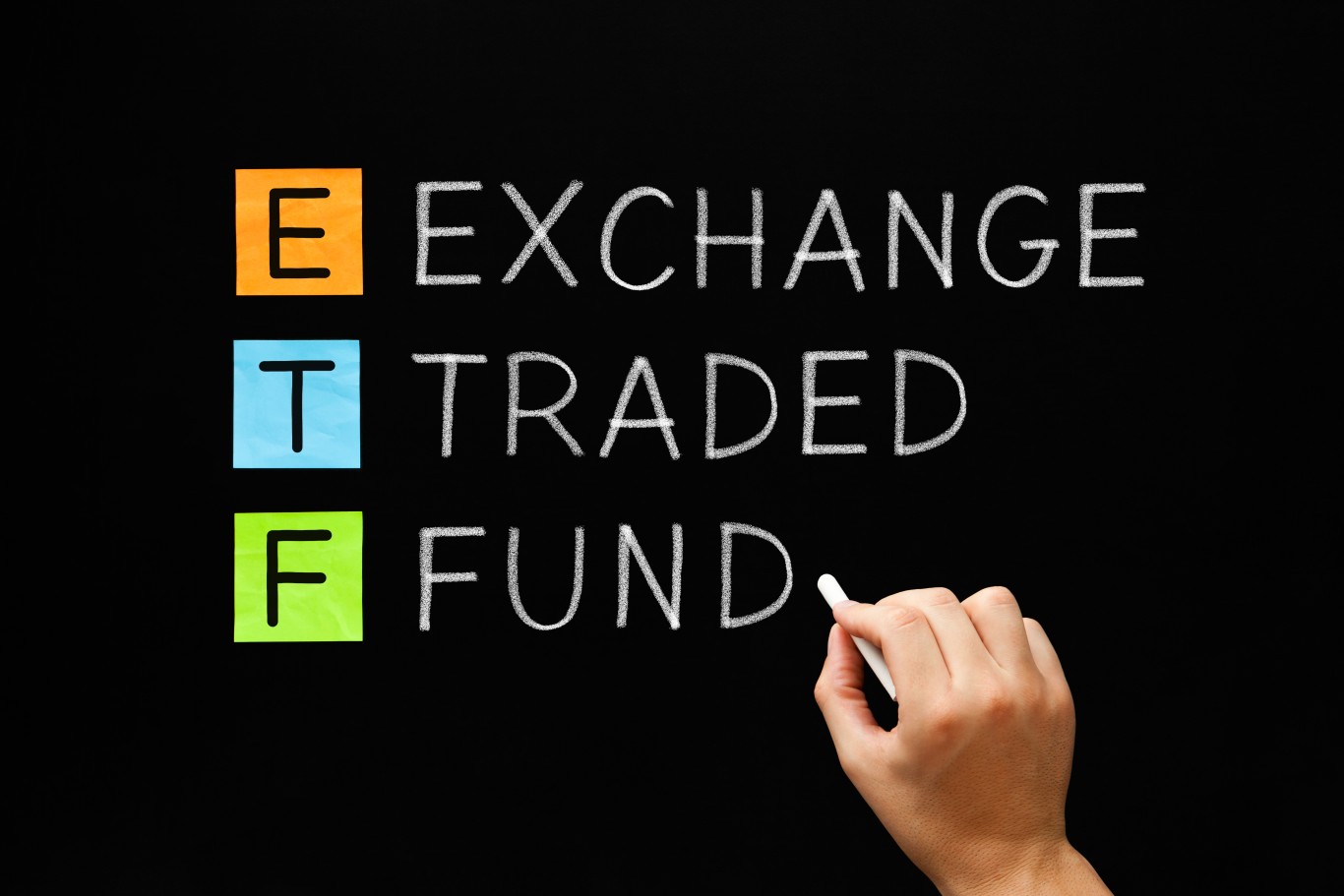
Unlike open-end mutual funds, ETFs trade on major exchanges like stocks. They own financial assets such as stocks, bonds, currencies, debts, futures contracts, and commodities such as gold bars.
One massive advantage ETFs have is that investors can buy or sell them anytime the markets are trading.
We screened our 24/7 Wall St. ETF research database to compare two of the hottest large value dividend ETFs and decide which is a better investment vehicle now. These top funds pay very reasonable dividends and are excellent vehicles for growth and income investors.
SPDR Portfolio S&P 500 High Dividend ETF

Trading at just over 15 times earnings and delivering a solid 4.56% dividend, the SPDR Portfolio S&P 500 High Dividend ETF (NYSEARCA: SPYD | SPYD Price Prediction) has been a very popular vehicle for growth and income investors.
The summary for the fund, which is run by financial giant State Street, says this:
Under normal market conditions, the fund generally invests substantially all, but at least 80%, of its total assets in the securities comprising the index. The index is designed to measure the performance of 80 high dividend-yielding companies within the S&P 50o Index. The S&P 500 Index focuses on the large capitalization U.S. equity market, including common stock and real estate investment trusts (“REITs”).
The fund has a massive $5.92 billion in assets under managment and has delivered total return this year of 4.89%. While far below the S&P 500’s gain of 17.5% this year, it’s important to remember the potential of total return, as it is one of the most effective ways to enhance the prospects of overall investing success. Total return is the collective increase in a stock’s value plus dividends.
One of the big positive statistics for the fund is the expense ratio is a tiny 0.07%. Plus, the fund has a reasonably low turnover of just 46%, which compares with the large value category average of 56.84%. Dividends are paid quarterly.
ALPS Sector Dividend Dogs ETF

Checking in with a price-to-earnings ratio of 14.04 and a dividend yield of 4.18% is the ALPS Sector Dividend Dogs ETF (NYSEARCA: SDOG), which has far fewer assets of $1.12 billion and pays quarterly dividends. The fund manager is ALPS Fund Services, which offers portfolio construction, asset management, financial planning, and investment advisory services.
The summary for the fund says this:
The underlying index generally consists of 50 stocks on each annual reconstitution date, which is the third Friday of December each year. The underlying index’s stocks must be constituents of the S-Network US Equity WR Large-Cap 500 Index, the leading benchmark index for U.S. large capitalization stocks.
ALPS notes that SDOG provides high dividend exposure across 10 sectors of the market by selecting the five highest-yielding securities in each sector and equally weighting them. The strategy is similar to the Dogs of the Dow on an expanded basis.
The expense ratio is 0.36%, which is well below the category average of 0.90%. The turnover ratio is 51%, which compares again with the large value category average of 56.84%. Year to date, the total return for the fund is 5.11%.
And the winner is

Choosing a winner here is difficult. Both of these funds have performed well within their stated category and both are run by very solid investment managment companies. While the performance this year favors the ALPS fund, the one-year and three-year return numbers are higher for the SPDR. Yet, the five-year results again favor the ALPS fund.
Since inception in 2012, the ALPS fund is up 10.56% versus 8.44% for the SPDR fund, which has an inception date of 2015.
So, despite having a much lower expense ratio, the strength of State Street and more assets under managment, we feel that the ALPS fund is the winner by a nose with a lower PE ratio, and the fund’s overall long-term performance trumps the 29-basis-point difference in yearly managment expense charges.
∴









 Top Gaining Stocks
 Top Losing Stocks