


A Golden Move for Tether
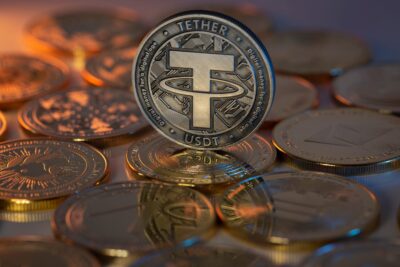
Tether, the issuer of the world’s largest stablecoin, USDT (CRYPTO:USDT), has deepened its push into precious metals with a $100 million investment in Canadian gold royalty company Elemental Altus Royalties.
This follows Tether’s earlier acquisition of a 37.8% stake in Elemental for $105 million in June, bringing its total ownership to a controlling position. The timing aligns with Elemental’s merger with EMX Royalty, creating a mid-tier gold-focused royalty company with 16 producing royalties.
Gold’s meteoric rise this year, hitting a record high near $3,580 per ounce, underscores the strategic appeal of this move. Tether’s CEO, Paolo Ardoino, calls gold the “natural Bitcoin,” signaling a dual-pillar strategy blending crypto and tangible assets.
Could Tether’s bold bet ignite interest among other stablecoin issuers to pursue royalty companies, unlocking revenue streams beyond crypto?
Gold and Bitcoin: Kindred Spirits or Distant Cousins?
Bitcoin (CRYPTO:BTC) is often hailed as “digital gold,” prized for its scarcity and potential as a store of value, much like gold itself. Both assets appeal to investors seeking hedges against fiat currency devaluation and economic uncertainty.
However, while gold’s status as a time-tested safe haven is nearly universal, Bitcoin’s role remains debated. Critics point to its volatility and lack of intrinsic value, unlike gold’s physical utility and historical stability.
This divergence could limit the appeal of Bitcoin-focused treasury companies like Michael Saylor’s Strategy (NASDAQ:MSTR | MSTR Price Prediction) or BitMine Immersion Technologies (NASDAQ:BMNR), which applies a similar strategy with Ethereum (CRYPTO:ETH). These firms bet heavily on crypto’s long-term value but face skepticism from traditional investors who view gold’s consensus as unmatched.
Tether’s pivot to gold royalties sidesteps this debate, offering exposure to a broadly accepted asset while leveraging blockchain’s efficiency, potentially making it a more stable bridge between digital and traditional finance.
Is Tether a Trailblazer or Outlier?
Tether’s investment in Elemental Altus may be a singular move driven by its massive $13 billion profit in 2024 and $5.7 billion in the first half of 2025, fueled by USDT’s $170 billion market cap.
Other stablecoin issuers, like Circle Internet Group‘s (NASDAQ:CRCL) USDC (CRYPTO:USDC) or Ripple‘s RLUSD (CRYPTO:RLUSD), may hesitate to follow, constrained by smaller profit margins or stricter regulatory compliance.
Circle, for instance, focuses on fiat-backed reserves, while Ripple targets payment-focused blockchain solutions. However, Tether’s strategy could inspire a new trend, blending crypto’s liquidity with gold’s stability. Royalty companies offer passive income without mining’s operational risks, making them attractive for stablecoin issuers seeking diversification.
If this catches on, stocks like Franco-Nevada (NYSE:FNV), Wheaton Precious Metals (NYSE:WPM), or Royal Gold (NASDAQ:RGLD) could become targets, given their established royalty portfolios.
This hybrid approach might outshine crypto-only treasury firms by appealing to both crypto enthusiasts and traditional investors.
Key Takeaways
Tether’s gold royalty strategy offers compelling benefits. It diversifies USDT’s reserves beyond fiat and Bitcoin, enhancing stability amid regulatory scrutiny. Gold royalties provide steady cash flows, insulated from mining’s operational risks, and align with rising gold prices, potentially boosting Tether Gold (CRYPTO:XAUt), with an $880 million market cap.
However, pitfalls loom. Gold price volatility, though less than crypto’s, remains a risk. Regulatory oversight could intensify, especially with Tether’s past transparency issues. Dependence on Elemental’s mining partners introduces indirect operational risks.
If successful, Tether’s move could redefine stablecoin backing, but failure might deter others, leaving it as an outlier. The crypto-gold nexus is promising but untested, and its success hinges on execution and market acceptance.













 Top Gaining Stocks
 Top Losing Stocks