


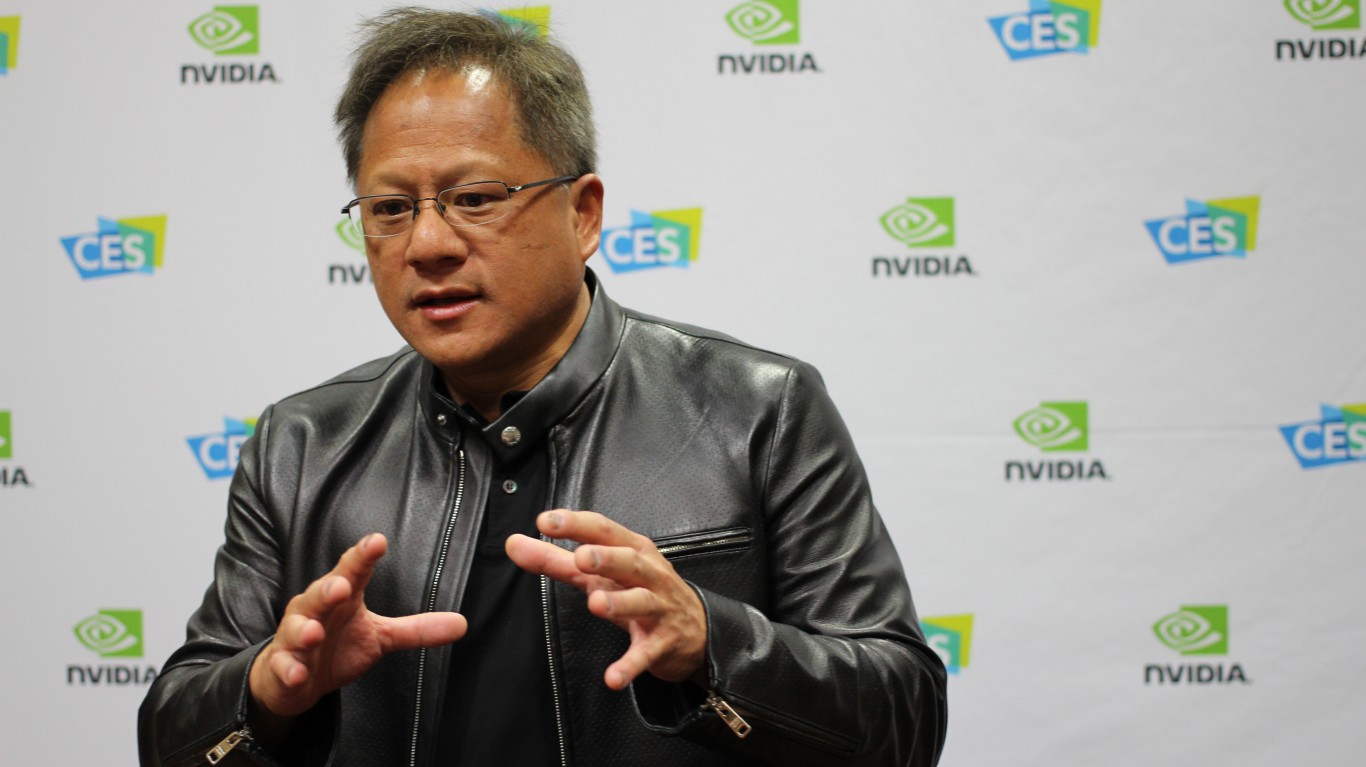
Nvidia (NASDAQ:NVDA | NVDA Price Prediction) may not be a quantum computing innovator, but CEO Jensen Huang, a man some consider the godfather of AI, has a lot to say about the profound, potentially game-changing nascent technology. All it really takes is a few comments from Huang to send quantum stocks soaring or tanking.
And while Huang has grown a bit more optimistic about the quantum timeline through the year, saying things like the technology is reaching an “inflection point,” rather than dismissing the technology as “decades away,” I do think that investors should get excited about the potential as quantum computing tech hits the market sooner rather than later.
Undoubtedly, if there’s a man who knows where the puck is headed next in the fast-moving world of tech, it’s Jensen Huang. And while he can’t transform Nvidia into a quantum computing pure-play overnight, he can make moves to better position his firm to profit from the profound technology, whenever it’s primed for take off.
NVQLink links Nvidia’s AI chips to quantum computers
With Nvidia pulling the curtain on its new NVQLink system, which connects quantum computers to its AI accelerators, it’s clear that Huang is already focused on “what’s next” while many of Nvidia’s rivals are still looking to catch up in the AI race. In many ways, Jensen and Nvidia seem to be playing chess while others play checkers. But the big question for investors is what such a hybrid quantum-classical product will really bring to the table and whether such a product will help Nvidia pull further ahead in the AI race.
Either way, it’s hard not to want to punch a ticket to shares of Nvidia as a way to play the quantum leap as the firm makes the next generation of quantum computers accessible for its existing customers. For Nvidia, innovations like NVQLink represent a low-risk, high-reward proposition that could help Nvidia move further ahead of its Magnificent Seven rivals.
Even if quantum is more than a decade (or even a few decades) from its big moment, Nvidia will be there to benefit when the prime time comes. Though I’ve been hesitant to buy Nvidia after its blistering rise, I think the latest NVQLink system is just another innovation that makes Nvidia such an anomaly. It’s a hyper-growth mega-cap titan that might just be able to keep its obscene growth rate lasting longer as it stays at the very cutting edge of emerging technologies.
Hybrid quantum-classical computers could be the way to go
Given Huang’s prior comments on quantum computing, it should really be no surprise to learn that he’s positioning Nvidia to eventually benefit from the emerging tech. If Nvidia can’t start making quantum computers, it can, at the very least, link its AI chips to quantum and provide a hybrid solution, which I do think could be a more practical way to go as quantum commercializes.
With Nvidia reportedly bringing on 17 quantum builders to support NVQLink, I think the big quantum leap might have been pulled forward by several years. Although I’m sure the latest quantum development will exacerbate some bears’ concerns about an AI bubble.
So, could collaborative innovations like NVQLink be the on-ramp that convinces the enterprise to make that initial big leap into quantum? Perhaps. It’ll be very interesting to see how the new tech plays out and the shot in the arm it could give to the AI revolution, which is already experiencing a profound boom.
The only thing more exciting than the latest and greatest AI chips is AI chips that are connected to quantum computers. And while there might be more upside to be had in the pure-plays, I do think that most investors would be best-served by sticking with Nvidia, especially since the shares are still modestly-priced at around 30 times forward price-to-earnings (P/E) despite surging past the $200 per-share mark on the back of the latest quantum news, which, I think is still being underestimated by Wall Street.
As analysts consider the potential of NVQLink and the potential for more applied quantum solutions, I think it’s hard not to want to buy the stock as Nvidia eyes a $5 trillion valuation.









 Top Gaining Stocks
 Top Losing Stocks