


Watch the Video
It struck me how confident Amazon seemed heading into the holidays. When I told Lee about their plan to hire 250,000 seasonal workers, he didn’t hesitate. That kind of expansion, he said, usually means the company is forecasting a strong shopping season. We both agreed it was one of the clearest early signs that consumer demand could help drive another strong fourth quarter.
Seasonal Hiring as a Retail Bellwether
I have always viewed major retailers’ hiring announcements as a reliable fourth-quarter GDP indicator. When companies like Amazon expand their workforce by hundreds of thousands, it signals confidence that orders will be high, shelves will move quickly, and logistics will be stretched to capacity. Lee pointed out that for many retail and e-commerce businesses, holiday performance essentially determines their entire year’s profitability.
AI and Automation on the Horizon
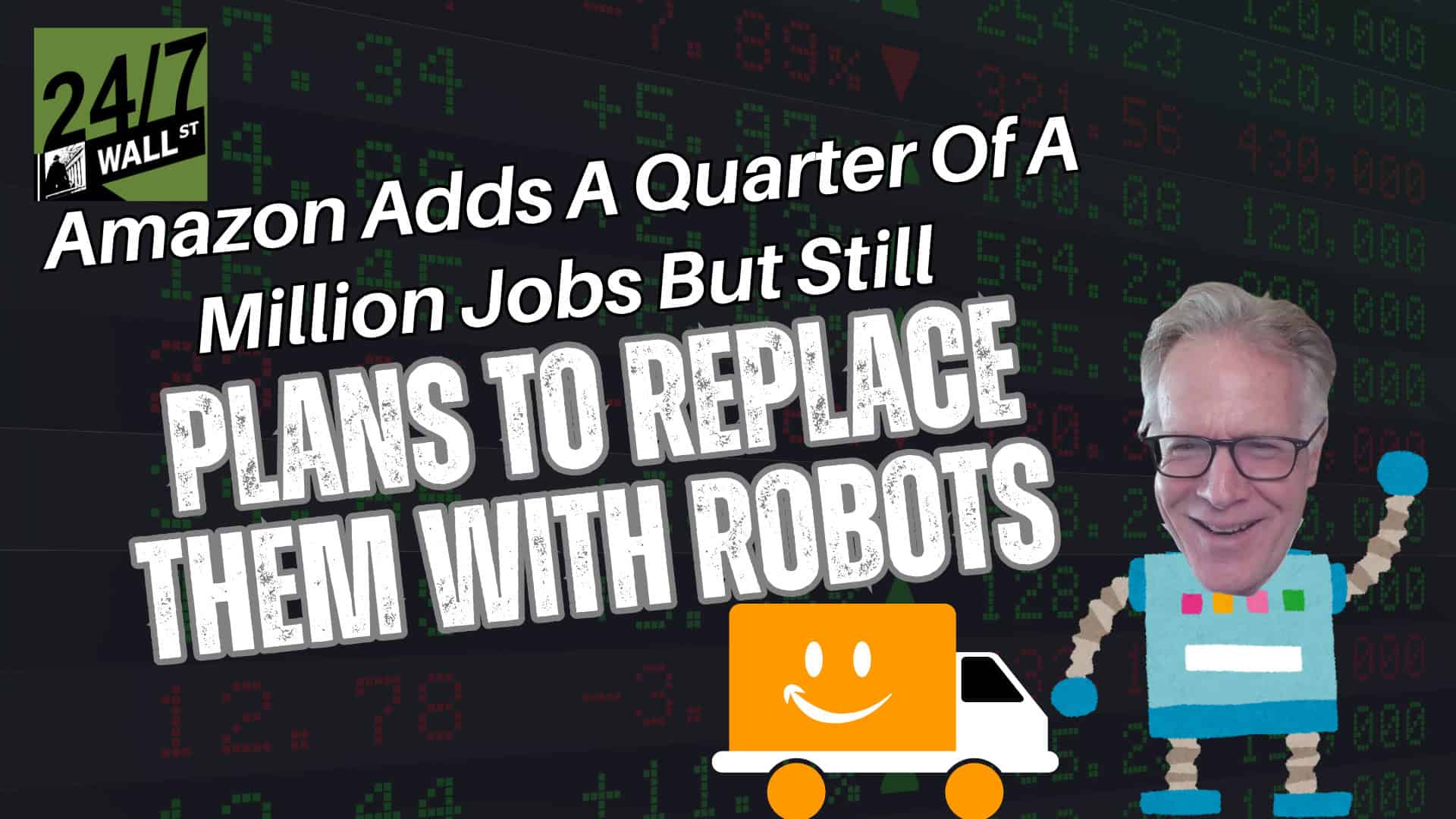
Lee shared a humorous but telling observation from The Water Coolest newsletter. He mentioned that Amazon could use AI to track every movement of these seasonal workers to train future robots. While said partly in jest, there is truth in the idea. Fulfillment work, such as pulling boxes, loading carts, and sorting on conveyor belts, is well-suited for automation.
Companies such as Miso Robotics are already deploying burger-flipping robots at White Castle and other fast-food chains. These machines, as Lee wryly noted, do not complain about working conditions or union membership. If Amazon follows that path, the number of seasonal hires could shrink steadily between 2025 and 2030.
Tracking the Trend Forward
This year’s hiring surge may be the high-water mark before a gradual decline in human seasonal labor. For now, the move reinforces that consumer spending and e-commerce volumes remain resilient, which is positive for both retail and the broader U.S. economy.
Transcript:
[00:00:04] Douglas: Lee, I’m heartened by the fact that Amazon is going to add the quarter of a million, uh, you know, extra employees. I know it’s for the holidays and they aren’t permanent jobs, but. You know, that’s still a lot of people to add and if you had to say who’s good at predicting retail sales, it’s Amazon.
[00:00:25] Lee Jackson: Oh, absolutely. Sure.
[00:00:26] Douglas: take amount of money that you know, walks through them every year. They must anticipate or even know that this holiday season is gonna be very good. always look at big retailers add as temporary employees as a bellwether for fourth quarter GDP.
[00:00:46] Lee Jackson: Exactly. And, if you’ve ever been in sort of e-commerce business world or the retail business world, you know, uh, my son works for a company where it all depends on now and the end of the year. It all, it all rolls into we gotta sell enough stuff during the holidays to make our year.
[00:01:06] Lee Jackson: And that’s true of almost every retail outlet in the United States of America. But, um, yeah, I think that is encouraging. Now, I, I read a, a, a kind of a spicy Wall Street Newsletter, and I should probably give this guy, it’s called The Water Coolest. And, uh, the guy’s really funny and he is really smart, but he said, he said, and watch what Amazon will do.
[00:01:31] Lee Jackson: They’ll, they’ll use AI to transcribe every action of all the 250,000 workers that were hired so they can use bots in the future. And I was like, uh, you know, that that could happen. They could use robots in the future, and robot, you know, all for all that kind of stuff. Because a lot of it’s just, you know, retail fulfillment, pulling boxes, loading ’em into a cart, putting them on a conveyor belt, you know, yada yada yada.
[00:01:54] Lee Jackson: So I think it’ll be interesting to see next year, Doug, if, are they hiring less? Will that number steadily go down from 2025 to say 2030 as more robots are put into the market? Because, you know, they’re starting to put robots into, uh, White Castle hamburger places. I don’t know if they still have those in the East coast.
[00:02:15] Lee Jackson: I guess they have ’em up north, but, but you know, it’s, it’s a company called Miso. And the, the, the, the robot will flip the burgers and take ’em off the griddle and do all that stuff. And the whole thing was, is that the robot will not complain about not being able to join a union or poor working conditions.
[00:02:33] Lee Jackson: So I, I think it’ll be interesting to see down the road.
[00:02:36] Douglas: Now do you think we can get away with this headline. Amazon to hire 250,000 workers or it can fire 250,000 workers later.
[00:02:51] Lee Jackson: Or not hire them next year or something along those lines. I don’t think Amazon would take that very
[00:02:57] Lee Jackson: but you know, it could be the case because again, a lot of these seasonal jobs are about six weeks, maybe, maybe eight weeks, maybe middle of November to middle of January. ’cause they have returns and things of that nature.
[00:03:09] Lee Jackson: But again, there, there are just guys and gals pulling stuff from shelves and boxes that are going on, you know, conveyor belts and things of that nature. So I, it’ll be interesting if we, for us to track this in next year, see how many people Amazon, you know, hires for the holiday season.











 Top Gaining Stocks
 Top Losing Stocks