


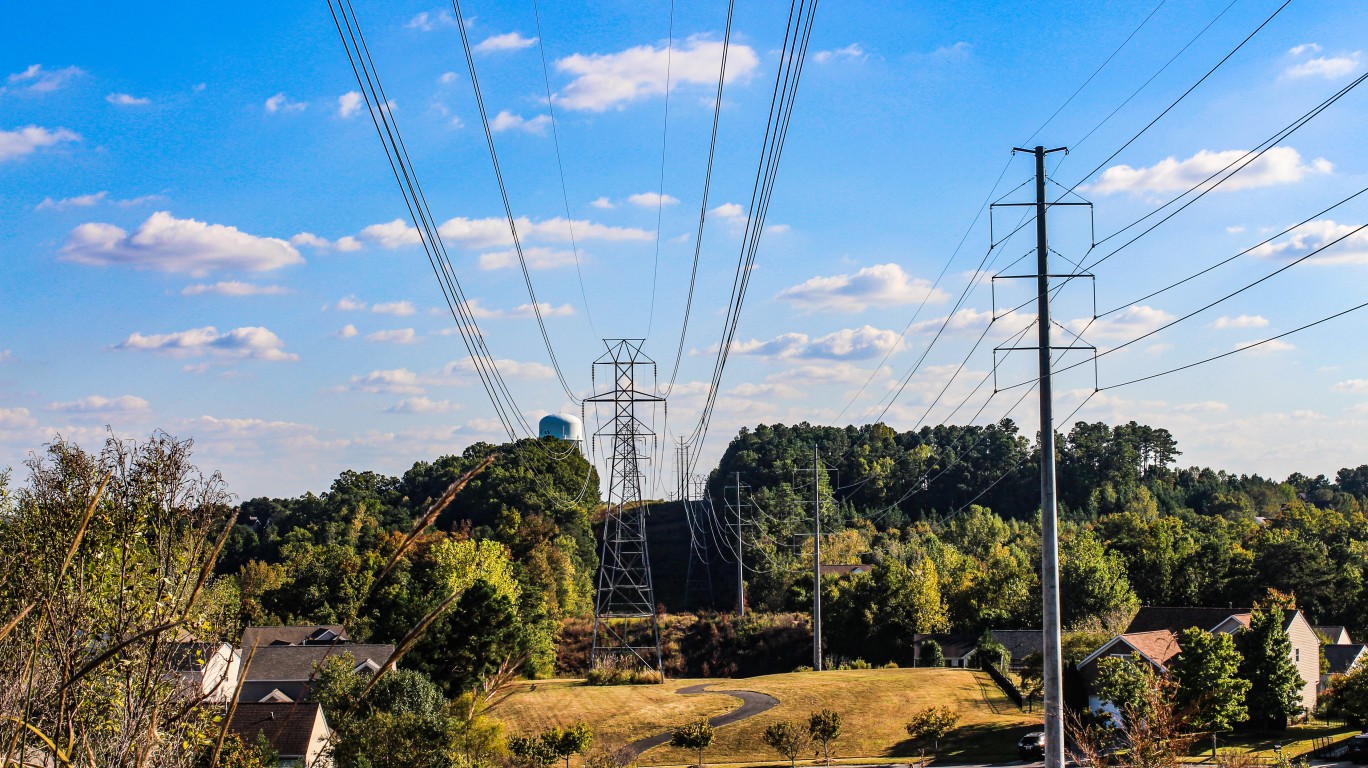
For most of its life, the Utilities Select Sector SPDR Fund (NYSEARCA:XLU | XLU Price Prediction) was the financial equivalent of a thermostat. You set it, you forgot it, and it quietly produced a check every quarter while the rest of your portfolio did the interesting work. Then artificial intelligence showed up and started plugging in server farms the size of small cities, and suddenly the most boring sleeve in the S&P 500 had a growth story written about it on CNBC.
That tension is the whole pitch. XLU is up about 20% over the past year and some 9% year-to-date, trading around $46. Those are not numbers anyone associates with regulated electric monopolies, and yet here we are.
What XLU Actually Owns
The fund is a concentrated bet on regulated power. As of late April 2026, electric utilities made up about 66% of the portfolio and multi-utilities another 26%, with top holdings led by NextEra Energy (NYSE:NEE), Southern Company (NYSE:SO), and Constellation Energy (NASDAQ:CEG). You are buying companies that run wires, generate electrons, and collect rate-regulated cash flows from people who cannot easily switch providers.
The return engine has historically been simple. Utilities earn an allowed return on their rate base, pay out most of the earnings as dividends, and reinvest the rest into capital projects that grow the rate base. XLU has paid quarterly dividends without interruption since 1999, with the long-term per-share payout climbing steadily for over a decade. The most recent quarterly distribution was $0.31 in March 2026.
The AI Power Plot Twist
Here is where the “strange but interesting mix” in the headline comes in. The classic utility model assumes flat-to-low electricity demand growth in developed economies. AI training clusters and hyperscale data centers are rewriting that assumption in real time. The International Energy Agency has called it a “power demand super cycle,” with electricity demand expected to more than double by 2030. American Electric Power alone has secured 63 gigawatts of new load by 2030 and lifted its five-year capital plan to $78 billion.
VettaFi’s Todd Rosenbluth summarized the shift on ETF Trends in November, calling XLU a hybrid investment offering both growth opportunities and income.
Does It Actually Deliver?
On the strategy promise, yes. XLU has functioned as a defensive sleeve, a dividend payer, and now a thematic vehicle for grid investment all at once. CNBC reported in August 2025 that the fund had reached a new record, outperforming tech stocks, a sentence nobody would have written in 2019.
The five-year total return of about 65% and ten-year return of 161% are respectable, though they trail what a plain S&P 500 index fund delivered over the same windows. That is the honest tradeoff. You bought stability and got it. You did not buy NVIDIA (NASDAQ:NVDA).
The Tradeoffs You Are Accepting
- Rate sensitivity cuts both ways. Utilities carry heavy debt loads to fund capital projects, so the 10-year Treasury yield near 4%, sitting in the 83rd percentile of the past year, is a real headwind. When yields rise, dividend stocks face stiffer competition from risk-free bonds.
- Concentration risk. With over 90% of the fund in electric and multi-utilities, you are essentially making one bet on regulated power. Adverse rate-case decisions, weather events, or grid reliability issues hit the whole portfolio.
- The growth story is priced in. Utilities have already rerated higher on the AI thesis. Buying a defensive sector after a roughly 20% twelve-month run is a different proposition than buying it during a panic.
XLU fits best as a 5-15% portfolio anchor for investors who want regulated-utility cash flows with a side of data center demand growth, and the primary risk is paying a premium price for a bond-proxy sector right as long rates push higher.














 Top Gaining Stocks
 Top Losing Stocks