



The brokerage sector is producing one of the widest divergences of 2026 so far. Robinhood Markets (NASDAQ:HOOD | HOOD Price Prediction) is down 30% year to date (YTD), while Interactive Brokers Group (NASDAQ:IBKR) is up 36% YTD. That roughly 65-point spread heading into mid-May tells a revealing story about customer mix and revenue durability.
HOOD stock closed at $79.05 on May 6 after an 11% recovery over the past week. IBKR shares closed at $87.04 the same day. Both companies reported Q1 2026 results in late April, and the market’s reaction handled the rest.
Robinhood and Interactive Brokers share the same industry but are on opposite trajectories. The gap reflects how cyclical retail engagement at Robinhood is colliding with the steadier compounding of Interactive Brokers’ professional, global client base.
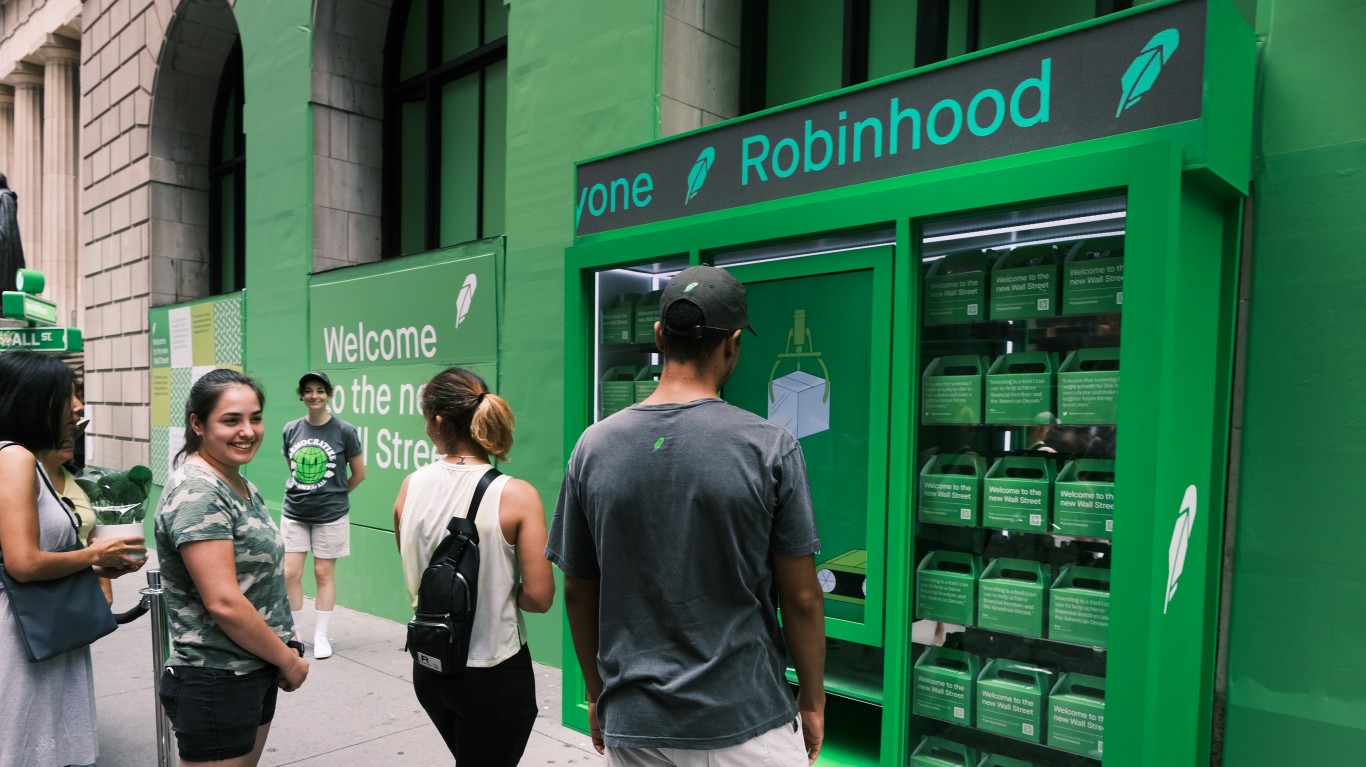
Robinhood’s Retail Cycle Catches Up
Robinhood missed on both the top and bottom lines in Q1 2026. Revenue of $1.07 billion missed the $1.14 billion consensus by 6%, and EPS of $0.38 came in shy of the $0.39 estimate, snapping a four-quarter beat streak.
Crypto was the drag. Robinhood’s cryptocurrency revenue collapsed 47% year over year (YoY) to $134 million. Transaction-based revenue rose 7% to $623 million, with options up 8% and equities up 46%, but the crypto slide overwhelmed those offsets.
Management also raised 2026 adjusted operating expense guidance by $100 million, citing infrastructure investment for the Trump Accounts program. Insiders have been heavy sellers. Robinhood CEO Vlad Tenev disposed of 375,000 Class A shares on April 6 at roughly $69 to $70.
Reddit sentiment on HOOD cratered to scores of 28 to 35 around the earnings report, then rebounded to 72 to 78 this week. That whiplash captures how sentiment-driven the name remains.
Interactive Brokers’ Compounding Continues
Interactive Brokers delivered a clean quarter. Revenue of $1.68 billion was in line with consensus, and adjusted EPS of $0.60 edged the estimate. Net income surged to $1.17 billion, a sharp jump from a year ago.
Commission revenue climbed 19% to $613 million, lifted by broad-based gains across stock, futures, and options volumes. Furthermore, Interactive Brokers’ net interest income rose 17% to $904 million as customer margin loans expanded sharply.
Customer accounts grew 31% to 4.75 million, while Interactive Brokers’ customer equity continued to expand. Pretax margin widened meaningfully, and the board raised the quarterly dividend from $0.08 to $0.0875 per share.
What the Divergence Tells Investors
The spread reflects fundamental differences in revenue quality. Robinhood’s mix leans heavily on retail transaction flow, where crypto and options engagement can swing quarter to quarter. Interactive Brokers’ professional and global client base generates commissions plus net interest income on a much larger pool of customer equity.
Higher rates have favored brokerages with large customer cash balances, and Interactive Brokers’ mix has been well positioned. Robinhood entered 2026 hot after a major 2025 rally, which raised the bar for any disappointment in the new year.
On Polymarket, participants assign a 54% probability to HOOD stock hitting $85 in May, with combined upside scenarios at $90 or above totaling 65%. That points to expectations for modest mean-reversion, not capitulation.
What to Watch
Cyclical divergences often mean-revert, and Robinhood retains a powerful retail brand, $307 billion in platform assets, and 4.3 million Gold subscribers. The Trump Accounts contract and Robinhood Banking crossing $2 billion in deposits add optionality, even with crypto as a swing factor. For broader context, see our recent analysis of brokerage sector winners and laggards.
Interactive Brokers’ valuation has expanded along with the rally. Net interest margin already compressed to 2% from 2%, a reminder that the rate tailwind eventually fades.
Prudent investors should keep an eye on whether Robinhood’s options and event-contract momentum can offset crypto softness, and whether Interactive Brokers can sustain operating leverage if rate cuts arrive later this year. It’s two stocks, one industry, and very different stories.













 Top Gaining Stocks
 Top Losing Stocks