Will Spread Of COVID-19 Increase Automation Of Jobs?

Photo of Douglas A. McIntyre
By Douglas A. McIntyre Published
This post may contain links from our sponsors and affiliates, and Flywheel Publishing may receive compensation for actions taken through them.
Will Spread Of COVID-19 Increase Automation Of Jobs?

© KingWu / iStock Unreleased via Getty Images

The spread of COVID-19 has put millions of people out of jobs. Particularly hard hit are the restaurant and hotel industries. This could trigger a move to the automation of these jobs which is already forecast to happen.

A Brookings Study entitles “Automation and Artificial Intelligence: How Machines Are Affecting People And Places”, looks at potential job loss to automation from 2016 to 2030.

The industry with the highest potential for automation which would trigger job loss is “food preparation and serving related operations”. The chances jobs will be lost in this industry is 81%. “Production occupations” are next at 79%. The people in this category largely work in factories and assembly locations.

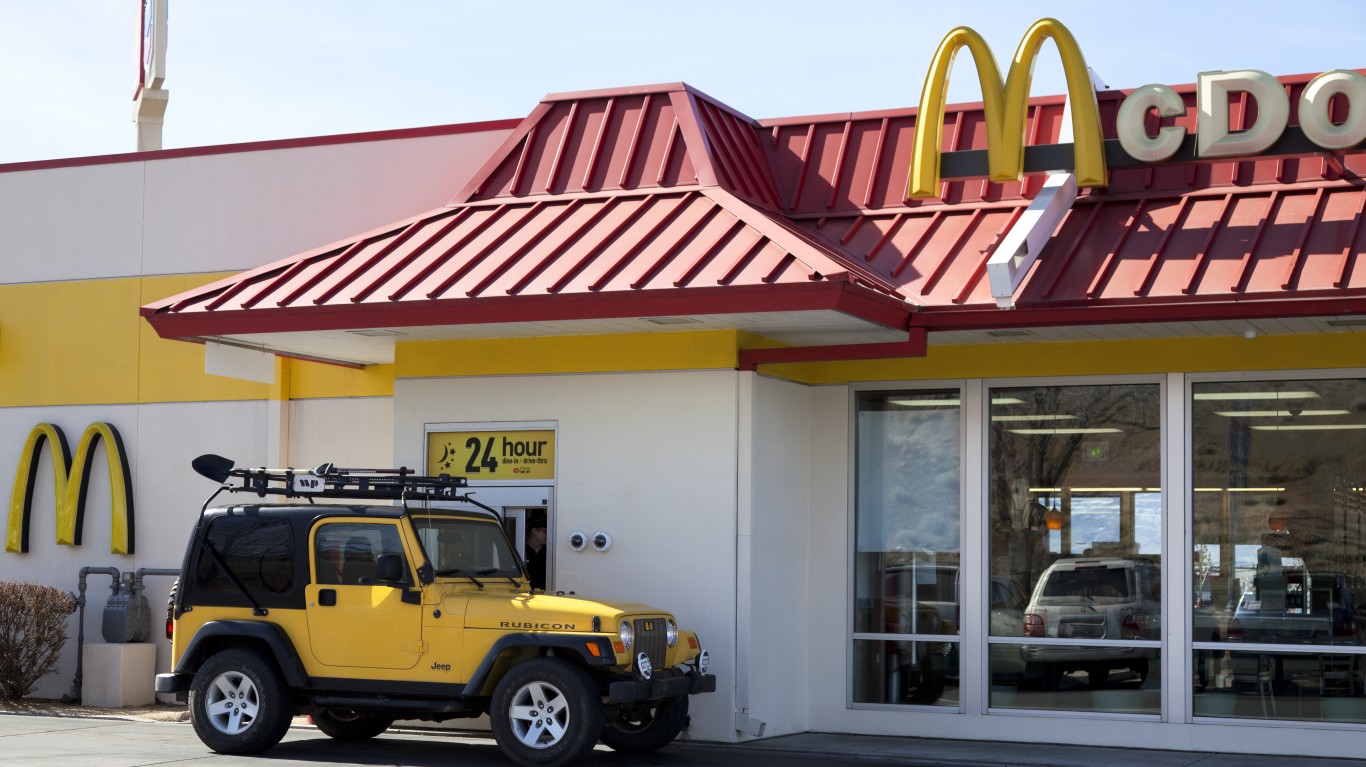
Among the reasons restaurants and hotels have been so hard hit is the proximity of people to one another. Automation largely eliminates that problem for people in these industries who come in contact with customers. The trend has already begun in the fast-food sector. McDonald’s Corp (NYSE: MCD | MCD Price Prediction) has automatic ordering options in most restaurants. And food and beverages can be ordered and paid for remotely at food retail establishments like Starbucks (NASDAQ: SBUX). Customers likely feel safer dealing with a machine than with a person who could be infected.

One of the points made by most analysts who have issued reports on jobs lost in the current recession is that they tend to be low paying, The Brookings report points out that people in the “food preparation and serving related operations” are among the lowest paid in the nation. The average wage for them is $23,900.

Families with four members in one household are considered below the poverty level if the income for the household is below $26,200. This means the risk of automation is highest among the poorest working individuals in the nation.

It is likely that the spread of COVID-19 will accelerate how companies look at automation as a way to replace workers who have the most exposure to customers. They are, for the most part, people who make very little.


 

Photo of Douglas A. McIntyre
About the Author Douglas A. McIntyre →

Douglas A. McIntyre is the co-founder, chief executive officer and editor in chief of 24/7 Wall St. and 24/7 Tempo. He has held these jobs since 2006.

McIntyre has written thousands of articles for 24/7 Wall St. He is an expert on corporate finance, the automotive industry, media companies and international finance. He has edited articles on national demographics, sports, personal income and travel.

His work has been quoted or mentioned in The New York Times, The Wall Street Journal, Los Angeles Times, The Washington Post, NBC News, Time, The New Yorker, HuffPost USA Today, Business Insider, Yahoo, AOL, MarketWatch, The Atlantic, Bloomberg, New York Post, Chicago Tribune, Forbes, The Guardian and many other major publications. McIntyre has been a guest on CNBC, the BBC and television and radio stations across the country.

A magna cum laude graduate of Harvard College, McIntyre also was president of The Harvard Advocate. Founded in 1866, the Advocate is the oldest college publication in the United States.

TheStreet.com, Comps.com and Edgar Online are some of the public companies for which McIntyre served on the board of directors. He was a Vicinity Corporation board member when the company was sold to Microsoft in 2002. He served on the audit committees of some of these companies.

McIntyre has been the CEO of FutureSource, a provider of trading terminals and news to commodities and futures traders. He was president of Switchboard, the online phone directory company. He served as chairman and CEO of On2 Technologies, the video compression company that provided video compression software for Adobe’s Flash. Google bought On2 in 2009.

Featured Reads

Our top personal finance-related articles today. Your wallet will thank you later.

Continue Reading

Top Gaining Stocks

CBOE Vol: 1,568,143
PSKY Vol: 12,285,993
STX Vol: 7,378,346
ORCL Vol: 26,317,675
DDOG Vol: 6,247,779

Top Losing Stocks

LKQ
LKQ Vol: 4,367,433
CLX Vol: 13,260,523
SYK Vol: 4,519,455
MHK Vol: 1,859,865
AMGN Vol: 3,818,618