


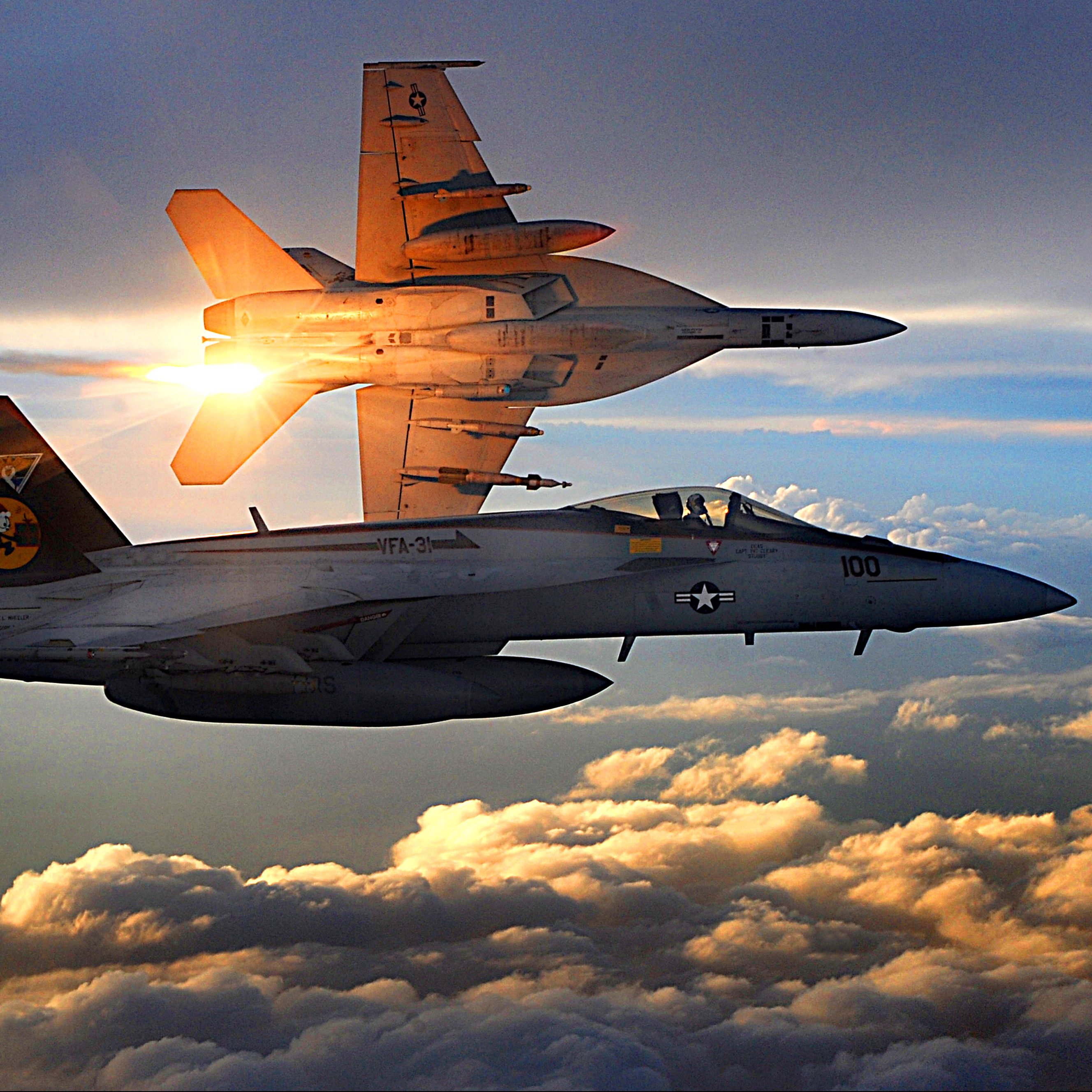
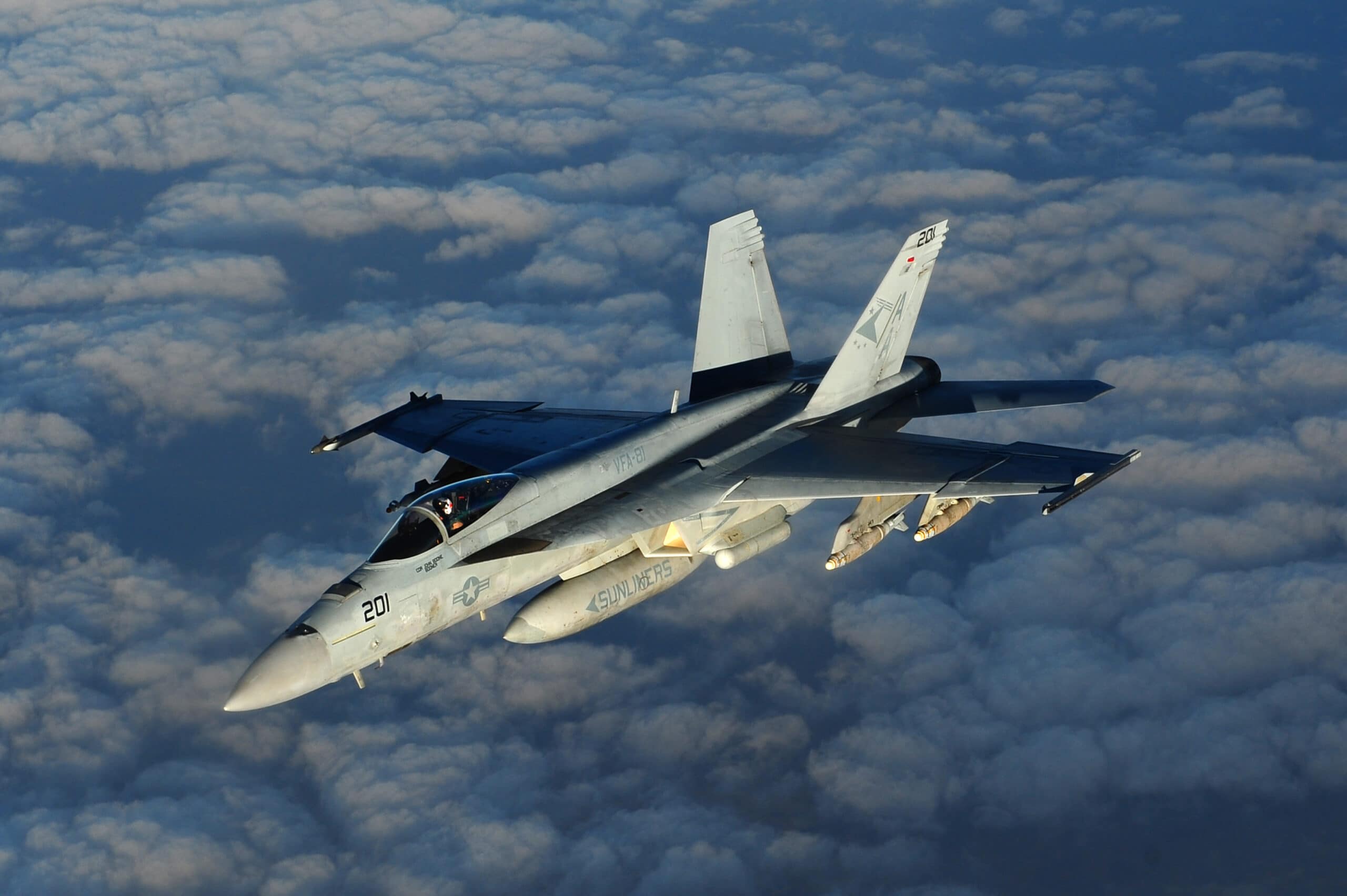
The F/A-18E/F Super Hornet has been the U.S. Navy’s workhorse since 1999. Larger and more capable than its predecessor the original Hornet, it brings a bigger airframe, more fuel, increased payload, and upgraded avionics. The Super Hornet is built to launch from carriers, fight for air superiority, and strike targets with precision all on the same sortie.
For some quick background on the jet, it has a maximum takeoff weight of 66,000 pounds and can carry over 17,000 pounds of ordnance. The frame is outfitted to handle air-to-air missiles, joint direct attack munitions (drop/guided bombs), or even anti-ship missiles. Each of these jets also come standard with a 20mm M61 Vulcan cannon. Also, it is powered by two General Electric F414 engines, and can hit speeds over Mach 1.5, making it one of the fastest jets in the fleet.
Since its introduction in 1999, the Super Hornet has been pivotal in a number of engagements and U.S. Navy operations. It proved effective in the Middle East in carrying out air strikes, throughout the U.S. Global War on Terrorism. However, we are not just looking at the Super Hornet today. 24/7 Wall St. is exploring the entirety of the Navy’s aircraft arsenal and how these jets rank in terms of speed.
To identify the fastest aircraft in the U.S. Navy, 24/7 Wall St. reviewed the 2025 World Air Forces report from FlightGlobal, an aviation and aerospace industry publication. We ordered these aircraft by top speed. We also included supplemental data on the type of aircraft, armament, and more. We excluded trainer aircraft.
Here is a look at the fastest aircraft in the U.S. Navy:
Why Are We Covering This?
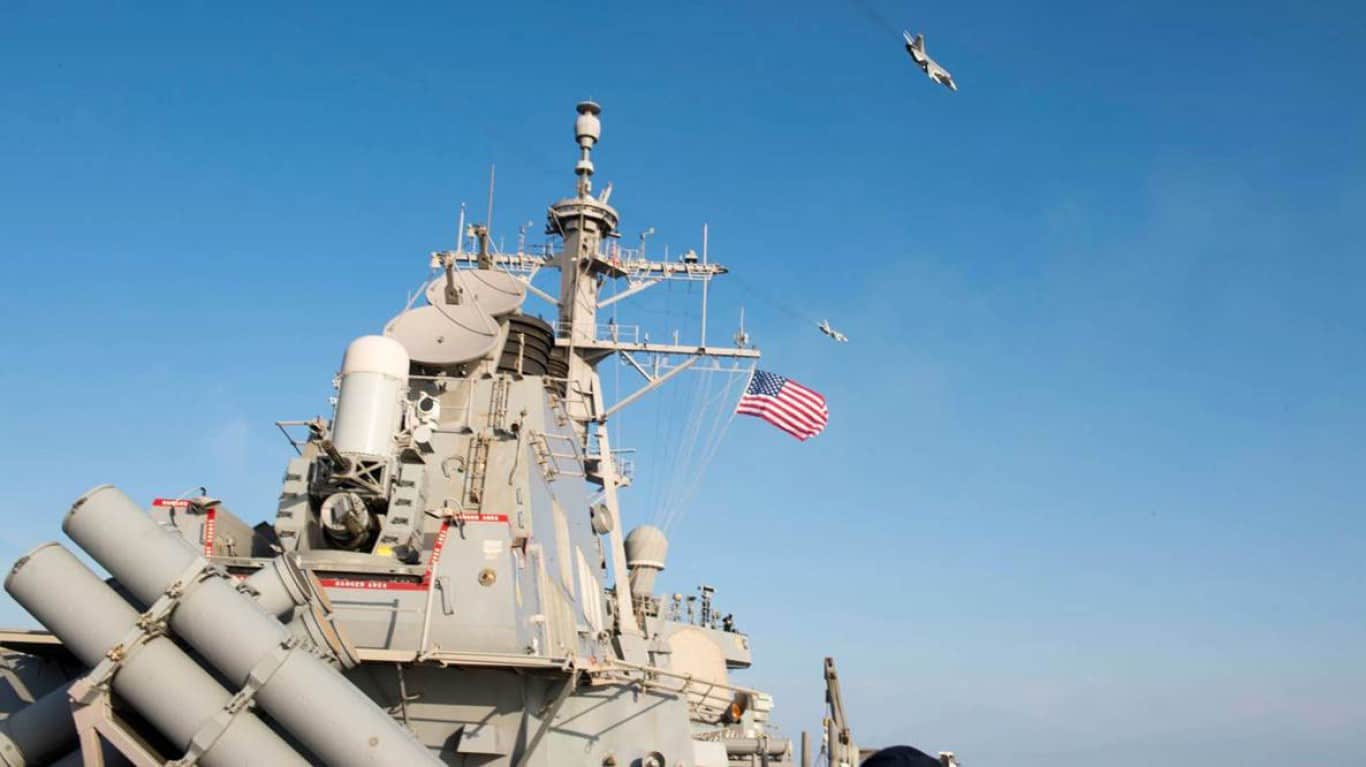
Understanding the aircraft used by the U.S. Navy provides insight into joint military capabilities and defense strategies. Also knowing what the U.S. has in its arsenal further explains its military capabilities. This further gives context to the tactical flexibility and logistical reach the Navy brings in its operations. Lastly, the composition and technological level of the aircraft fleet highlight the Navy’s ability of maintaining dominance and its rapid response capabilities, both of these are key factors in its strategic defense planning.
18. Bell 407
- Type: Light utility helicopter
- Year introduced: 1996
- Active aircraft: 5
- Top speed: 162 mph
- Armament: N/A
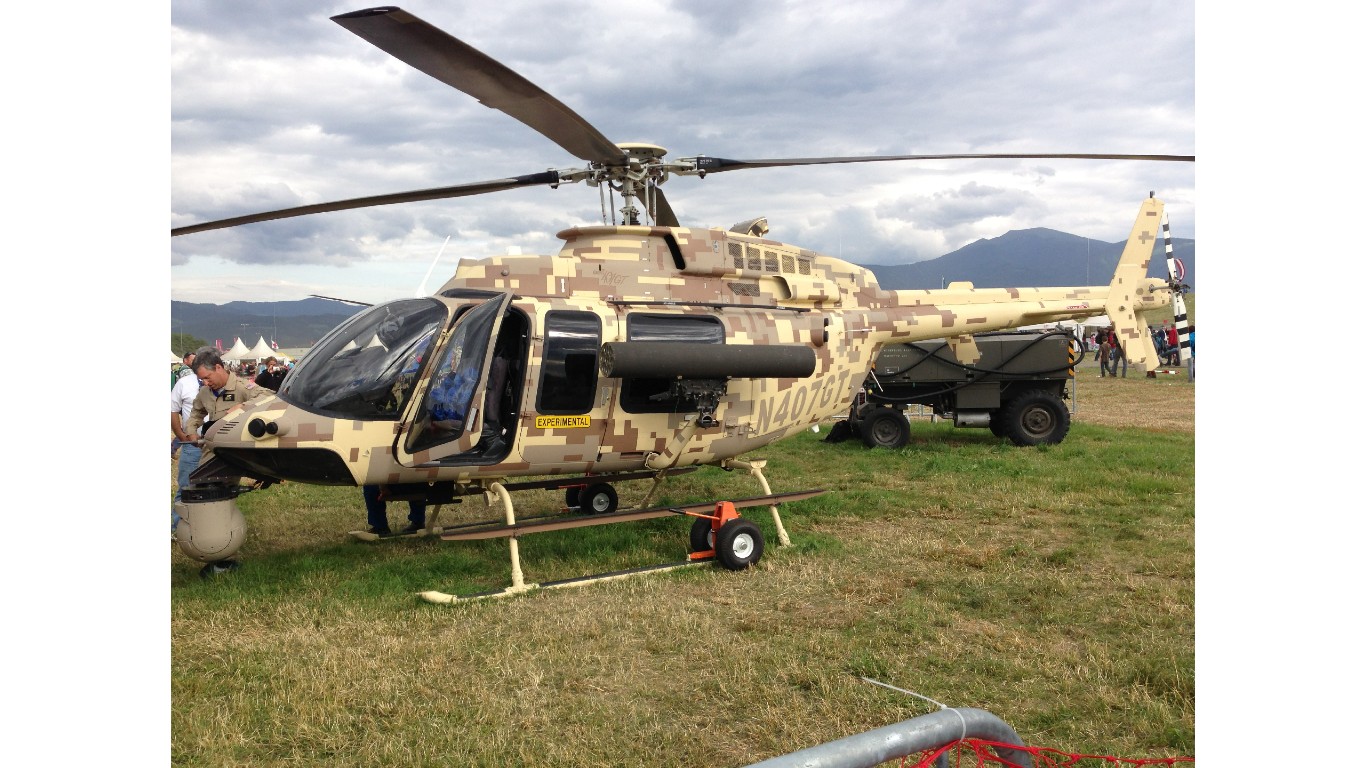
The Bell 407, introduced in 1996, is a light utility helicopter. Since its introduction by Bell Helicopter, the 407 has been recognized for its reliability and performance, in logistical and transport operations within the Army. These helicopters can hit a top speed of 162 mph and do not come with any standard armaments. Again, the Bell 407 usually plays various support roles.
17. S-70 Black Hawk

- Type: Medium-lift multi-mission helicopter
- Year introduced: 1979
- Active aircraft: 452
- Top speed: 183 mph
- Armament: 7.62mm machine guns, Hellfire missiles, 12.7mm gatling guns, M134 gatling guns, rocket pods, 30mm chain gun
Black Hawk helicopters have been a global workhorse for not just the U.S. Armed forces. They were famously seen in the 1993 Battle of Mogadishu where they performed under intense urban fire and helped evacuate casualties. This was later dramatized in the film Black Hawk Down. Widely regarded as one of the most iconic helicopters ever built, the UH-60 family serves across U.S. military branches with several thousand of these in service. Powered by twin turboshaft engines and sporting a four-bladed main rotor plus four-bladed tail rotor, the Black Hawk can exceed 180 mph, typically flies with two pilots and two crew chiefs, transports up to 11 fully equipped soldiers, and carries roughly a 9,000-pound payload.
16. MH-53E Pave Low
- Type: Multirole transport helicopter
- Year introduced: 1981
- Active aircraft: 26
- Top speed: 196 mph
- Armament: 7.62mm M134 miniguns, 12.7mm Browning M2 heavy machine guns
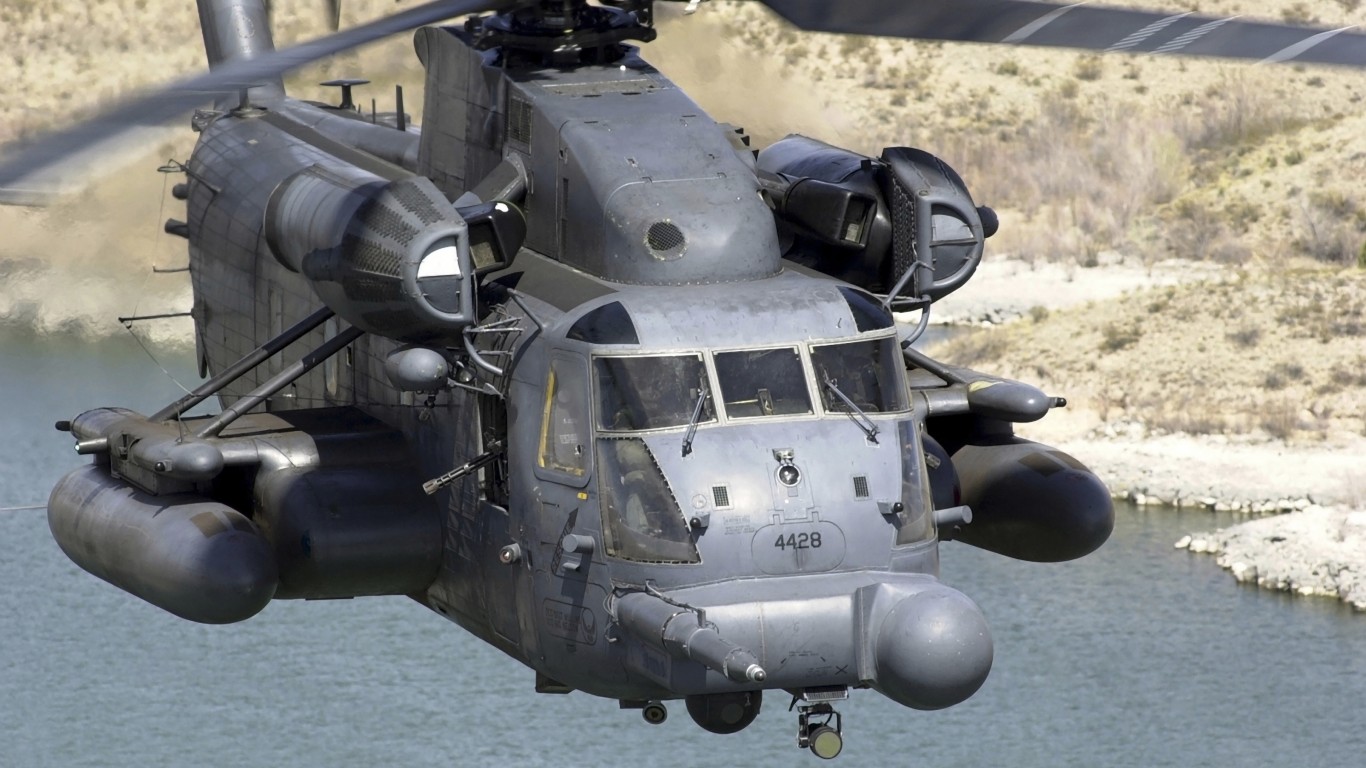
The MH-53E Pave Low, introduced in 1981, is a multi-role transport helicopter with 26 active aircraft in service. It can hit a top speed of 196 mph and is heavily armed with 7.62mm M134 miniguns and 12.7mm Browning M2 heavy machine guns. This helicopter is used for long-range insertion and extraction missions.
15. MV-22 Osprey

- Type: Tiltrotor VTOL aircraft
- Year introduced: 2007
- Active aircraft: 29
- Top speed: 316 mph
- Armament: 7.62mm machine guns, 12.7mm machine guns
The Osprey’s tiltrotor design allows for vertical takeoff and landing like a helicopter, as well as cruise-speed performance like a turboprop. This configuration gives a unique reach for special operations. Built by Bell Boeing, the Osprey fills roles like infiltration, extraction, resupply and humanitarian missions for U.S. Special Operations forces. Its aerial refueling capability extends its mission range dramatically, and its cabin can fit roughly 24 combat-loaded troops. The Osprey has proven its value across Iraq, Afghanistan and other global conflicts.
14. C-2 Greyhound
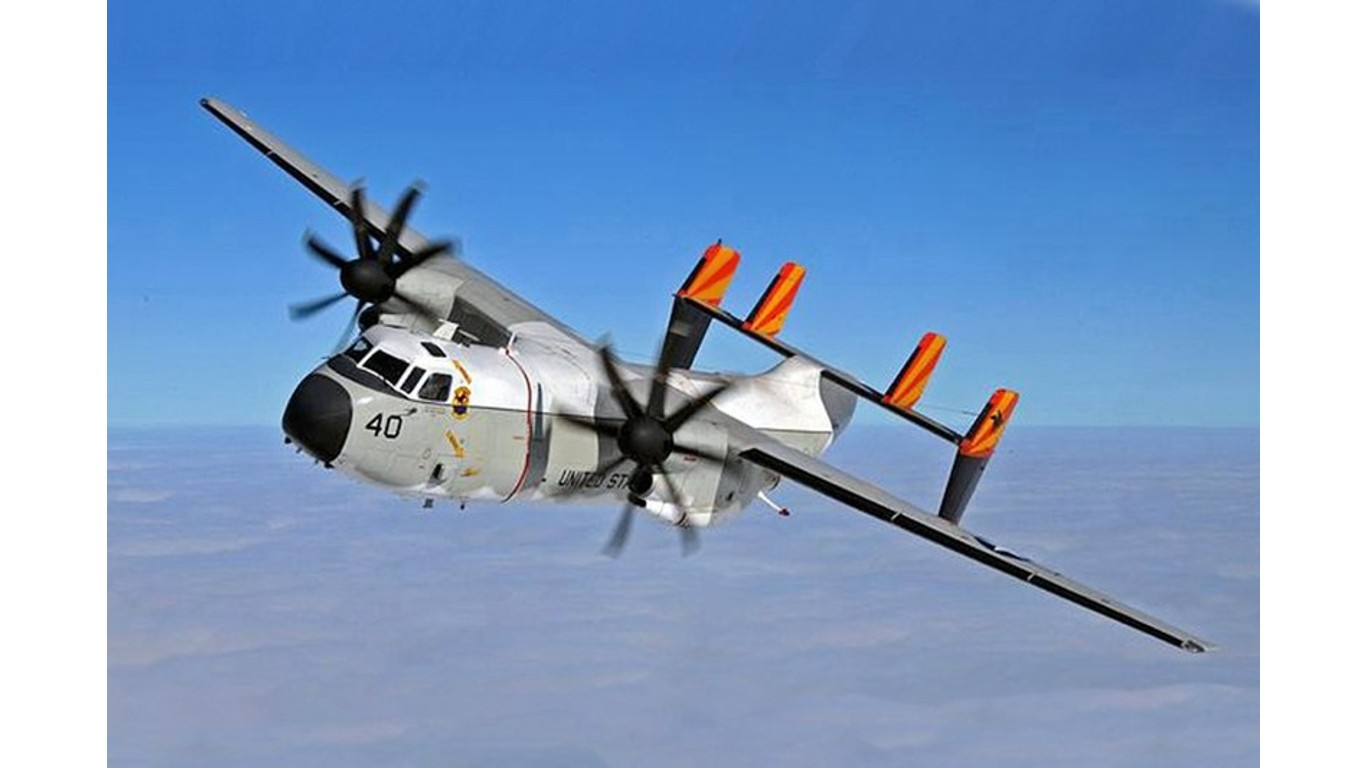
- Type: Carrier-based cargo / transport aircraft
- Year introduced: 1967
- Active aircraft: 25
- Top speed: 331 mph
- Armament: N/A
Grumman’s C-2 is the Navy’s carrier onboard delivery workhorse, ferrying passengers, mail, and high-priority cargo between carriers and shore bases since the late 1960s. It is essential to carrier strike-group logistics.
13. C-26D Metroliner
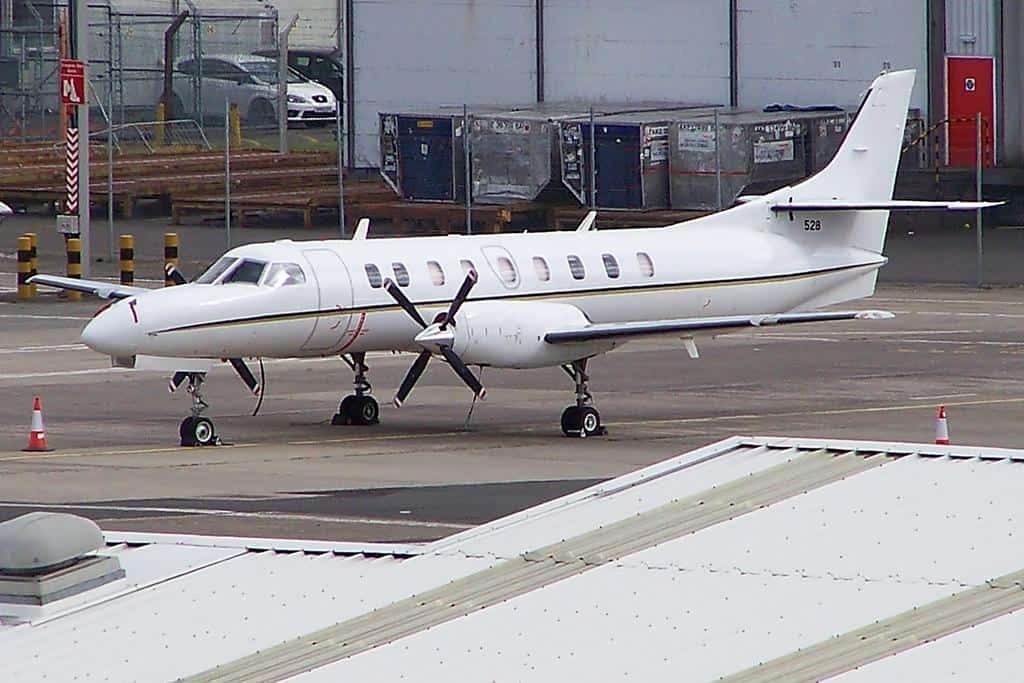
- Type: Transport aircraft
- Year introduced: 2003
- Active aircraft: 7
- Top speed: 331 mph
- Armament: N/A
The C-26 Metroliner has been a staple of transport aircraft in the U.S. Armed Forces since its introduction in 1980 by Fairchild Aircraft. It was designed primarily for cargo and personnel transport, and the Metroliner can reach speeds up to 331 mph. Outside of the military, the C-26 is used worldwide in civilian sectors for regional airline and freight operations.
12. C-12 Huron
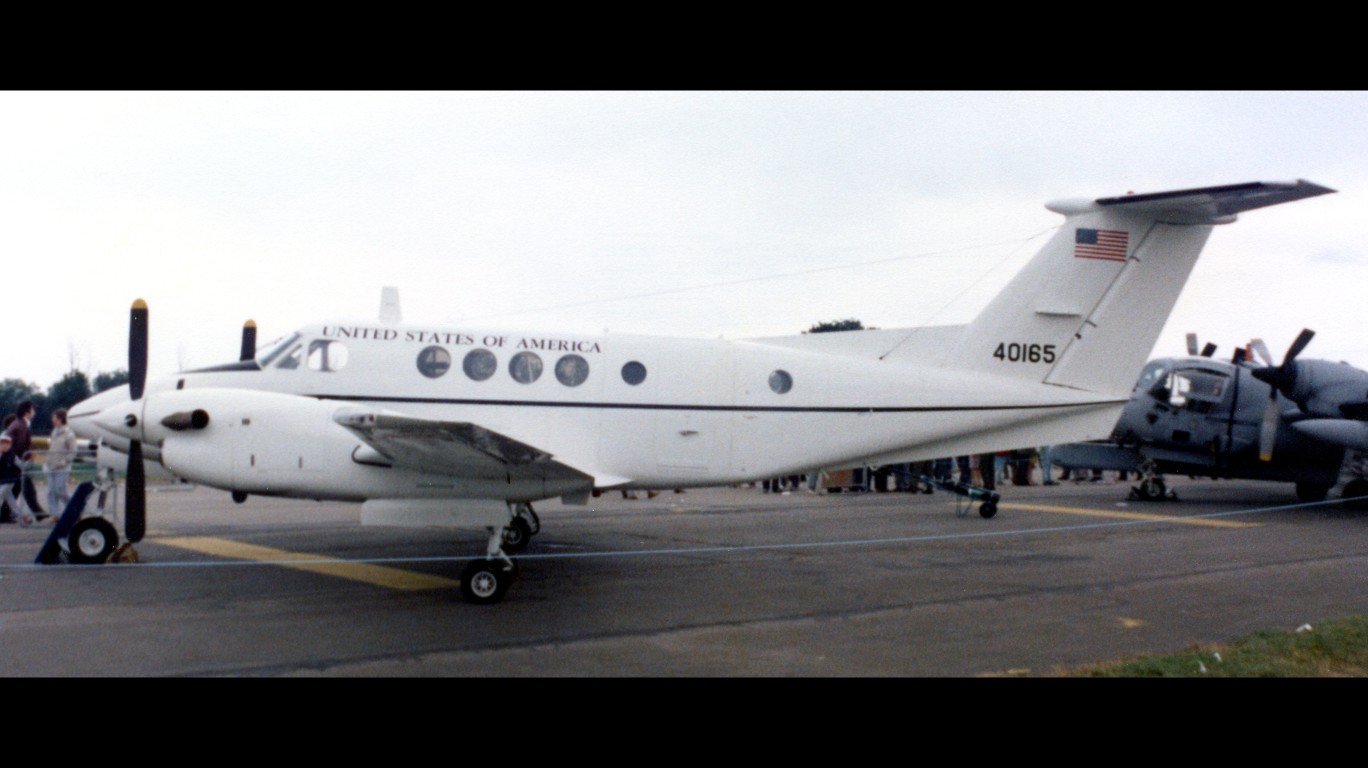
- Type: Special mission aircraft
- Year introduced: 1974
- Active aircraft: 13
- Top speed: 332 mph
- Armament: N/A
Introduced in 1974, the Beechcraft C-12 Huron has served as a special-missions workhorse for the U.S. Armed forces, known for its speed, flexibility and reliability. It can hit top speeds over 330 mph. The C-12’s true strength lies in its mission adaptability and modular cabin.
11. E-2 Hawkeye
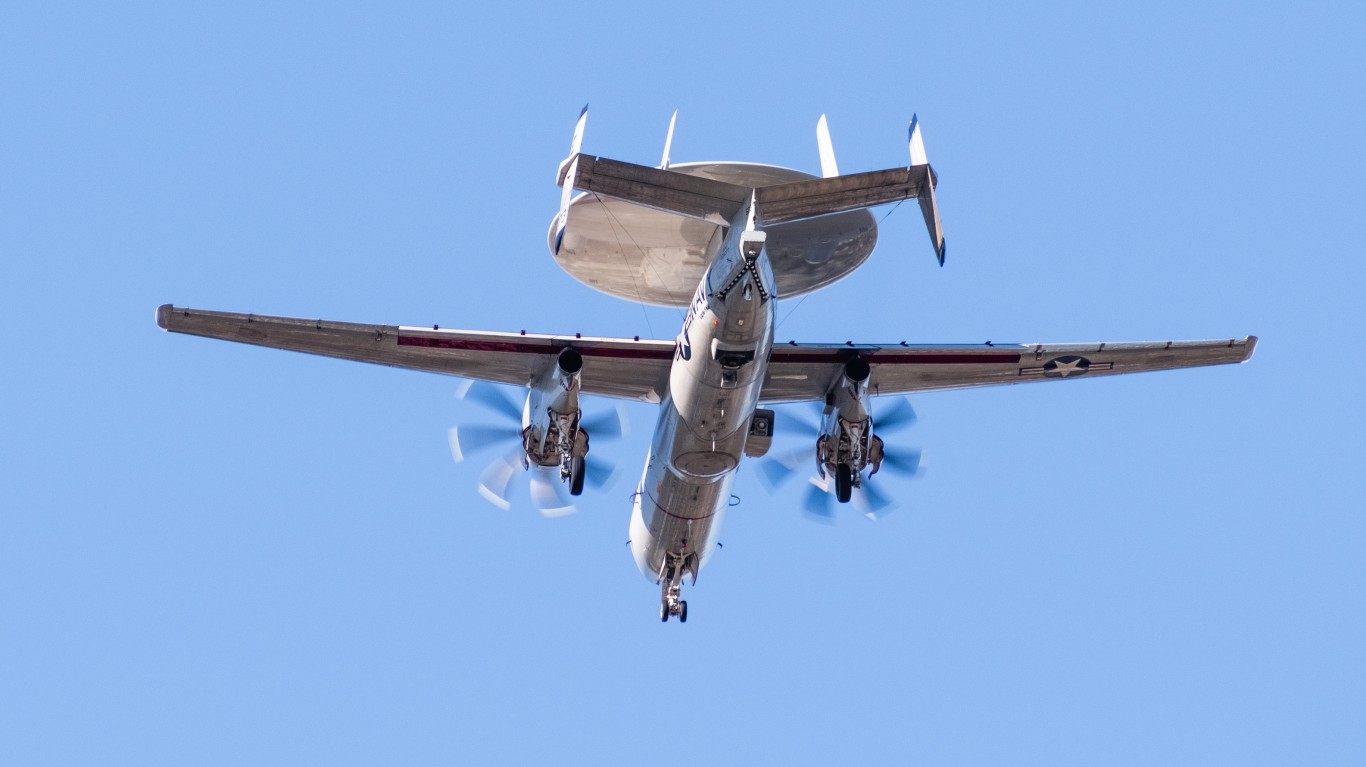
- Type: Airborne command post
- Year introduced: 1964
- Active aircraft: 86
- Top speed: 375 mph
- Armament: N/A
The E-2 Hawkeye is a carrier-capable airborne early warning and command aircraft, instantly recognizable for its rotating radome. It provides battle-management, radar coverage, and C2 for carrier strike groups.
10. C-130J Super Hercules
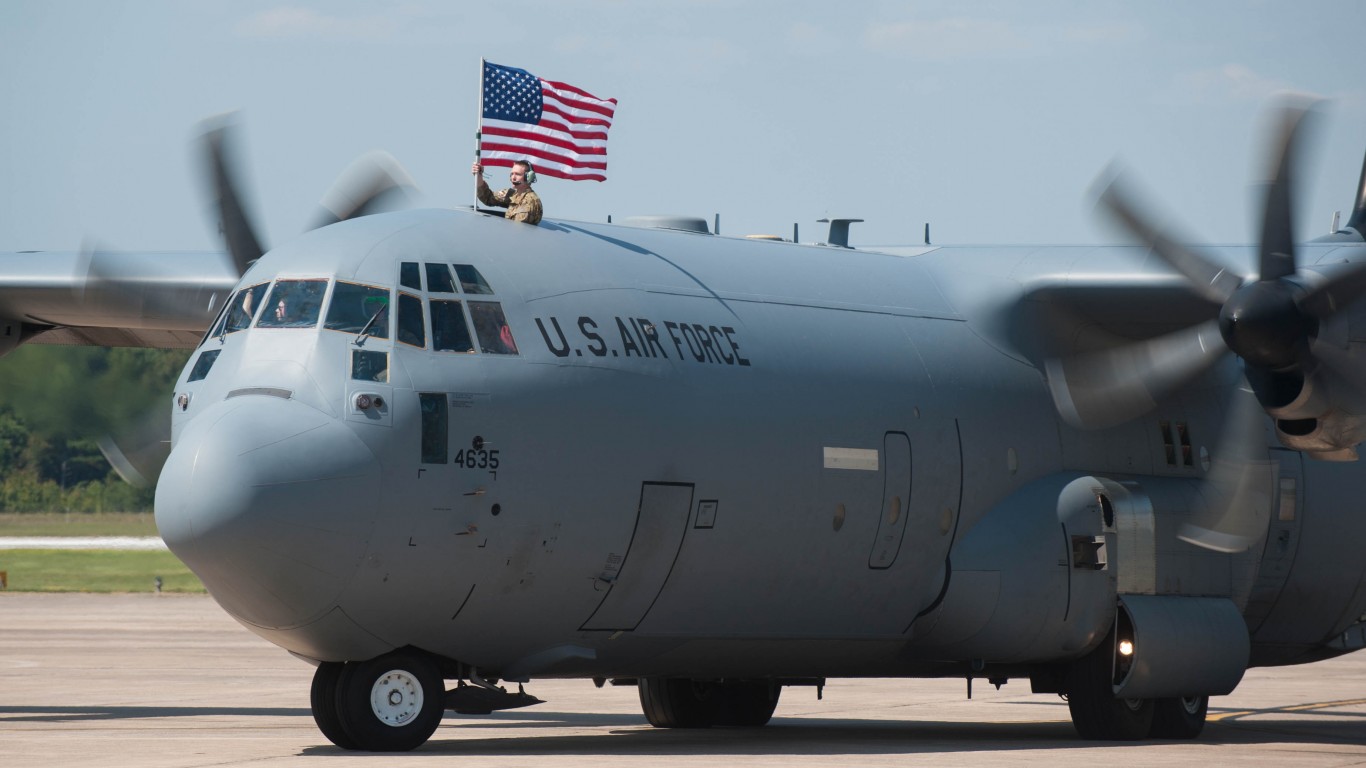
- Type: Tactical medium transport aircraft
- Year introduced: 1999
- Active aircraft: 18
- Top speed: 416 mph
- Armament: N/A
The C-130J Super Hercules is the modernized C-130 with new engines, propellers, and avionics. These massive jets perform tactical airlifts, airdrops, medevacs, and special-operations roles worldwide. The C-130J is truly the workhorse of the U.S. Armed Forces. This upgraded variant entered service in the late 1990s and was heavily used in Iraq, Afghanistan, as well as humanitarian missions. Some other variants are used for combat like the Stinger or the Ghostrider.
9. KC-130 Super Hercules

- Type: Aerial tanker / transport aircraft
- Year introduced: 1962
- Active aircraft: 11
- Top speed: 416 mph
- Armament: N/A
The KC-130 is a fairly versatile airlifter and tanker variant of the C-130 family used by USMC and others for aerial refueling, medevac, and logistics. It has proven itself in expeditionary operations worldwide since the 1960s.
8. P-3 Orion
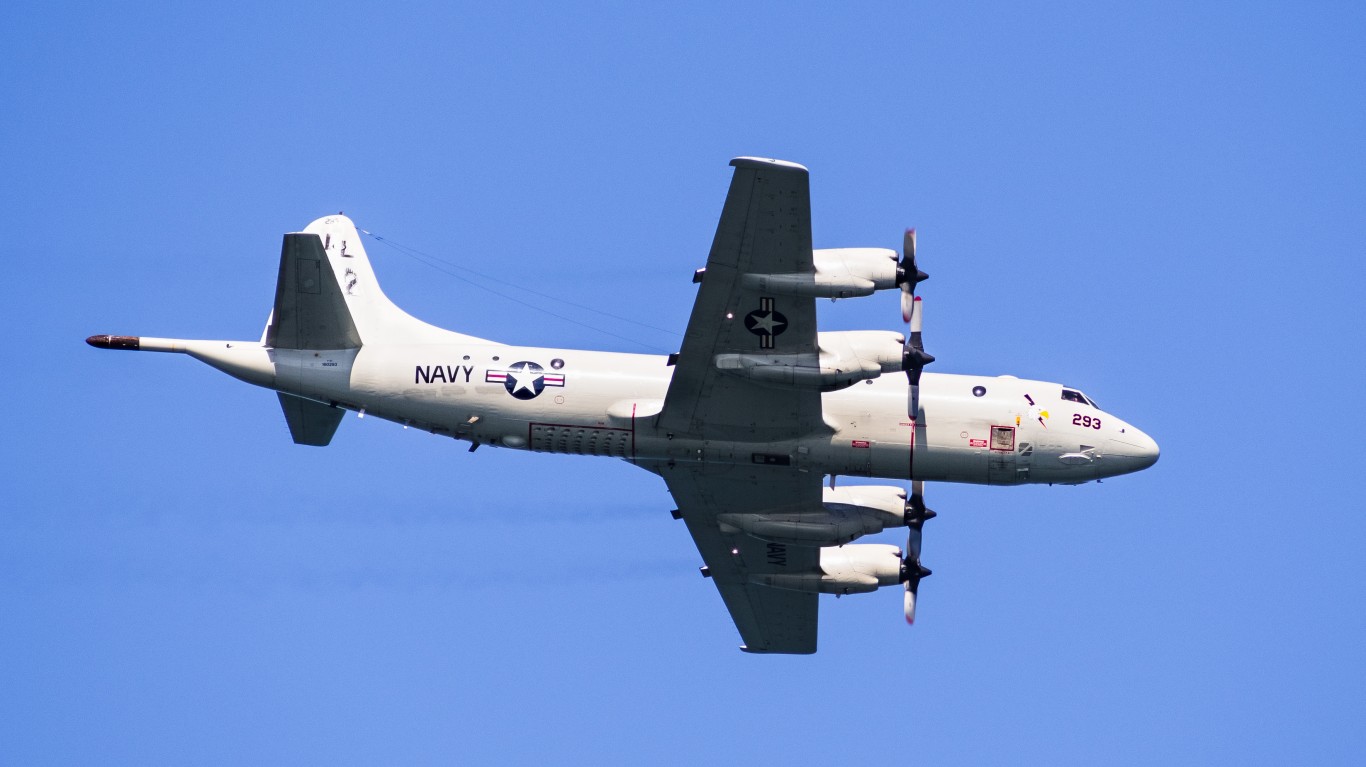
- Type: Multimission reconnaissance, anti-submarine aircraft
- Year introduced: 1962
- Active aircraft: 13
- Top speed: 466 mph
- Armament: Torpedoes, depth charges, Harpoon missiles, SLAM-ER missiles, Maverick missiles, naval mines, unguided rockets
The P-3 Orion is a four-engine maritime patrol and ASW aircraft introduced in the 1960s. During the Cold War it hunted submarines, tracked surface contacts, and flew long surveillance patrols.
7. P-8A Poseidon

- Type: Multimission reconnaissance, anti-submarine aircraft
- Year introduced: 2013
- Active aircraft: 122
- Top speed: 490 mph
- Armament: Torpedoes, naval mines, air-to-surface missiles, anti-ship missiles, stand-off cruise missiles
The P-8A Poseidon is a maritime-patrol and ASW aircraft that entered service in 2013 to replace the P-3 Orion. These aircraft handle long-range patrol and reconnaissance.
6. C-40 Clipper
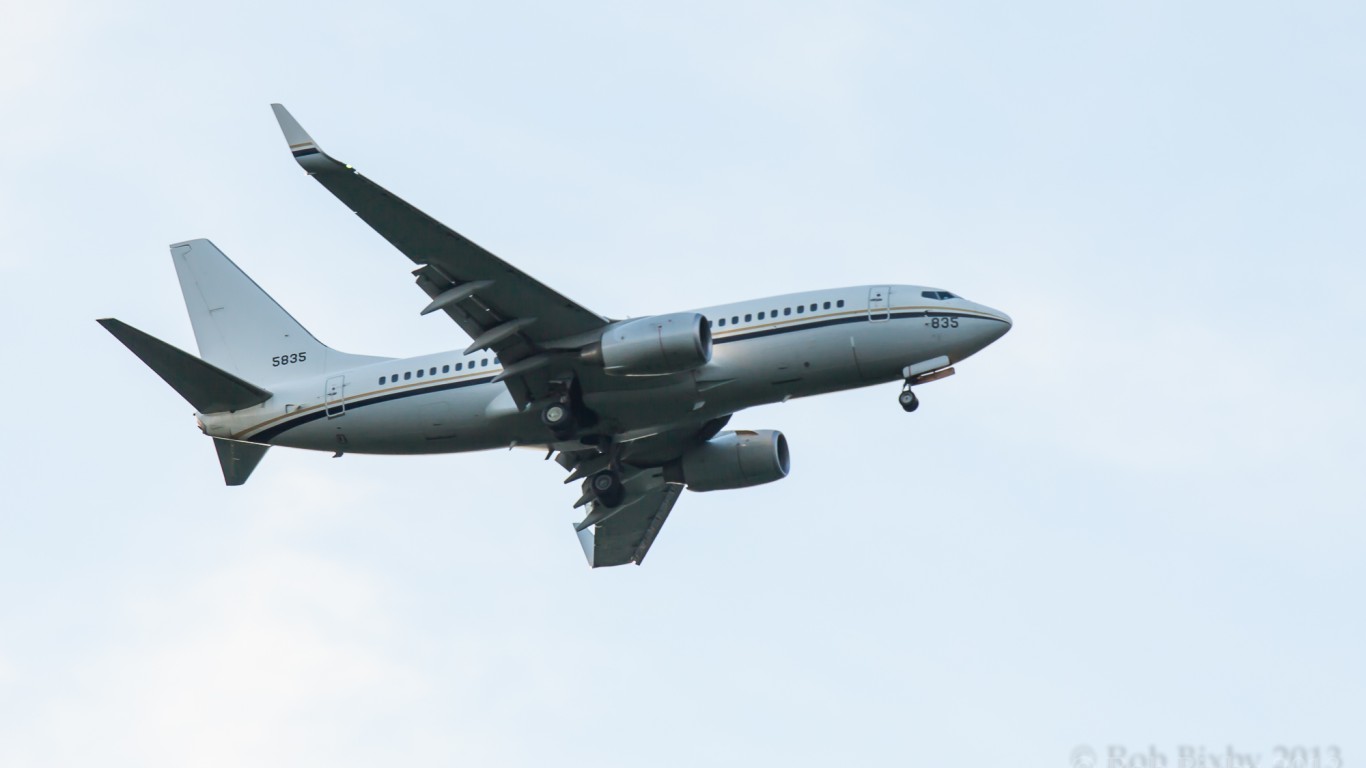
- Type: Transport aircraft
- Year introduced: 2001
- Active aircraft: 17
- Top speed: 544 mph
- Armament: N/A
The C-40 is a militarized Boeing 737 which has a few variants. These serve in logistics and VIP transport capacities across the USN and USAF. It entered service in the early 2000s and functions as “offices in the sky” with secure comms for senior leaders.
5. C-20 Gulfstream IV

- Type: Military VIP passenger transport aircraft
- Year introduced: 1983
- Active aircraft: 1
- Top speed: 582 mph
- Armament: N/A
The Gulfstream C-20H is a variant within the Gulfstream series that typically serves as a high-speed transport aircraft, primarily for VIP and high-priority missions. Introduced in 1983 by Gulfstream Aerospace, this aircraft has a top speed of 582 mph, making it one of the fastest in the Army’s fleet. Although it carries no armament, the C-20H’s speed and range are its main assets, facilitating transport for government officials and top military brass. There is only one active unit in service.
4. E-6B Mercury

- Type: Airborne command post
- Year introduced: 1989
- Active aircraft: 16
- Top speed: 603 mph
- Armament: N/A
The E-6B Mercury serves the TACAMO (Take Charge And Move Out) role that links national command authorities to ballistic-missile submarines. It also performs the “Looking Glass” airborne launch-control mission.
3. EA-18G Growler
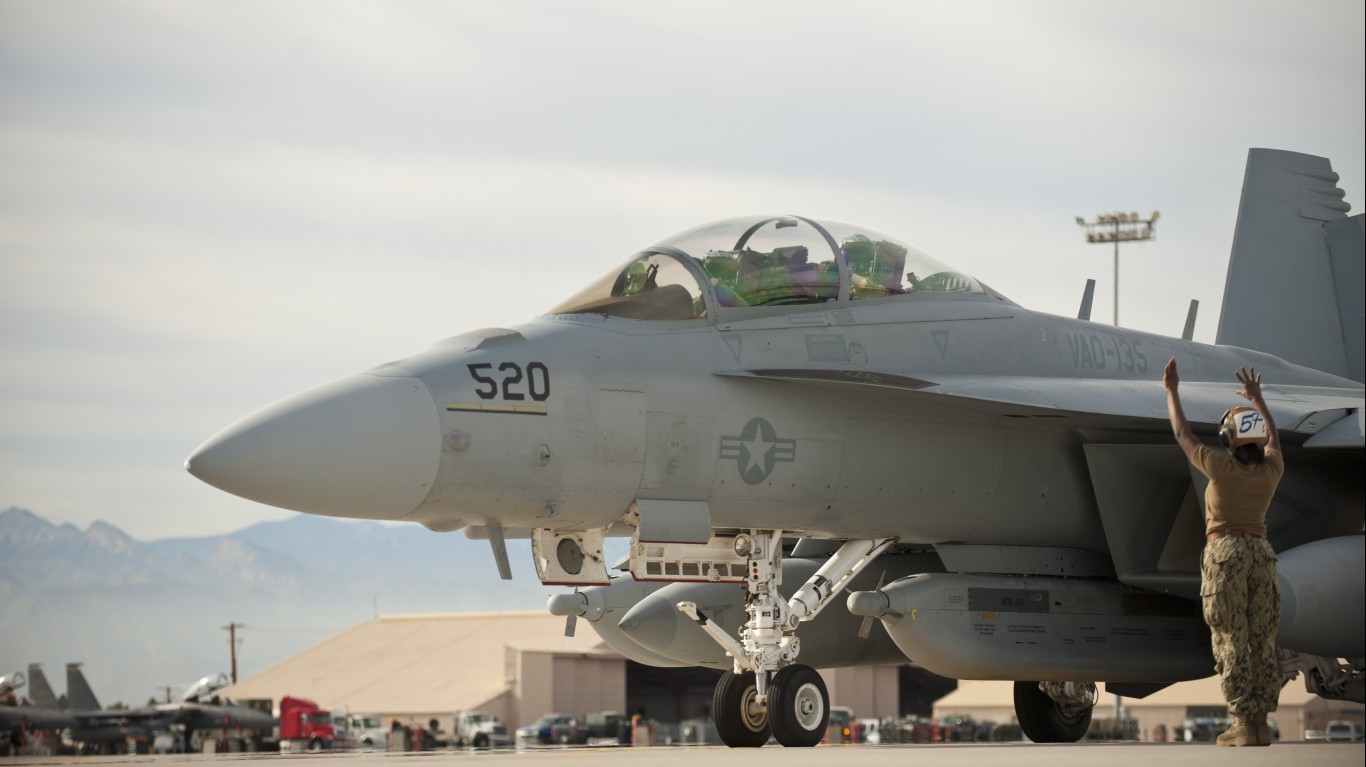
- Type: Carrier-based electronic warfare aircraft
- Year introduced: 2009
- Active aircraft: 153
- Top speed: 1,181 mph
- Armament: Detection pods, high band jamming pods, low band jamming pods, AN/ASQ-228 ATFLIR, SHARP, Harm missiles, AMRAAM missiles, Joint stand-off weapons
The EA-18G Growler is the Navy’s carrier-based electronic-attack jet, a specialized variant of the F/A-18F Super Hornet that only entered service in 2009. The Growler features dedicated detection and jamming pods to hunt, deny, and confuse enemy radars and communications, along with other defensive capabilities. These fighters fly ahead of strike packages and clear corridors for less survivable aircraft by suppressing air defenses and intercepting signals.
2. F/A-18 Super Hornet
- Type: Carrier-based strike fighter aircraft
- Year introduced: 1999
- Active aircraft: 416
- Top speed: 1,187 mph
- Armament: 20mm M61A1 Vulcan automatic cannon, Sidewinder missiles, AMRAAM missiles, Harpoon missiles, HARM missiles, Maverick missiles, joint direct att munitions, Rockeye II bombs, general purpose bombs
Introduced in 1999, the F/A-18 Super Hornet is the U.S. Navy’s larger, more capable carrier strike fighter, with hundreds in service today. It comes standard with a 20mm M61A1 Vulcan cannon and can equip a wide range of weapons including Sidewinders, AMRAAMs, Harpoons, HARMs, Mavericks, JDAMs and other precision munitions. Its bigger airframe from the original Hornet allows for this increased payload as well as improved fuel capacity to give it superior range and endurance than its predecessor.
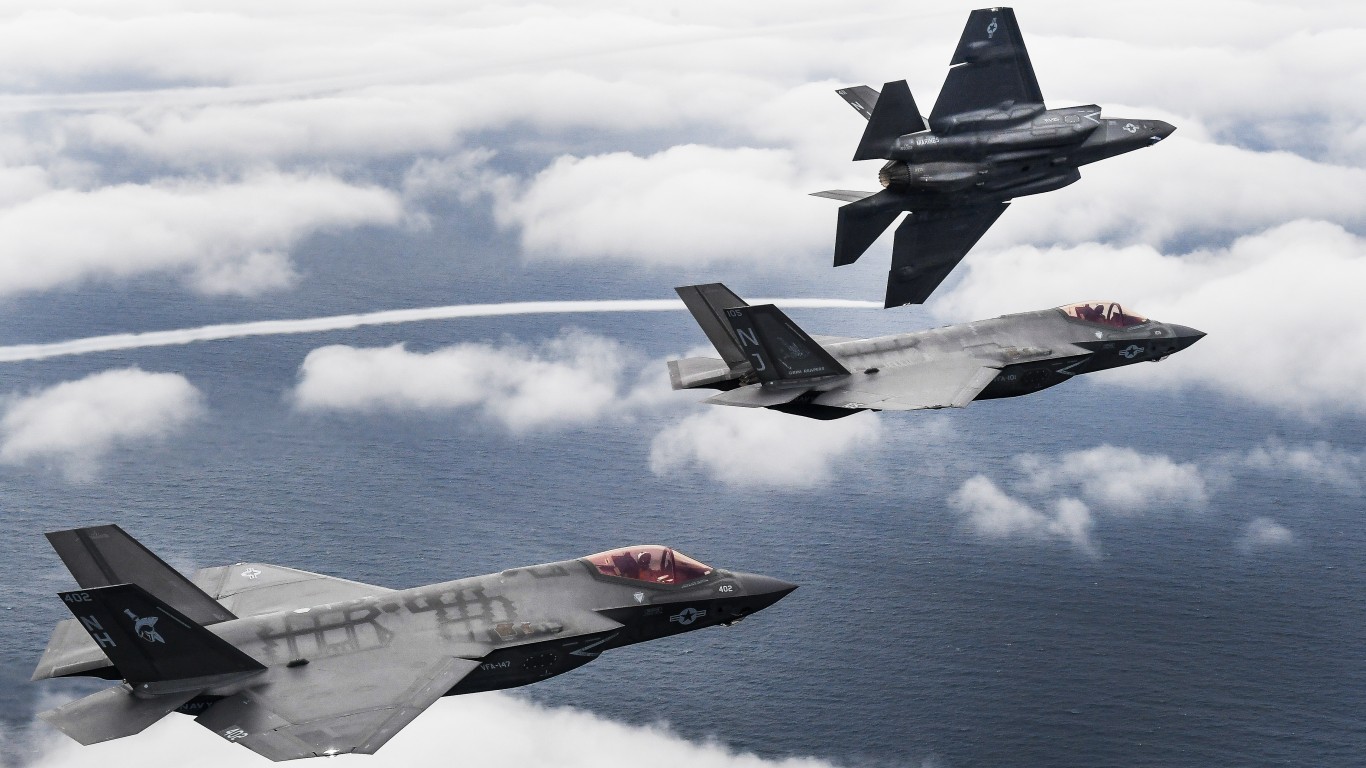
1. F-35C Lightning II
- Type: Multirole fifth generation strike fighter aircraft
- Year introduced: 2016
- Active aircraft: 41
- Top speed: 1,199 mph
- Armament: 25mm GAU-12/U cannon in external pod, Sidewinder missiles, Paveway guided bombs, Rockeye II bombs, Brimstone missiles, Storm shadow missiles, drop bombs
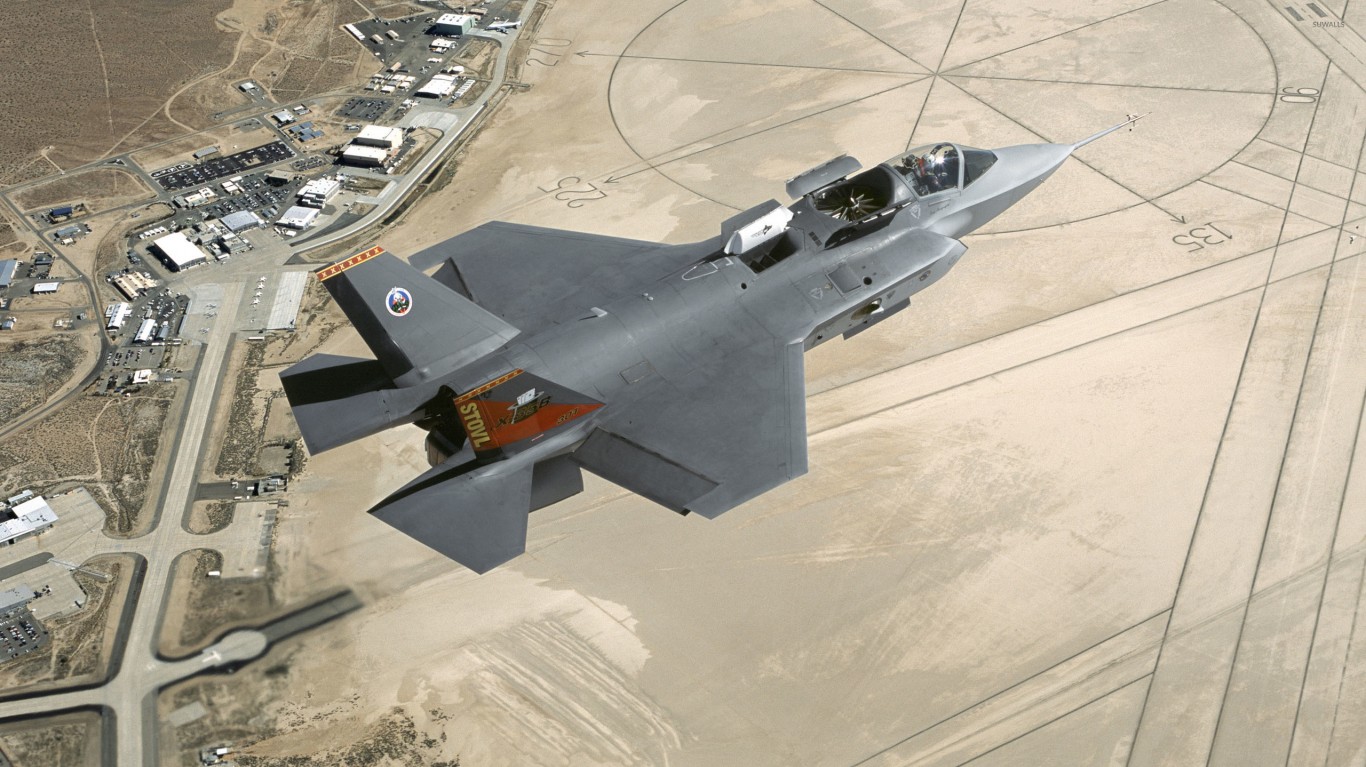
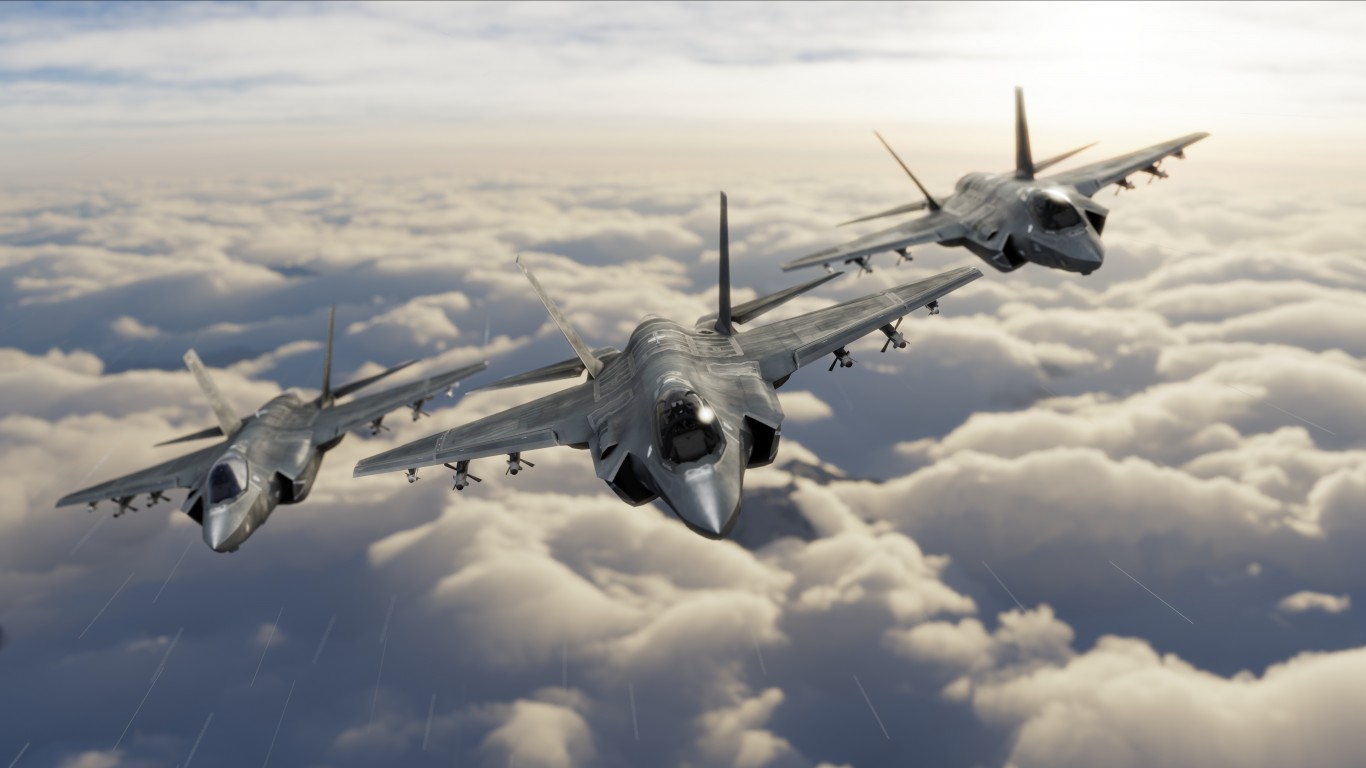
The F-35 Lightning II is a 5th-generation multirole stealth fighter developed by Lockheed Martin and Northrop Grumman for all U.S. armed forces as well as allies. It entered service in the 2010s to replace older fighter jets with improved sensors and stealth. Note that there are three distinct variants (A/B/C) of the F-35 that share a common core (one with VTOL capabilities), making the F-35 the most widely used stealth jet in history.






 Top Gaining Stocks
 Top Losing Stocks